هذا هو النص الإنجليزي الأصلي؛ لا تتوفر حاليًا ترجمة عربية مُراجَعة لهذا الإصدار.
Short answer: a gem laboratory does not identify turquoise treatment from colour or matrix alone. It selects tests for a specific question—such as whether a material is turquoise, whether polymer impregnation is present, or whether a particular treatment is indicated—and interprets the results together. The exact specimen and the wording of the report matter.
First define the question
“Is this turquoise?” “Has it been impregnated?” “Is it dyed?” and “Can its geographic origin be determined?” are different questions. A report may answer one without answering the others. Before submitting a stone, ask the laboratory what it can examine, which conclusions it may be able to state, whether the test requires sampling, and how the result will be reported.
This distinction is useful for buyers: a seller’s product record is a documentary statement about a particular item; an independent laboratory report is a separate examination with its own scope. Neither should be described as the other.
Methods laboratories may use
Infrared spectroscopy (FTIR)
Fourier-transform infrared spectroscopy measures how a material interacts with infrared light. In gemology, it can help identify mineral materials and detect some substances introduced into pores or fractures. GIA describes FTIR as useful for identifying polymer impregnation in turquoise. Because turquoise is opaque, a laboratory may need a suitable reflectance method or carefully prepared material; the preparation and sampling policy should be confirmed in advance. Methods continue to develop, so a technique used in one study is not a promise that every lab will use the same procedure.
Read GIA’s overview, Infrared Spectroscopy and Its Use in Gemology, for the role and limits of FTIR across gem materials.
X-ray powder diffraction (XRD)
XRD examines a material’s crystal structure. A GIA study proposed combining infrared spectroscopy and X-ray powder diffraction to distinguish natural, treated and synthetic turquoise from imitations. That 1983 paper describes a method involving a very small powdered sample; it should be read as a published research method, not as a rule that every current examination is destructive or requires that quantity. Ask the receiving laboratory how it will handle your specific stone.
Source: GIA, The Identification of Turquoise by Infrared Spectroscopy and X-Ray Powder Diffraction.
Chemical analysis and treatment-specific tests
Some treatments can leave chemical clues even when the stone’s ordinary gemological appearance resembles untreated turquoise. In its study of Zachery-treated turquoise, GIA reported that many examples could be identified most efficiently through chemical analysis such as energy-dispersive X-ray fluorescence (EDXRF), rather than visual appearance alone. Other research on resin-filled turquoise examines combinations of methods including infrared spectroscopy and fluorescence techniques. These findings are treatment-specific; they do not create one universal test for every treated stone.
See GIA’s Zachery-treatment identification study and its research on resin-filled turquoise.
Why laboratories sometimes combine evidence
Treatments evolve, and different processes can produce different signals. GIA’s study of porcelain-treated turquoise notes that some infrared and visible/near-infrared spectra can be difficult to distinguish from untreated material; identification may require a combination of observations and analytical results. A negative result from one test therefore should not automatically be turned into a broad statement that every possible treatment has been ruled out.
Source: GIA, Composition and Spectral Characteristics of Porcelain-Treated Turquoise.
What a photograph or home test cannot settle
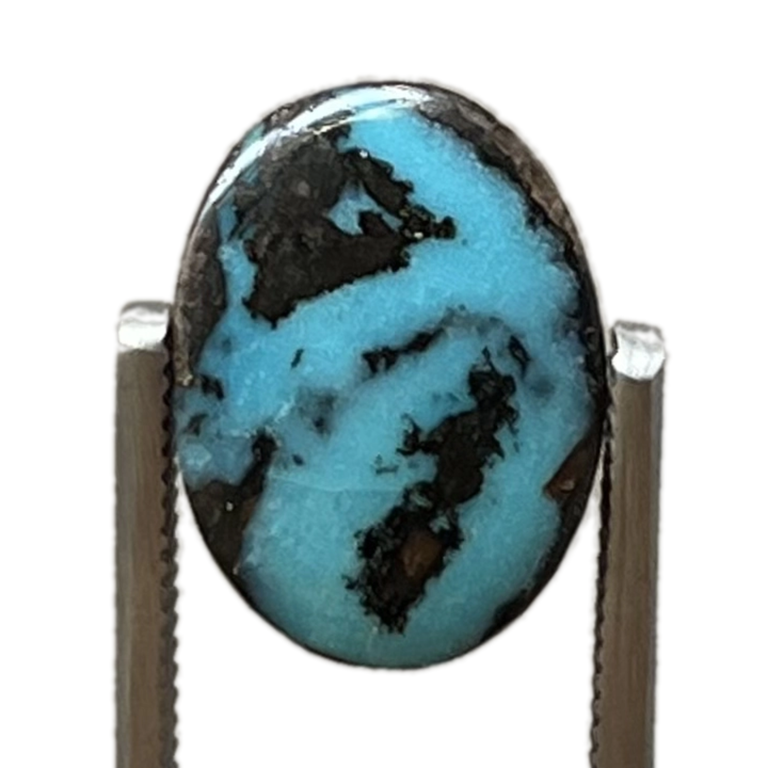
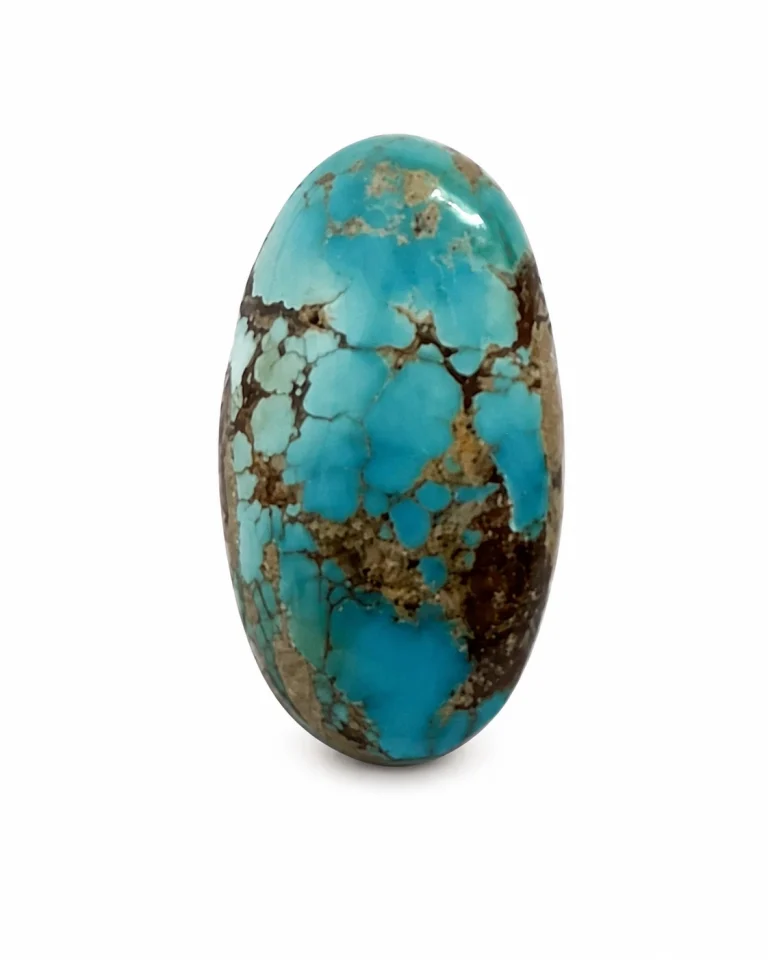
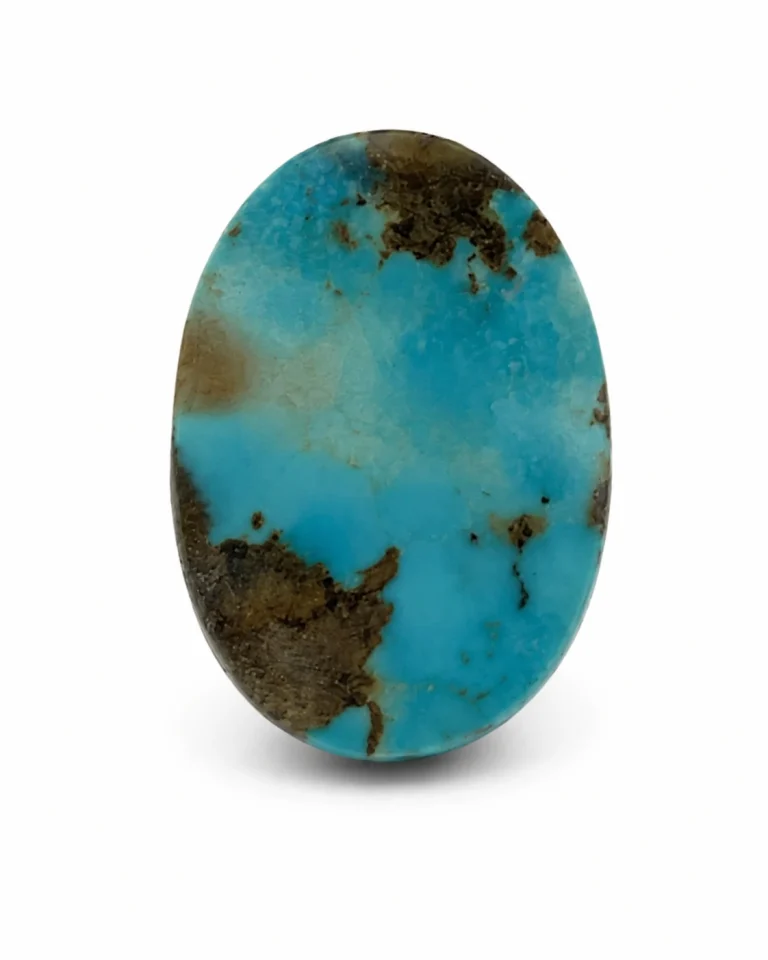
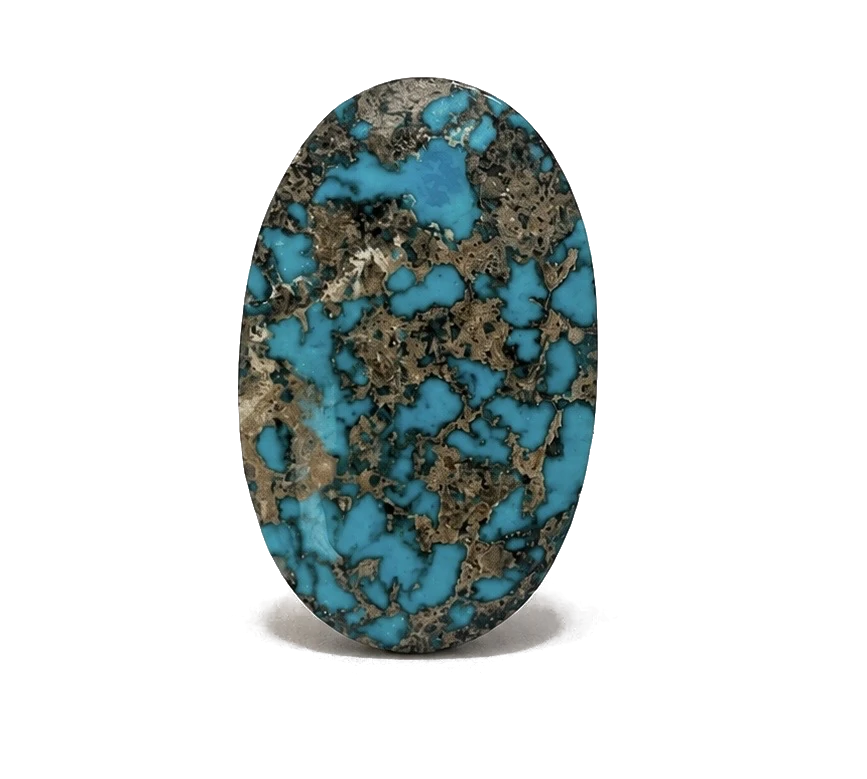
Colour, matrix pattern, polish, translucency and surface feel can guide questions, but they cannot independently confirm treatment, mine origin or authenticity. Avoid scratch, heat, solvent or chemical “tests” at home: they can damage a cabochon and may still produce an unreliable conclusion. Our guide to reading turquoise photographs explains what images can—and cannot—show. For the broader buyer framework, see natural turquoise, treated material and imitations.
Questions to ask before sending a stone
- What exact question will the examination answer: material identity, treatment, origin, or more than one?
- Will testing be non-destructive, or could it require contact, sampling or removal of material?
- Will the report identify the tested item clearly and state methods, findings and limitations?
- Does “no evidence detected” apply to a named treatment only, or to a broader set of treatments?
- If geographic origin matters, does the laboratory offer that opinion for turquoise and state it explicitly?
For an independent report, contact the laboratory before shipping; do not assume every laboratory offers every test or origin opinion.
How to use this when buying online
Start with the exact stone identity, its current photographs and written record. Check whether a laboratory report is actually supplied and what it says. If it is not, treat the seller’s documented origin and treatment statements as seller statements—not as an independent lab conclusion. NEYFI’s Stone Record guide explains how to read product documentation, and المجموعات shows the currently listed one-of-one stones and their individual records.
The practical rule is simple: use photographs to observe, records to compare, and a qualified laboratory when a technical conclusion matters. Keep each kind of evidence in its proper place.
Sources
- GIA: Infrared Spectroscopy and Its Use in Gemology
- GIA: Turquoise Identification by Infrared Spectroscopy and X-Ray Diffraction
- GIA: Identification of Zachery-Treated Turquoise
- GIA: Technical Evolution and Identification of Resin-Filled Turquoise
- GIA: Composition and Spectral Characteristics of Porcelain-Treated Turquoise
From the field notes
See the stones behind the material.
A field note is the beginning. Compare individual Neyshabur stones with their own documentary images, Stone IDs and EUR availability.