Choosing a turquoise cabochon for a ring, pendant or custom jewellery project is not only a question of colour. The stone’s length, width, thickness and dome profile affect how it sits in a setting, how much metal surrounds it and how its documented character reads at wearing distance.
This guide gives jewellery designers and collectors a practical way to read those dimensions before commissioning a setting. The measurements below come from the individual NEYFI Stone Records linked to each stone.
Why turquoise cabochon dimensions matter
Two stones with a similar face shape can behave very differently in a finished piece. Length and width determine the footprint seen from above. Thickness influences the depth available to the setting and the transition between the stone and the shank, bezel or pendant back. Dome profile changes the visual height and the way light moves across the polished face.
For a custom project, treat dimensions as a starting boundary rather than a promise that a stone will fit every setting. The jeweller should confirm the final seat, tolerance and construction after reviewing the complete Stone Record and the physical stone.
Read the four measurements together
- Length and width: describe the visible footprint and help establish proportion within a ring or pendant.
- Thickness: helps the maker plan the depth of the bezel, gallery or back structure.
- Dome profile: indicates how much the polished face rises above the setting.
- Shape: affects orientation, symmetry and how the design frames the stone.
Three documented stones, three design conversations
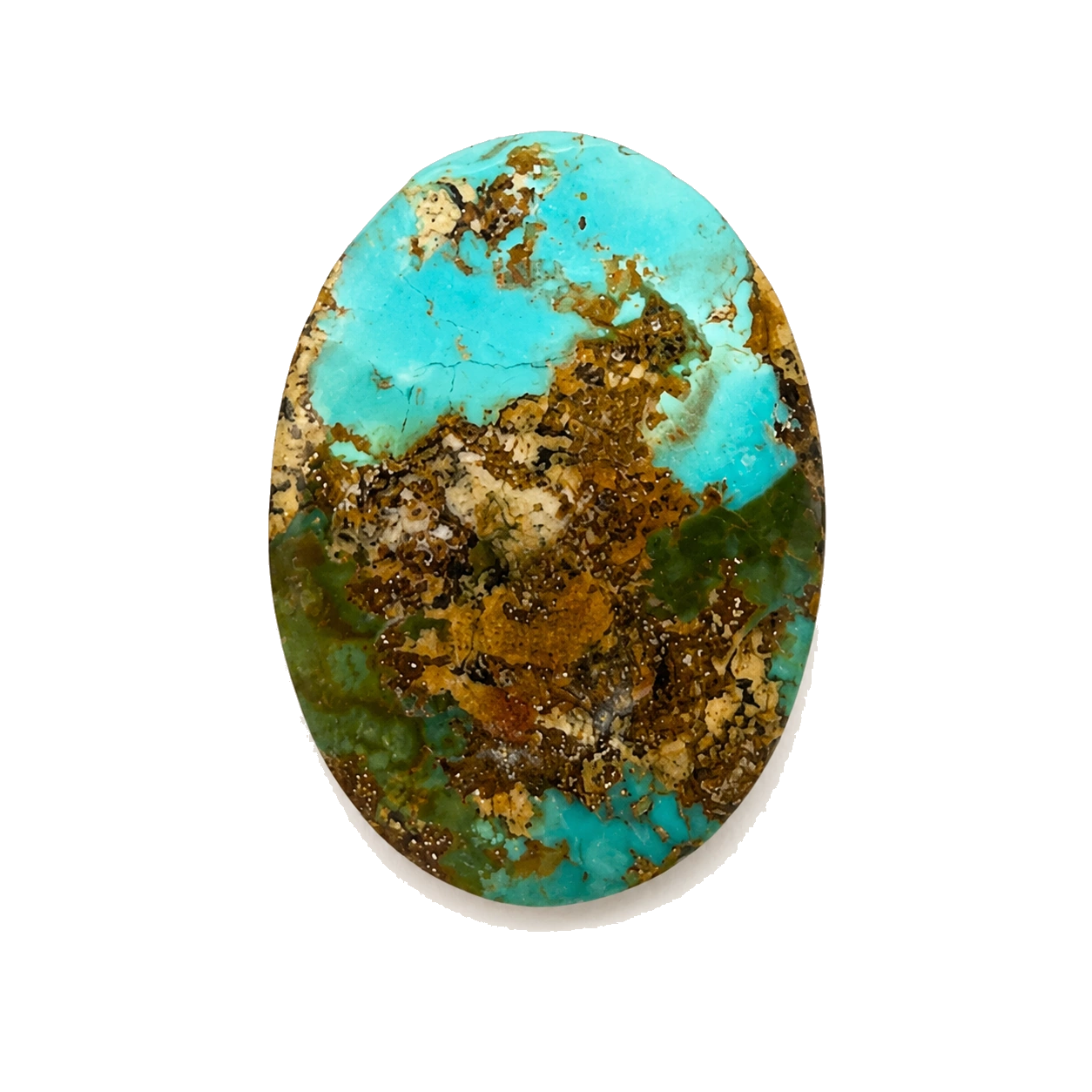
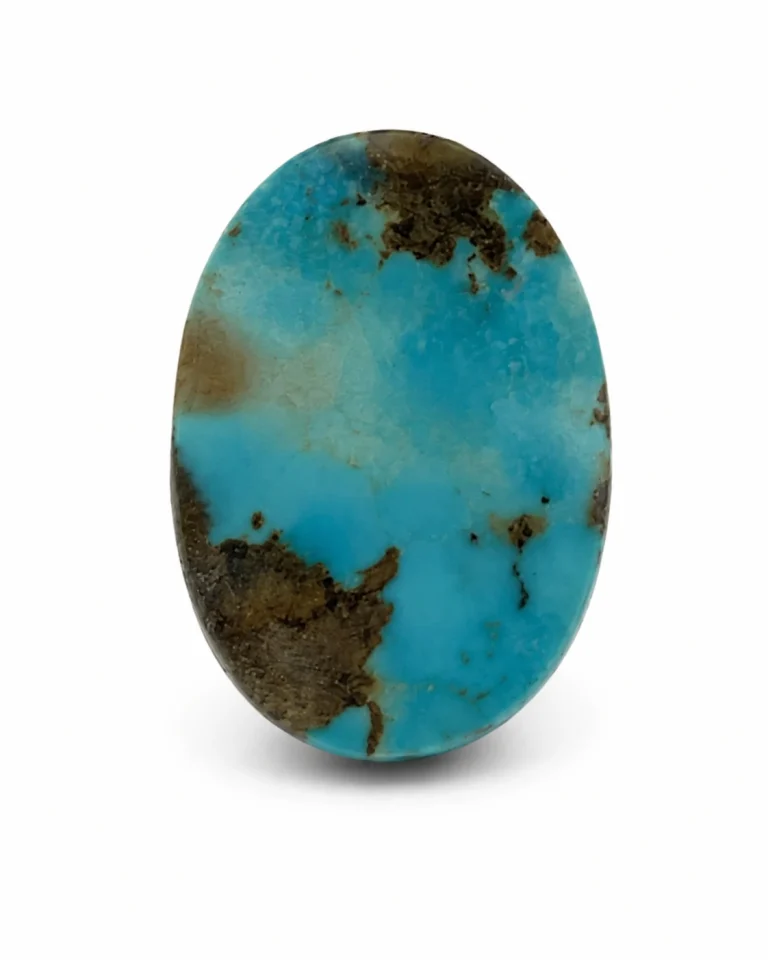
NEYFI 1014 has a broad oval footprint and a low profile. Its 29 × 21 mm face gives a designer a substantial horizontal canvas, while the 5 mm thickness and low dome keep the silhouette comparatively controlled. The Stone Record documents a vivid turquoise-blue upper field, cream-ochre-brown mosaic matrix and natural green mineral zones. For a project, the key question is how much of that face should remain visible inside the chosen bezel or frame.
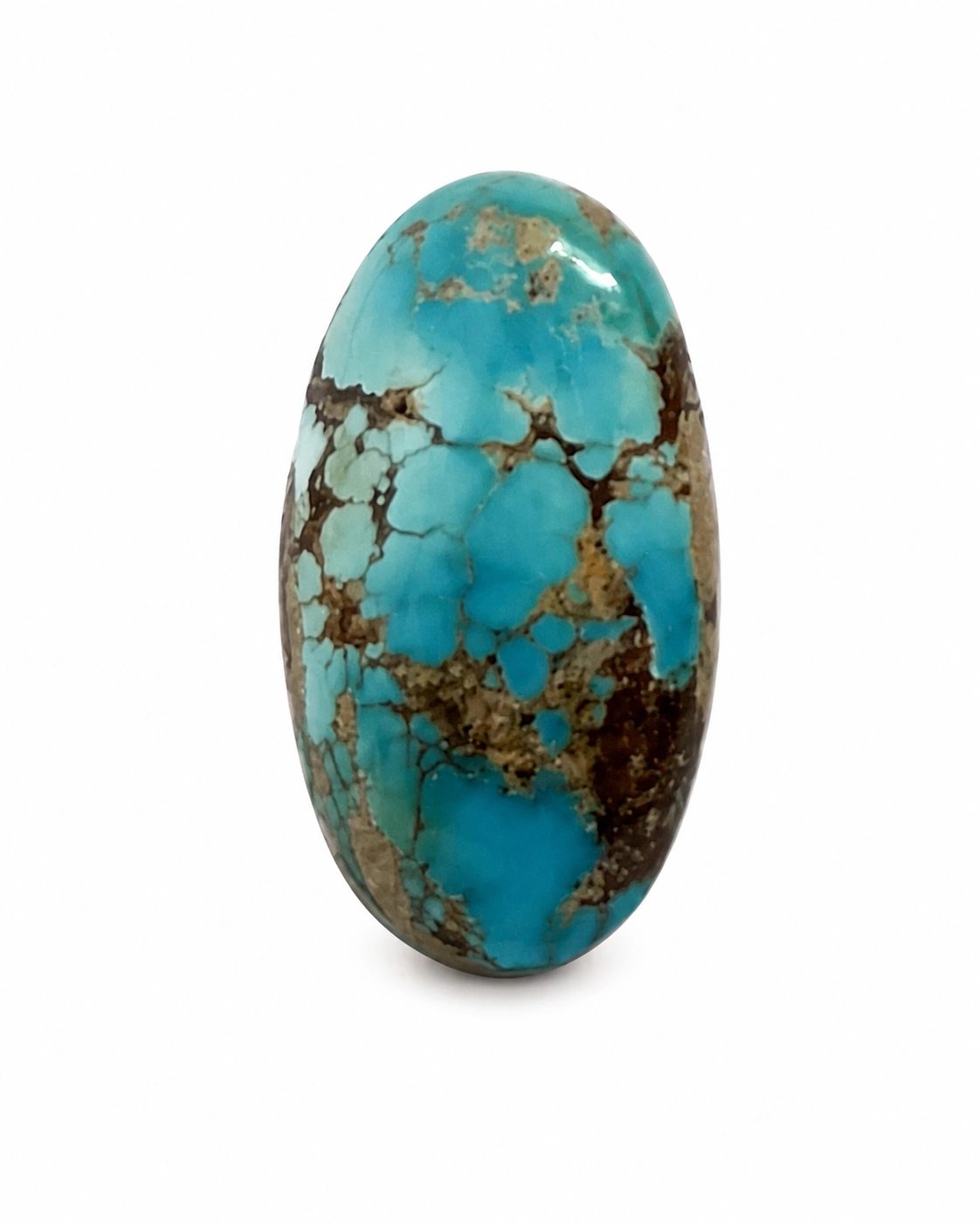
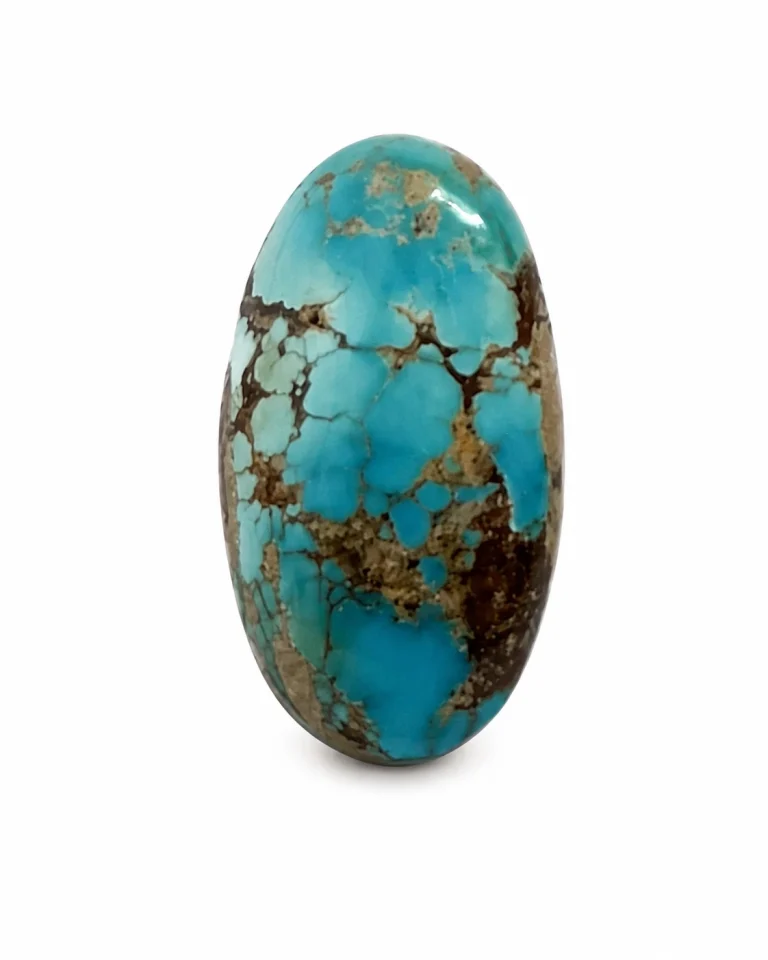
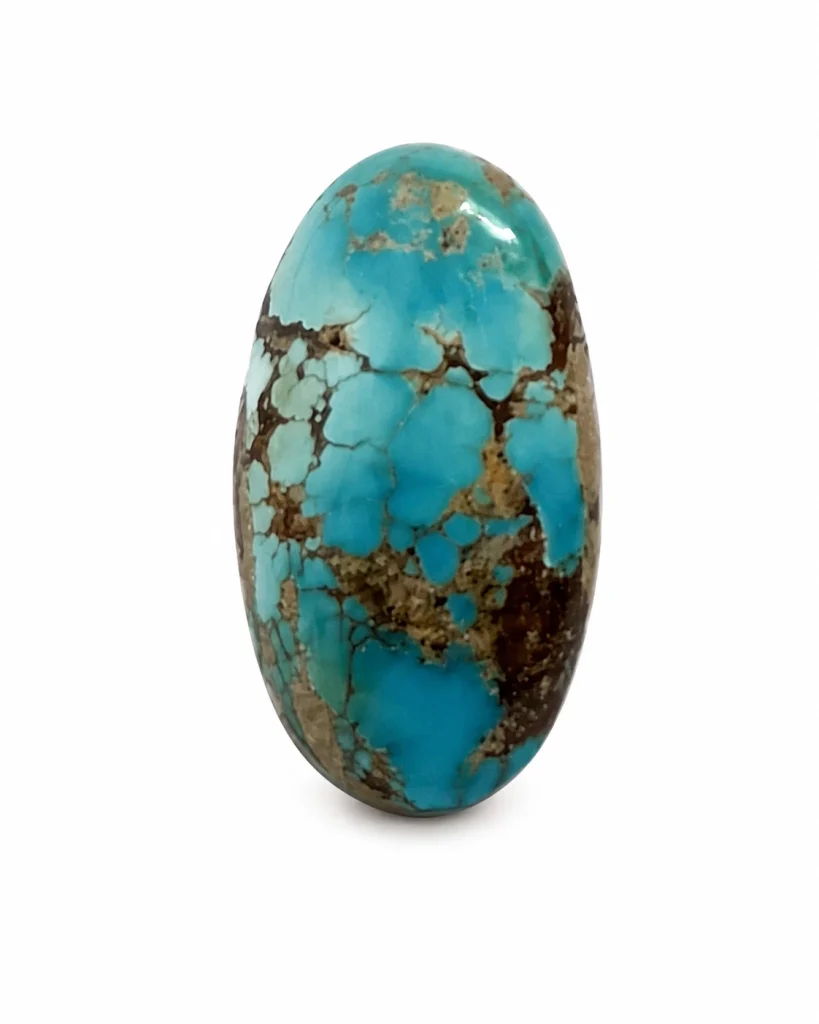
NEYFI 1024 is narrower and more elongated at 22 × 11 mm. Its medium dome and 8 mm thickness create a different construction brief from a low-dome oval. The recorded cream, grey and brown host-rock mosaic is part of the stone’s visible identity, so the setting should be planned around the actual outline rather than an assumed standard oval.
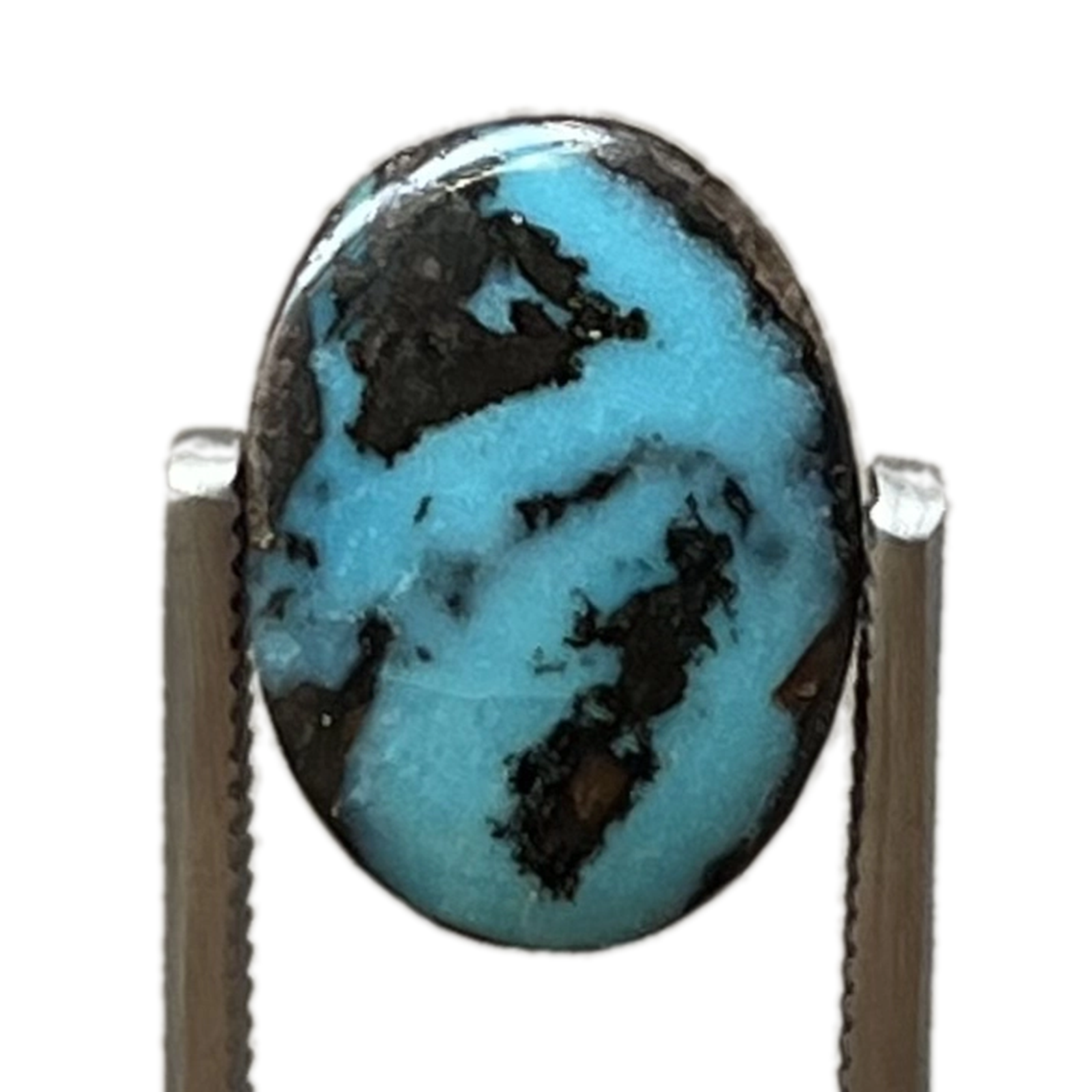
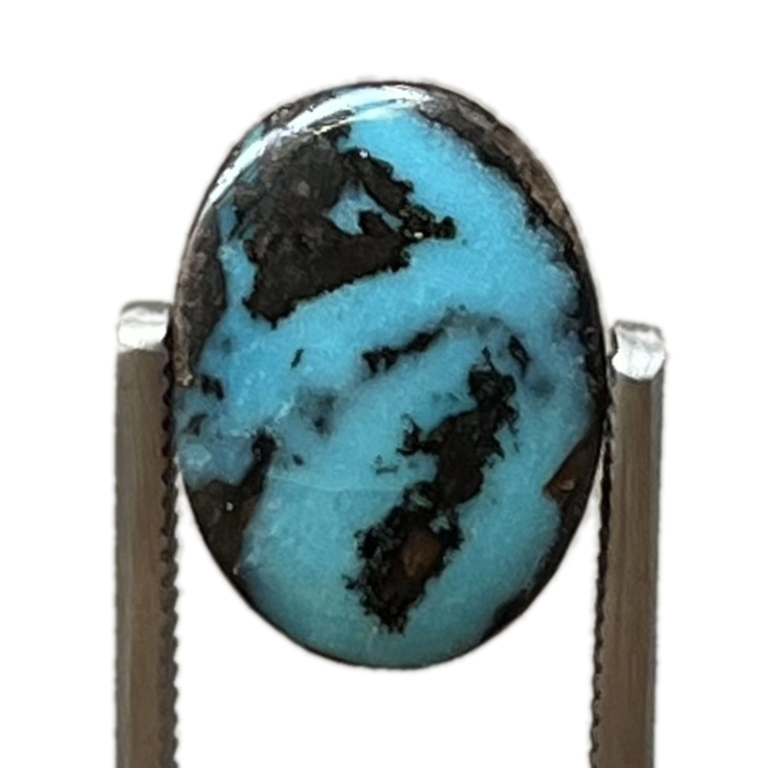
NEYFI 1030 sits between the other two examples in overall footprint, with a 20 × 14 mm oval face, 5 mm thickness and low dome. Its documented bright blue-cyan field and dark brown-black matrix-rich mixed pattern should be assessed as an individual composition. The most useful design decision is not whether the stone is “better” than another shape, but whether its documented scale and pattern suit the intended piece.
A pre-setting checklist for designers
- Start with the exact Stone Record, not a generic product category.
- Mark the stone’s length, width and thickness on the project brief.
- Confirm whether the dome is low, medium or another documented profile.
- Decide how much of the face and edge should remain visible.
- Ask the jeweller to confirm the setting after inspecting the actual stone.
- Keep the product URL and Record link with the project file so the stone identity remains attached to the design.
To compare current one-of-one stones, visit NEYFI Collections. For a jewellery project with a defined shape, size or quantity brief, use Professional Turquoise Sourcing. For a deeper look at matrix selection, read How to Choose Matrix-Rich Turquoise for Jewellery.
From the field notes
See the stones behind the material.
A field note is the beginning. Compare individual Neyshabur stones with their own documentary images, Stone IDs and EUR availability.