Matrix-rich turquoise is selected for its geological character as much as for its blue or green body colour. For a jewellery designer, the practical task is to understand how the documented matrix pattern, contrast and stone shape will behave inside a setting and next to metal.
Every one-of-one stone should be assessed as an individual surface. The examples below use NEYFI Stone Record information and real documentary images so a design brief can begin with evidence rather than a generic grade label.
What “matrix-rich” should mean in a design brief
Matrix is the visible host-rock or mineral pattern recorded in a stone. “Rich” is not a universal quality grade. It describes a stronger visual presence of the matrix within the face, and its usefulness depends on the composition, scale and intention of the finished piece.
Before choosing a stone, separate three questions: what colour field is documented, what kind of matrix is documented, and how is that pattern distributed across the actual face? A short product label cannot replace the Stone Record and the image set.
Three ways to compare matrix for jewellery
- Contrast: Does the matrix create a clear visual relationship with the turquoise field and the planned metal?
- Movement: Does the pattern read as a network, islands, bands or another documented arrangement?
- Scale: Will the pattern remain legible at the size and distance of the finished ring, pendant or object?
Documented examples from NEYFI
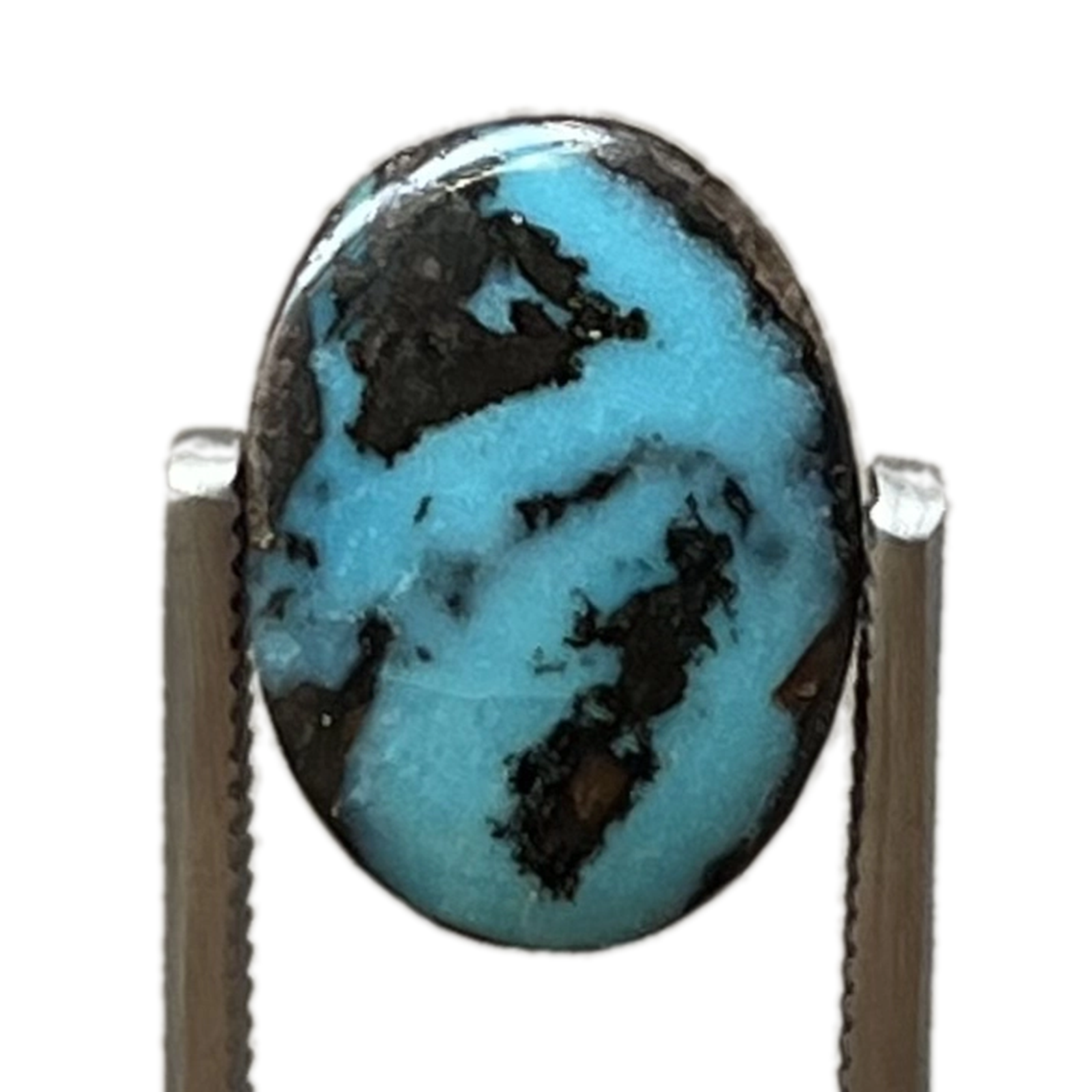
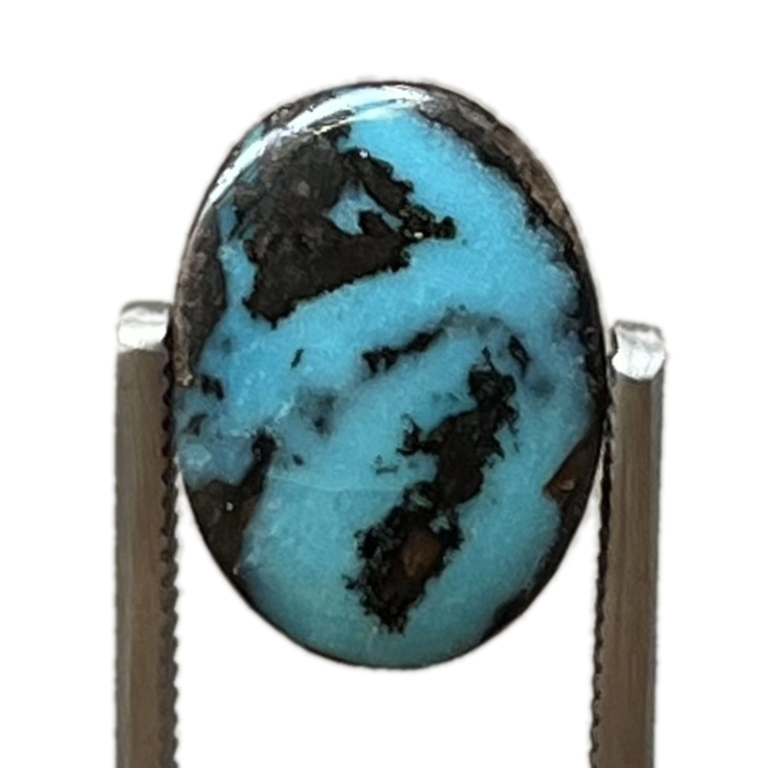
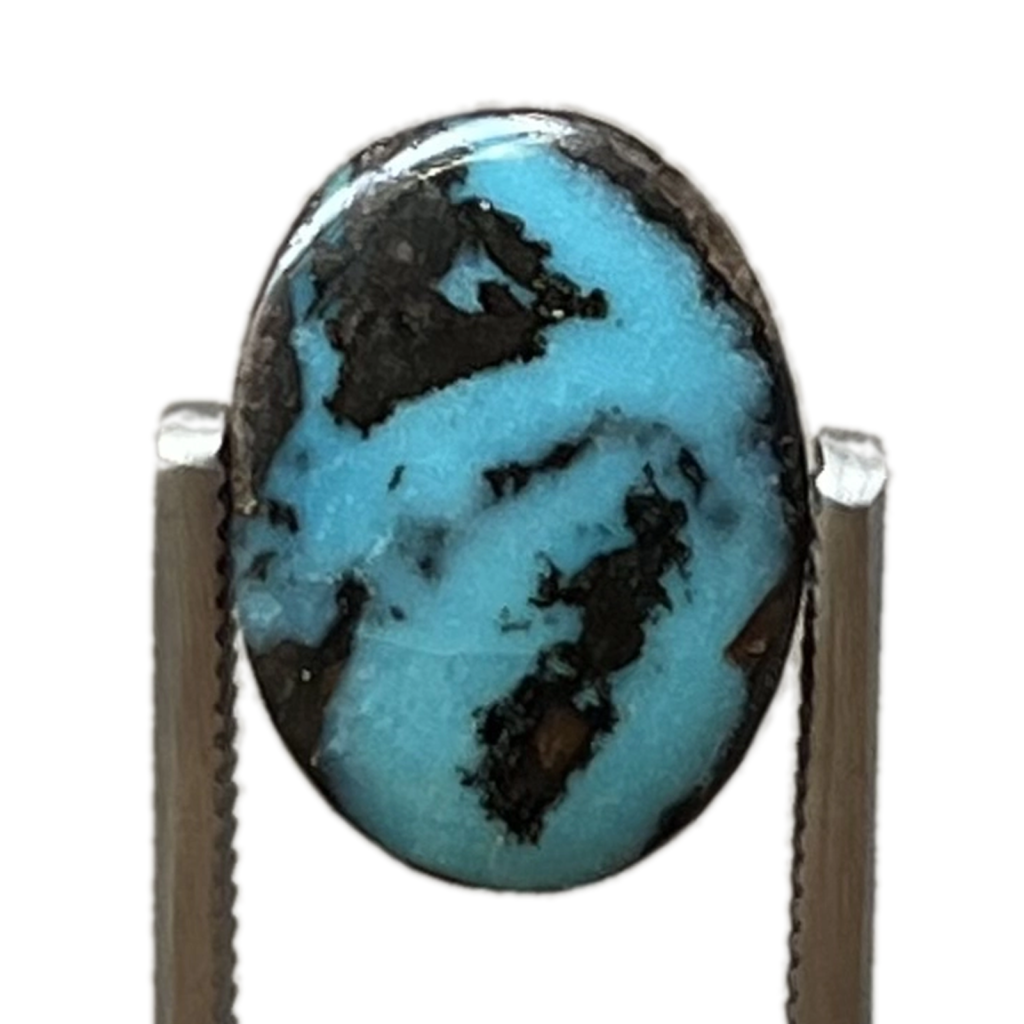
NEYFI 1030 offers a compact oval footprint with a low dome. Its recorded bright blue-cyan field and dark brown-black matrix-rich mixed pattern create a high-contrast starting point for a designer. The right setting question is how much of the dark pattern should stay visible around the centre of the face, not whether the matrix should be treated as an imperfection.
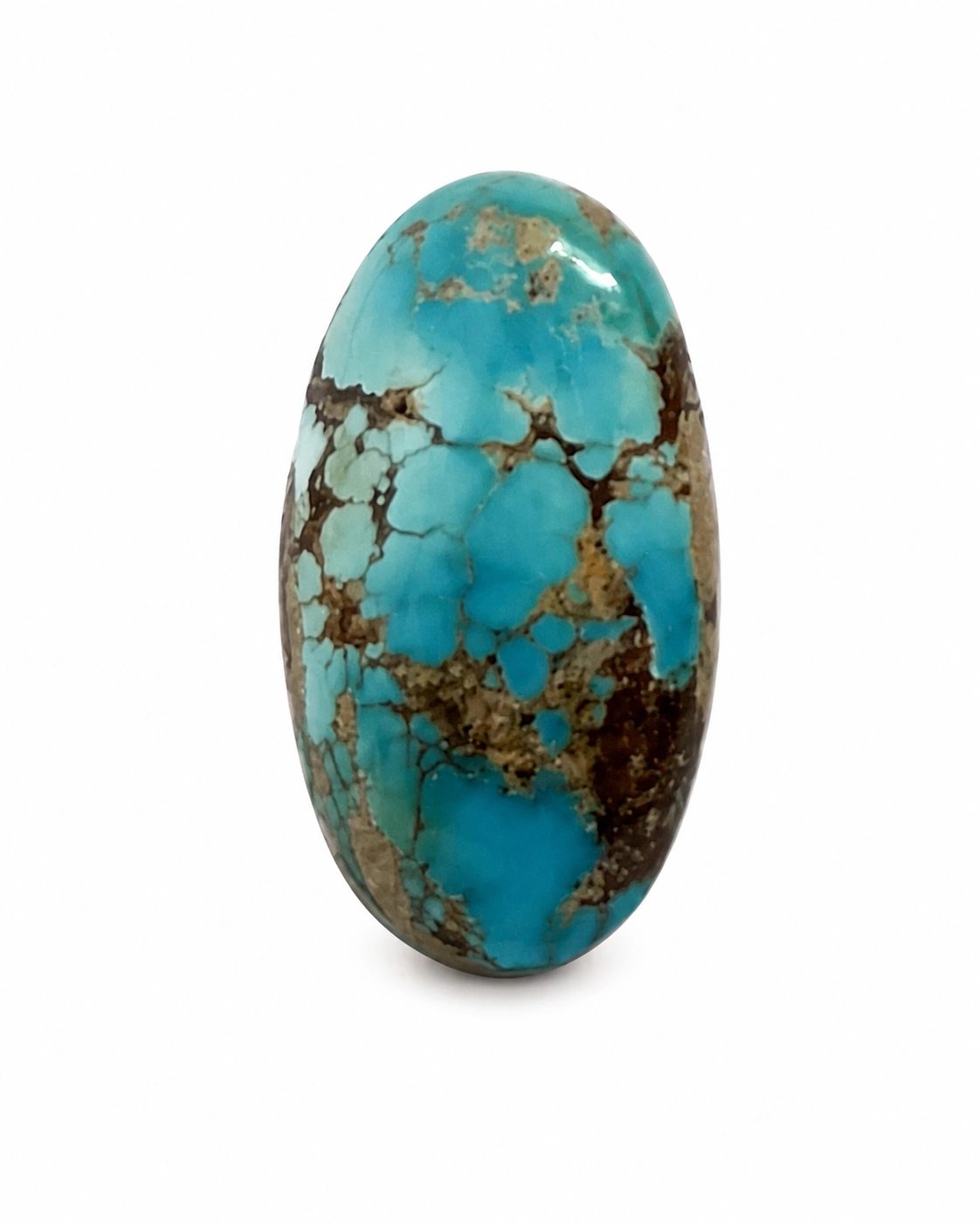
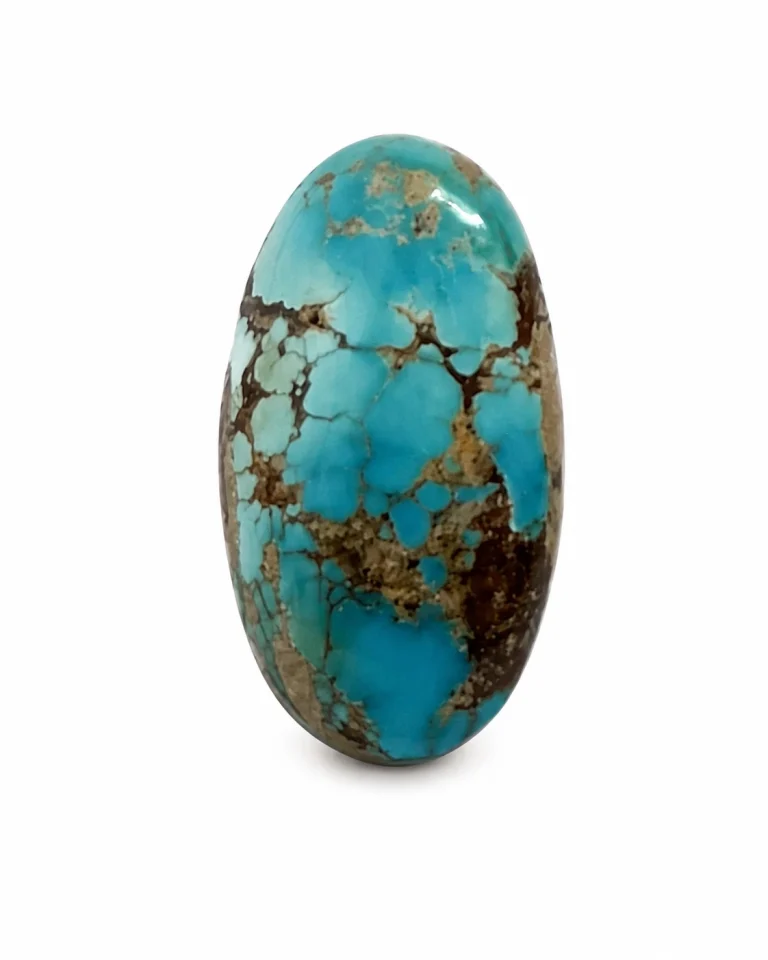
NEYFI 1024 presents a narrower elongated outline and a medium dome. Its cream, grey and brown host-rock mosaic is distributed across the polished face. That longer silhouette may suit a vertical pendant or an elongated ring composition, but the maker should work from the exact stone outline and the complete profile images before finalising a seat.
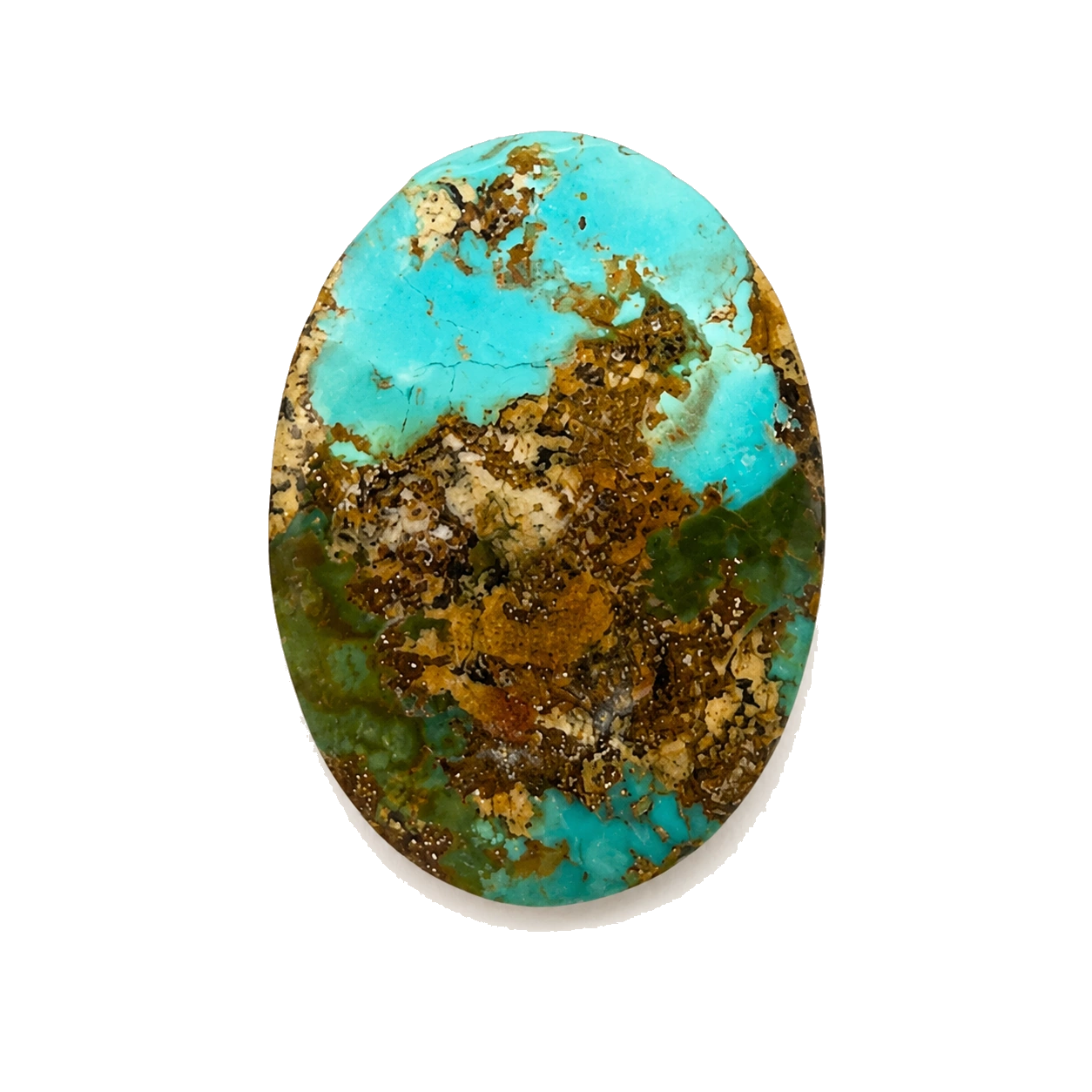
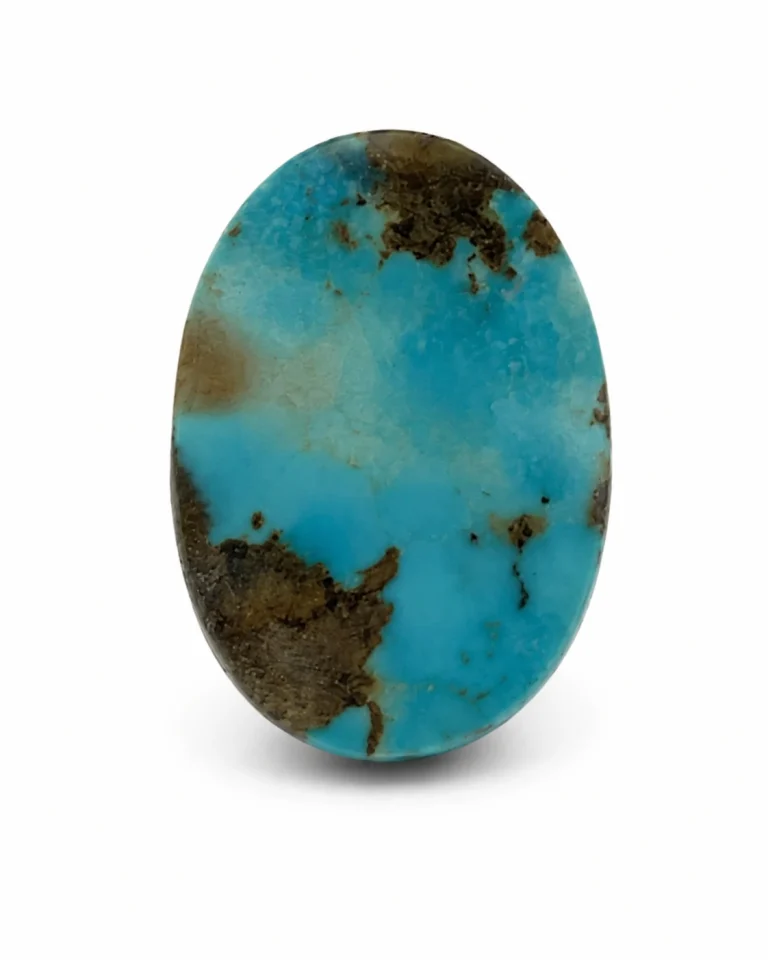
NEYFI 1014 gives a broader face and a low dome. The documented mosaic matrix and natural green mineral zones make the surface a larger visual field for a statement design. A broad stone like this can reward a setting that leaves enough of the face open for the pattern to remain readable.
How to match matrix to a setting
- Choose the visual scale first: small accent, centre stone or statement surface.
- Use the face image to study the pattern, then use profile and reverse views to plan construction.
- Decide whether the metal should echo the matrix contrast or provide a quiet frame.
- Keep the stone’s documented identity, dimensions and Record link in the commission brief.
- Ask the maker to inspect the physical stone before the final seat is made.
Do not reduce a one-of-one stone to a grade label
Matrix-rich, clean, blue or green are useful descriptive starting points, but they do not fully describe a unique stone. A responsible purchase decision considers the complete record: identity, dimensions, treatment status, origin information, images and the actual availability of the individual piece.
Browse the current NEYFI Collections to compare one-of-one stones. If you are sourcing for a collection, a specific setting or a larger jewellery brief, send the requirements through Professional Turquoise Sourcing. For a practical sizing framework, read Turquoise Cabochon Dimensions for Jewellery Design.
From the field notes
See the stones behind the material.
A field note is the beginning. Compare individual Neyshabur stones with their own documentary images, Stone IDs and EUR availability.