هذا هو النص الإنجليزي الأصلي؛ لا تتوفر حاليًا ترجمة عربية مُراجَعة لهذا الإصدار.
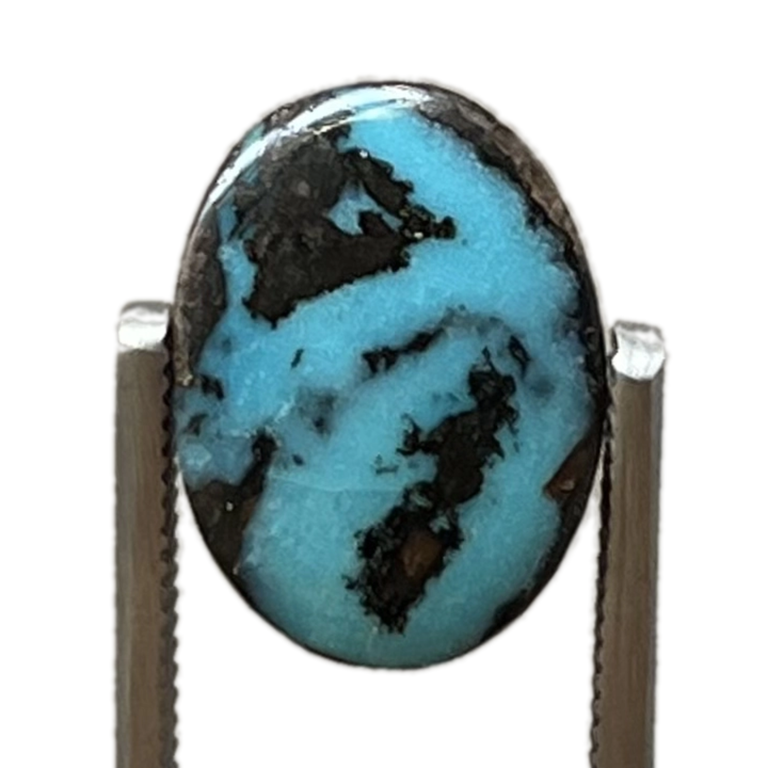
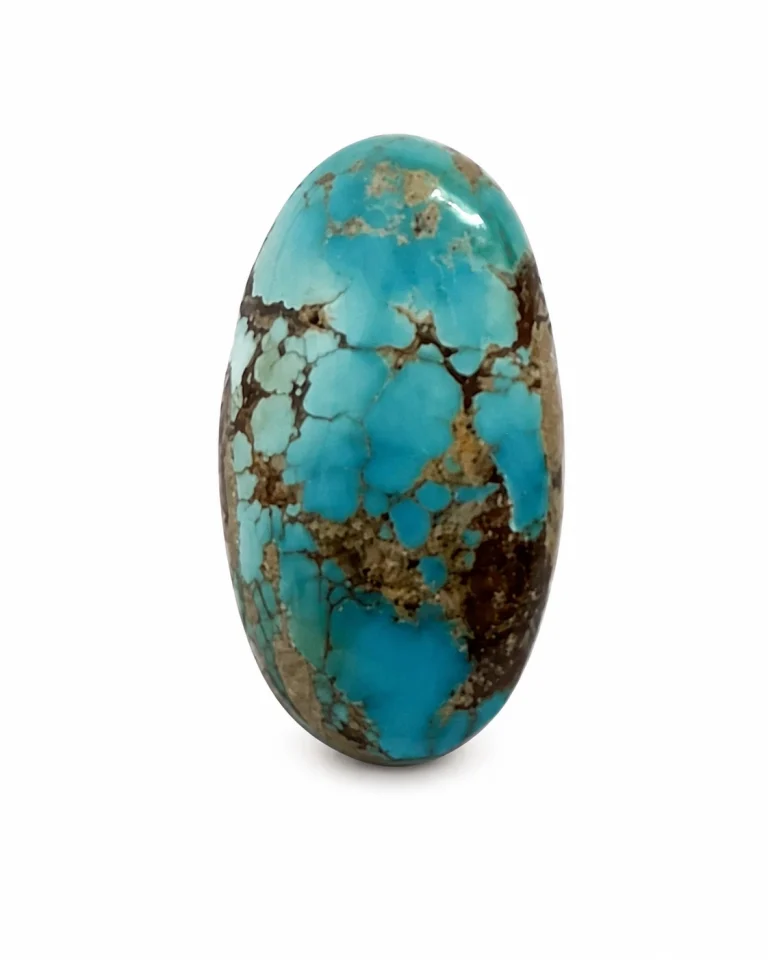
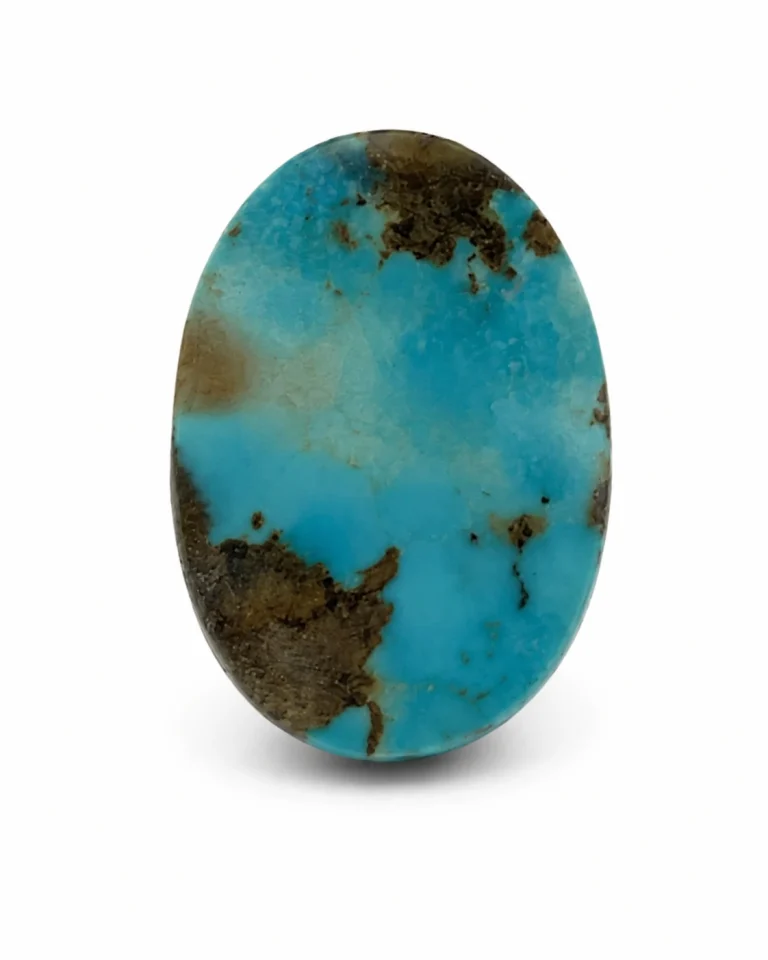
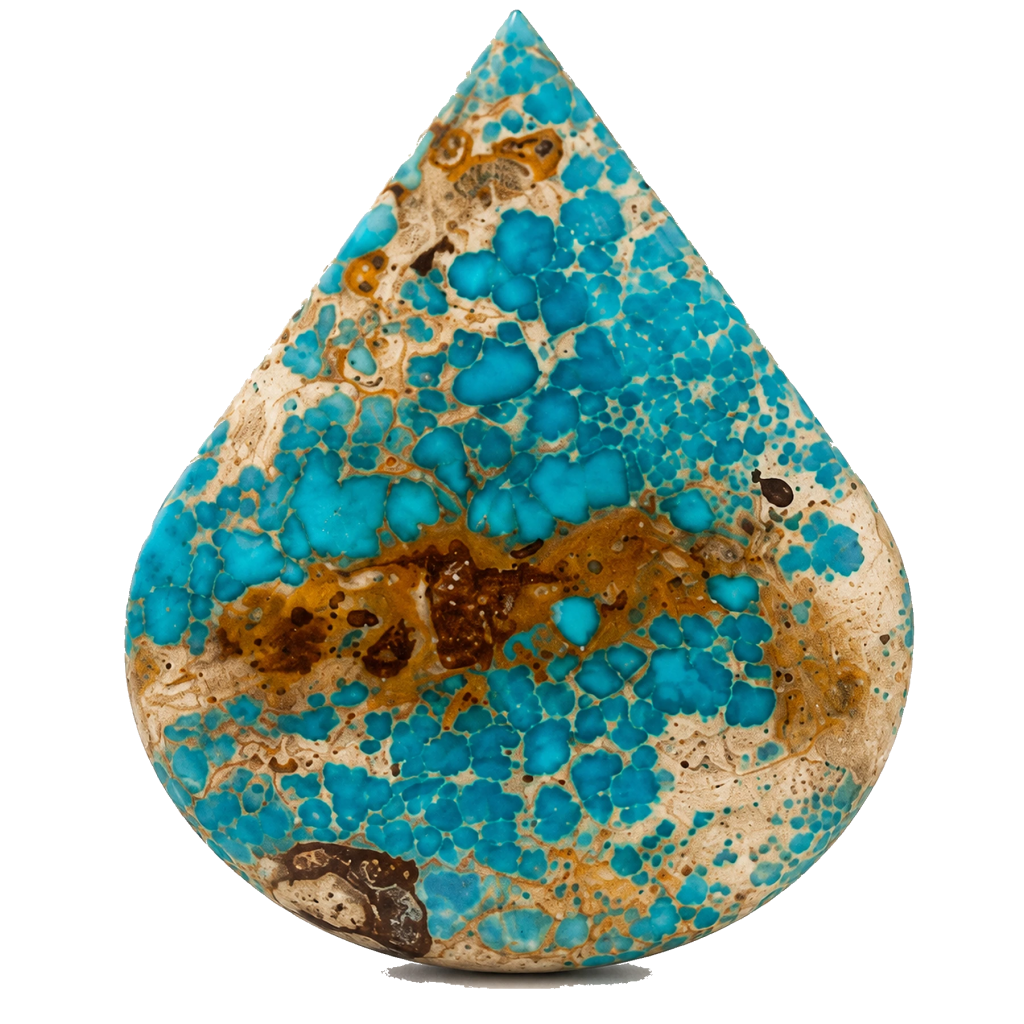
Three stones, three different readings of Neyshabur turquoise. A teardrop with a broad, open blue field; an oval whose dense, dark matrix forms a close network; and an elongated cabochon with a striking contrast between its face and reverse. This visual comparison looks closely at NEYFI stones 1001, 1002 and 1004 using their individual product records—not as interchangeable examples, but as distinct one-of-one objects.
How to read this comparison
Turquoise is a natural material: color, matrix, outline, thickness and surface character vary from stone to stone. The descriptions below refer to the documented appearance and measurements of these three individual stones. They are not a laboratory grading, a guarantee that another stone will match, or a claim that one pattern is objectively superior.
Matrix is the host-rock pattern visible within or across turquoise. Its amount and contrast can change how a stone reads at a glance: broad uninterrupted color may feel calm and graphic, while a dense network may create a more intricate, geological character. Neither description determines durability or treatment.
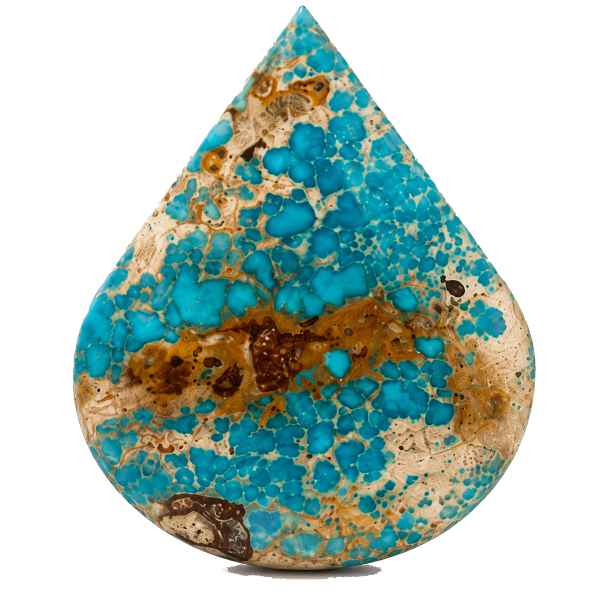
NEYFI 1001 — an open, vivid teardrop
Stone 1001 is a teardrop-shaped, flat cabochon measuring approximately 29 × 24 × 6 mm and weighing 28.45 ct (5.69 g), according to its current product record. Its face presents vivid blue-cyan turquoise with contrasting cream, ochre, golden-brown and darker matrix areas. The tapered outline gives it a natural direction, while the relatively flat profile may suit designs where a lower setting is preferred; a jeweller should confirm setting compatibility against the measured stone.
What makes it distinctive: the combination of a recognisable teardrop silhouette and a broad turquoise field interrupted by contrasting matrix. Consider it when a design needs an asymmetric focal stone rather than a conventional oval.
See NEYFI 1001’s images, measurements and availability.
NEYFI 1002 — a close network of turquoise and matrix
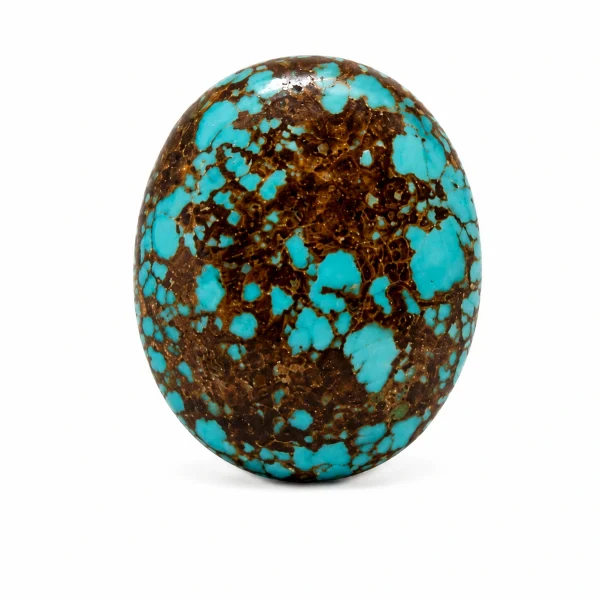
Stone 1002 is an oval, medium-dome cabochon recorded at approximately 27 × 23 × 12 mm and 60.65 ct (12.13 g). The face combines vivid turquoise islands with a dense dark-brown and golden-brown matrix network; its reverse is described in the record as more matrix-dominant. The visual change between sides is part of this particular stone’s character, so review the full image set before deciding which face best serves a design.
What makes it distinctive: a compact oval outline paired with a strongly patterned face and a contrasting reverse. It may appeal to a designer seeking a highly textured focal point. Its depth is greater than that of 1001; allow the measured dome and setting construction to guide the design.
See NEYFI 1002’s full record and image set.
NEYFI 1004 — an elongated form with two visual faces
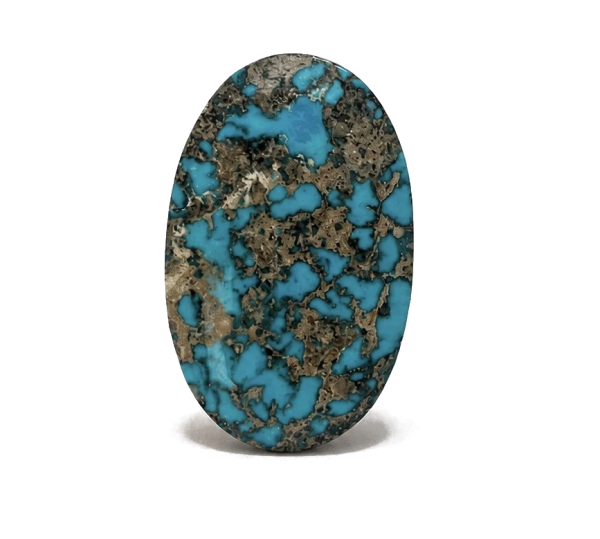
Stone 1004 is an elongated oval, medium-dome cabochon measuring approximately 35 × 15 × 10 mm and weighing 60 ct (12 g), as listed in its product record. Its blue-cyan face is intersected by taupe, brown and charcoal matrix, while the reverse offers a more matrix-dominant contrast. The long, narrow proportions give it a different design role from the more compact 1002: it can establish a vertical or horizontal line, depending on orientation.
What makes it distinctive: its elongated silhouette and the contrast between its two documented faces. Check the complete photographs and dimensions when planning a bezel, pendant or other custom setting.
See NEYFI 1004’s images, measurements and availability.
At a glance
| Stone | Recorded form | Recorded size | Recorded weight | Visual distinction |
|---|---|---|---|---|
| 1001 | Flat teardrop cabochon | 29 × 24 × 6 mm | 28.45 ct / 5.69 g | Vivid blue-cyan field with contrasting matrix |
| 1002 | Oval, medium dome | 27 × 23 × 12 mm | 60.65 ct / 12.13 g | Dense matrix network; more matrix-dominant reverse |
| 1004 | Elongated oval, medium dome | 35 × 15 × 10 mm | 60 ct / 12 g | Elongated outline; contrasting face and reverse |
Measurements and weights are transcribed from the individual product records and should be checked there for the latest availability and full photo set. Carat weight is a mass measure; it does not by itself describe a stone’s face-up dimensions, quality or value.
Choosing by design brief
Use this quick checklist before choosing a stone for a commission:
- Check the measurements, not just the carat weight. Compare face-up length and width, then confirm depth against your setting design.
- Review more than the hero photograph. Inspect the face, reverse and profile in each individual product record.
- Choose the pattern for the design. Decide whether you want an open turquoise field, a denser matrix network or a long directional outline; these are visual preferences, not grades.
- Confirm purchase details directly on the product record. Availability, current price, shipping total and any independent report should be checked before ordering.
- For a tapered, directional silhouette: compare 1001.
- For a compact oval with dense patterning and a notably different reverse: compare 1002.
- For a long, narrow focal form: compare 1004.
For a like-for-like review, compare each stone’s full-resolution face and reverse images, measurements, depth and current product details. Start with the current NEYFI collection, or use Find a Stone to explore by documented visual references. For a considered multi-stone brief, see Professional Sourcing.
Origin, treatment and what the record can—and cannot—establish
NEYFI identifies these pieces as Neyshabur turquoise in their individual product records. The treatment wording shown in a product record is NEYFI’s internal assessment; it is not a substitute for an independent gem laboratory report. Appearance alone cannot establish every treatment. For general background, the Gemological Institute of America’s research on identifying Zachery-treated turquoise explains why specialist testing may be necessary in some cases. Buyers who require independent verification should request an appropriate report before purchase.
Any internal NEYFI index shown on a product page is an editorial/operational aid, not an independent gemological grade, laboratory result or universal ranking. This comparison does not use it to claim that one stone is objectively “best.”
Explore the three individual records
Each stone is a distinct object; photographs and measurements belong to that stone and are not promises of an identical replacement. Review the current record before purchase:
Further reading
- How to read a turquoise stone record before you buy
- Turquoise cabochon dimensions for jewellery design
- Turquoise matrix patterns explained
From the field notes
See the stones behind the material.
A field note is the beginning. Compare individual Neyshabur stones with their own documentary images, Stone IDs and EUR availability.