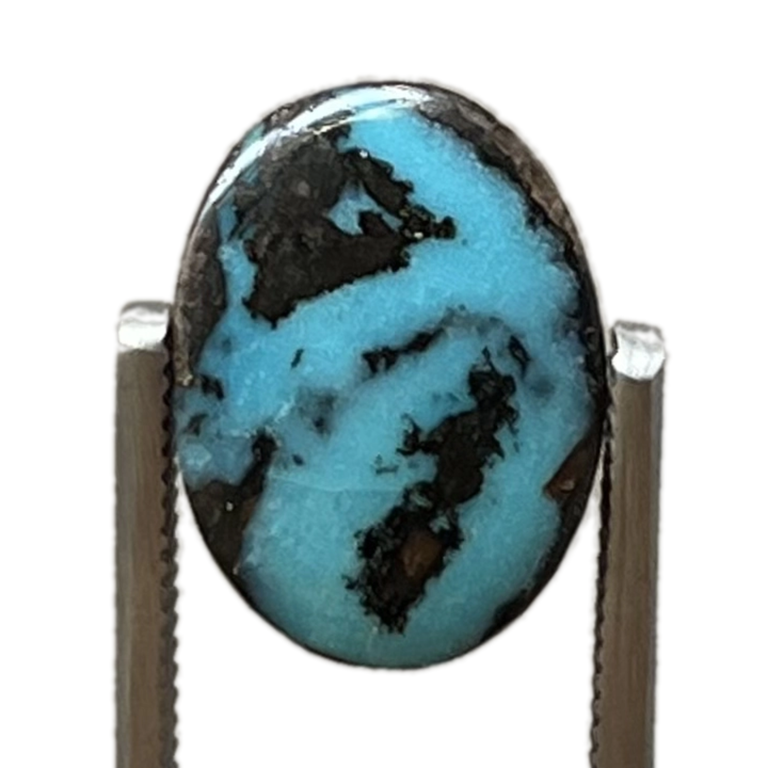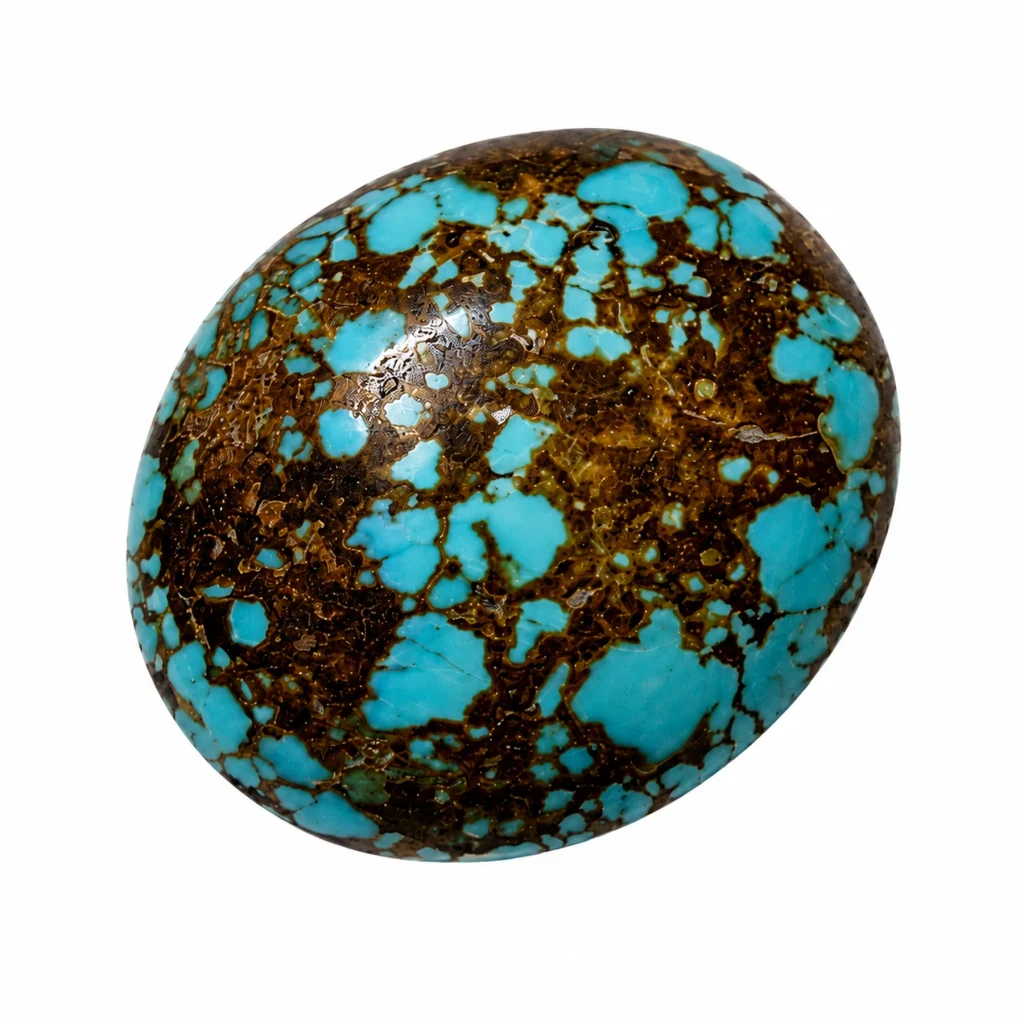
Can turquoise be worn in a ring? Yes, with a setting and wearing habits that respect the stone. Turquoise is not a “wear anywhere” gem. The useful question for a buyer or jeweller is whether a particular cabochon, setting and way of wearing it work together.
The Gemological Institute of America (GIA) reports a Mohs hardness of 5–6 for turquoise and describes its toughness as generally fair to good. Hardness concerns scratching; toughness concerns resistance to breakage. Neither number alone tells you how an individual stone will perform in a finished ring.
Why a ring asks more of turquoise
A ring meets desks, door frames, tools, water and skin products more often than a pendant. An exposed dome or edge is easier to knock. Turquoise can also be discoloured by high heat, chemicals, cosmetics, skin oils and perspiration, according to GIA. That does not make a ring impossible; it makes the design brief and care routine important.
A practical approach is to reserve a turquoise ring for considered wear, remove it before household cleaning, sport and manual work, and store it separately from harder jewellery. If the design is intended for frequent wear, ask the maker to evaluate the actual stone and protect its edge. Those are design precautions, not a guarantee against damage.
Read the individual stone before drawing the setting
“Oval turquoise” is not a sufficient specification for a custom ring. The stone record should give an exact identity, dimensions, weight, shape, documented views and treatment statement. A maker still needs to inspect the physical stone for the final seat, edge and construction. The recorded dimensions establish a starting envelope, not a promise of fit.
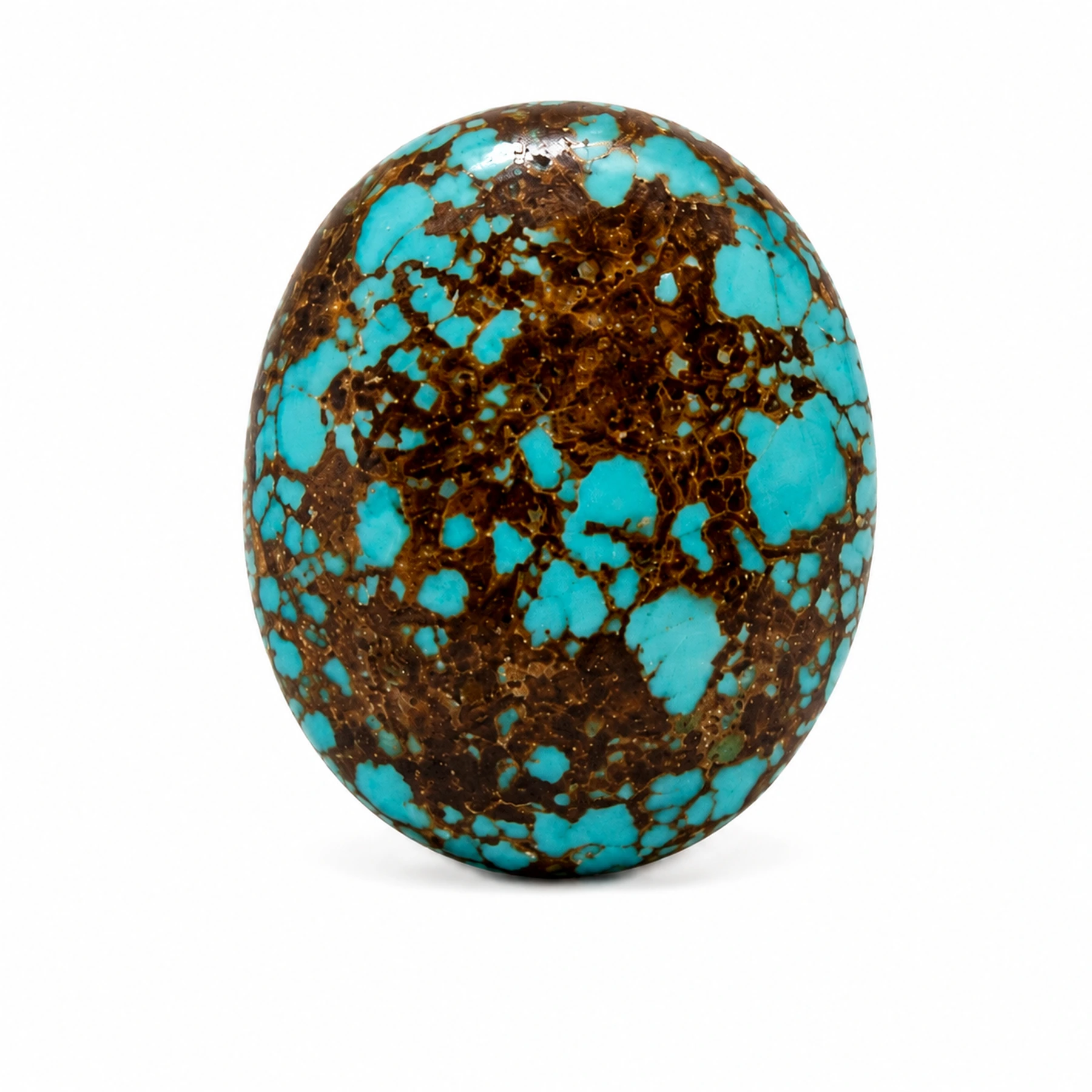
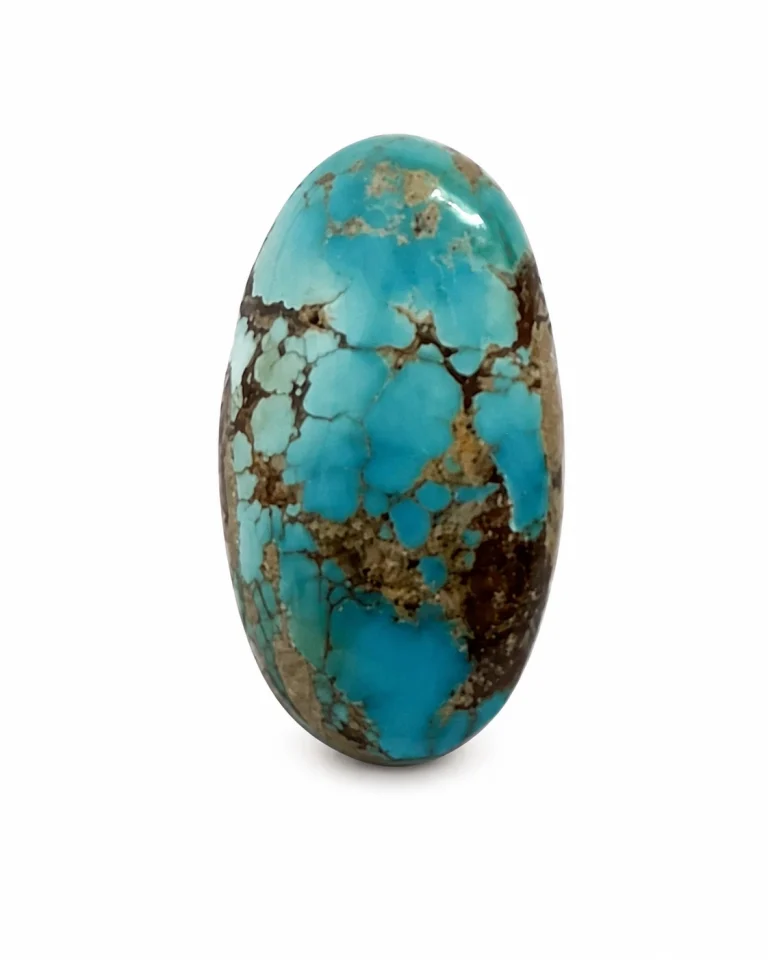
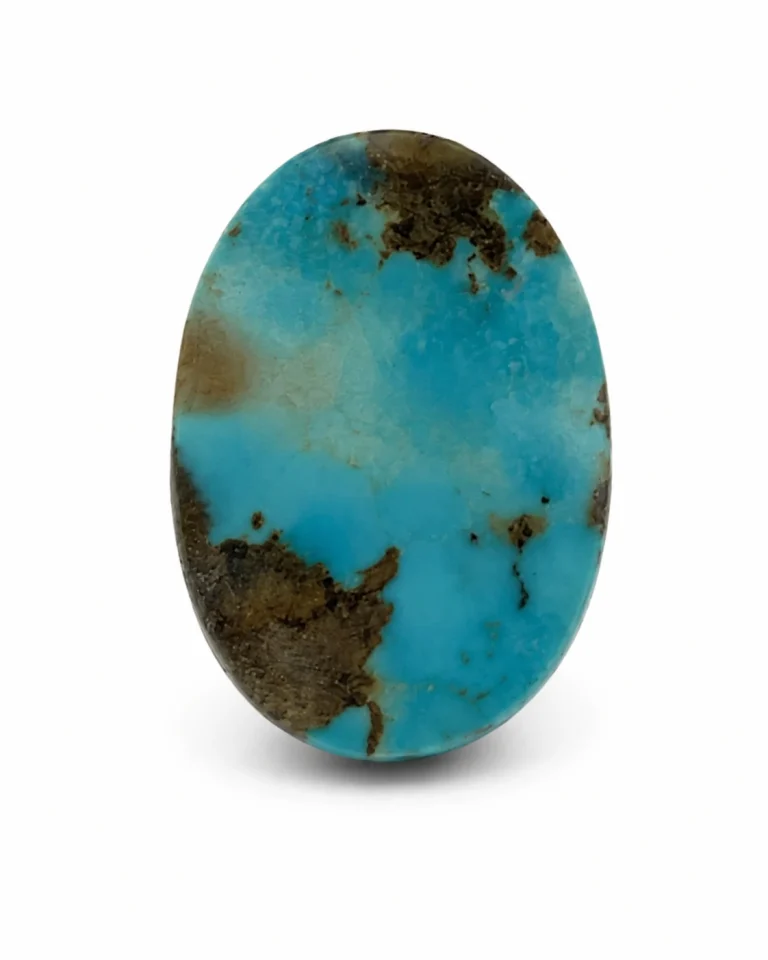
For NEYFI 1002, the 12 mm thickness matters as much as the 27 × 23 mm face when a jeweller plans the ring’s height and the space under the stone. Its product page carries the current individual record and additional views. The designer should confirm the final dimensions and mounting against the stone in hand.
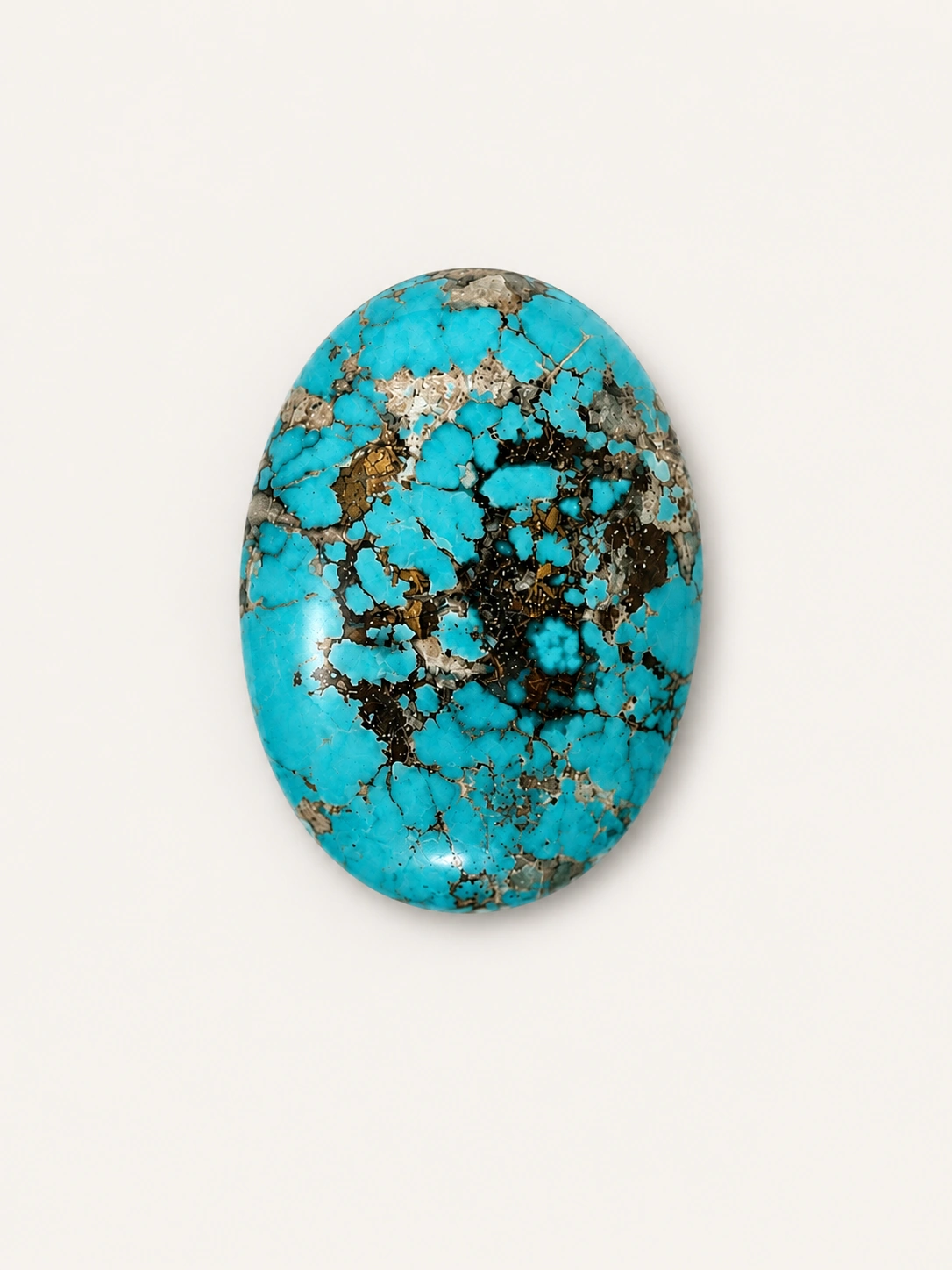
Comparing these two stones shows why carat weight alone cannot specify a setting. NEYFI 1005 has a wider and longer face but less recorded thickness than 1002. Their visible patterns are individual, and neither image is a laboratory test of durability. The cabochon dimensions guide explains how length, width, thickness and dome profile inform a design brief.
Questions to ask a jeweller
- What will protect the edge? Ask how the setting frames the actual outline and where the stone will be exposed to knocks.
- How high will it sit? Discuss the cabochon’s measured thickness and dome in relation to the finger and intended use.
- When is the stone set? Heat and chemicals used during manufacture or repair must be considered before bringing turquoise near the work.
- What care can the wearer maintain? A ring worn occasionally and removed during manual work has a different risk profile from one worn continuously.
These are questions for the maker, not remote conclusions from a photograph. No photograph or general gem guide can certify the durability, treatment or origin of a specific loose stone. Read the individual product record and ask for any additional evidence needed for the commission.
Care after the ring is made
GIA recommends cleaning turquoise jewellery with warm, soapy water and says not to use steam or ultrasonic cleaners. Keep the ring away from cleaners, perfume, lotions and metal polish. Remove it before swimming, strenuous work or activities where the setting may be struck; dry it gently after cleaning and let the maker inspect any looseness in the setting.
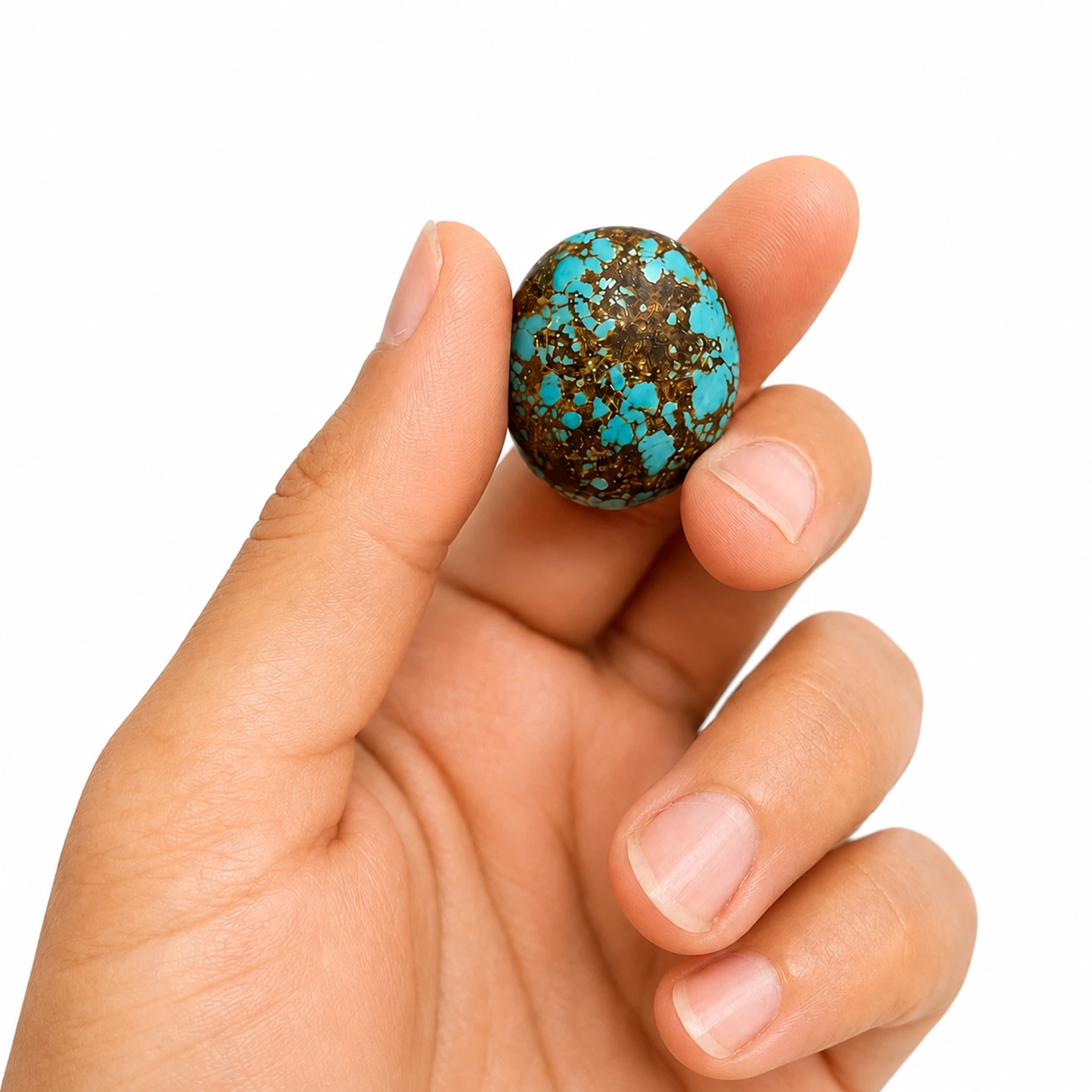
A short decision checklist
- Confirm the Stone ID and open its current product record.
- Record length, width, thickness, weight and available views in the design brief.
- Ask the jeweller to assess the physical stone, its edge and the proposed setting.
- Discuss how often the ring will be worn and which activities it must avoid.
- Read the treatment statement carefully; do not treat a seller’s assessment as an independent laboratory report.
- Agree on cleaning, repair and inspection instructions before delivery.
For a one-of-one commission, start with the current NEYFI collection and the exact Stone Record. If you need a coordinated selection or a particular scale, send a professional sourcing brief. For broader care guidance, see how to care for Neyshabur turquoise.
Material guidance: GIA Turquoise Care and Cleaning Guide and GIA Turquoise Buyer’s Guide. Product measurements above come from the linked individual NEYFI product records, checked 26 September 2026. A jeweller should confirm the final setting with the physical stone.
From the field notes
See the stones behind the material.
A field note is the beginning. Compare individual Neyshabur stones with their own documentary images, Stone IDs and EUR availability.