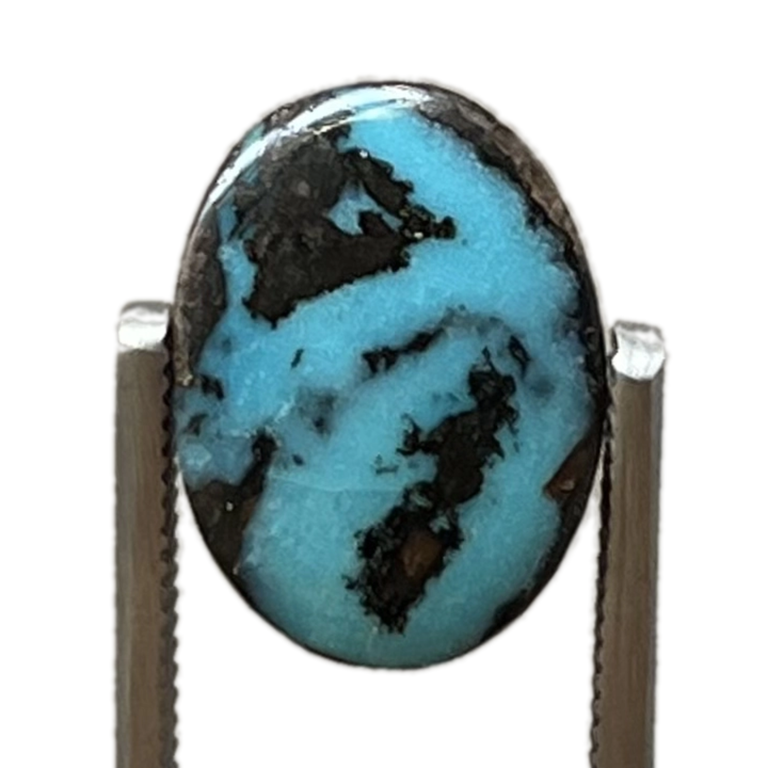
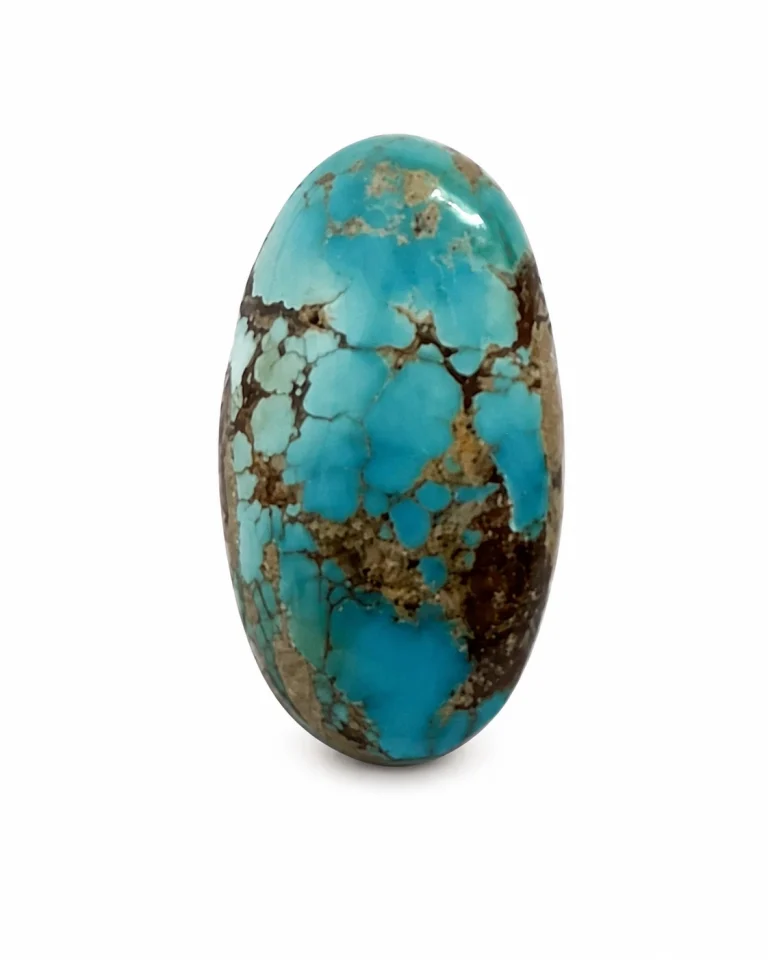
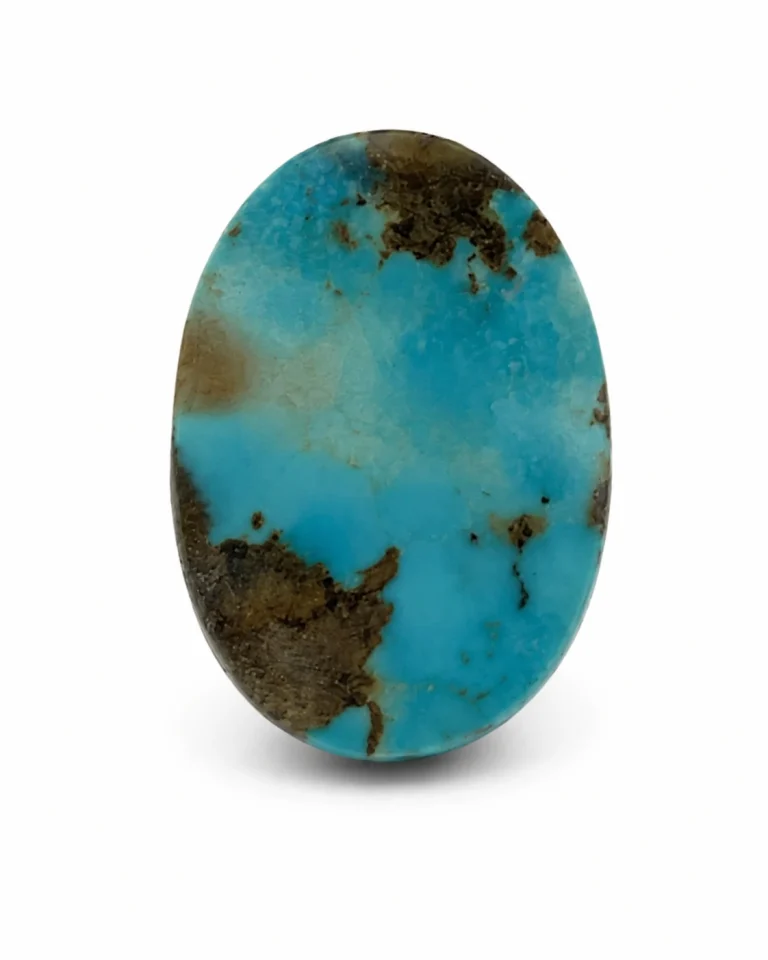
A jewellery brief often begins with a colour: blue, green-blue, pale sky, or a strong contrast between turquoise and its host-rock matrix. But colour alone is a weak sourcing instruction. For a designer, the useful question is more specific: what must this particular stone do in the finished object?
Neyshabur turquoise is not interchangeable stock. Each cabochon has its own outline, depth, matrix distribution and measured footprint. A better sourcing process starts with the design constraints, then matches those constraints to an individual stone record—not the other way around.
1. Write the setting constraints before choosing the stone
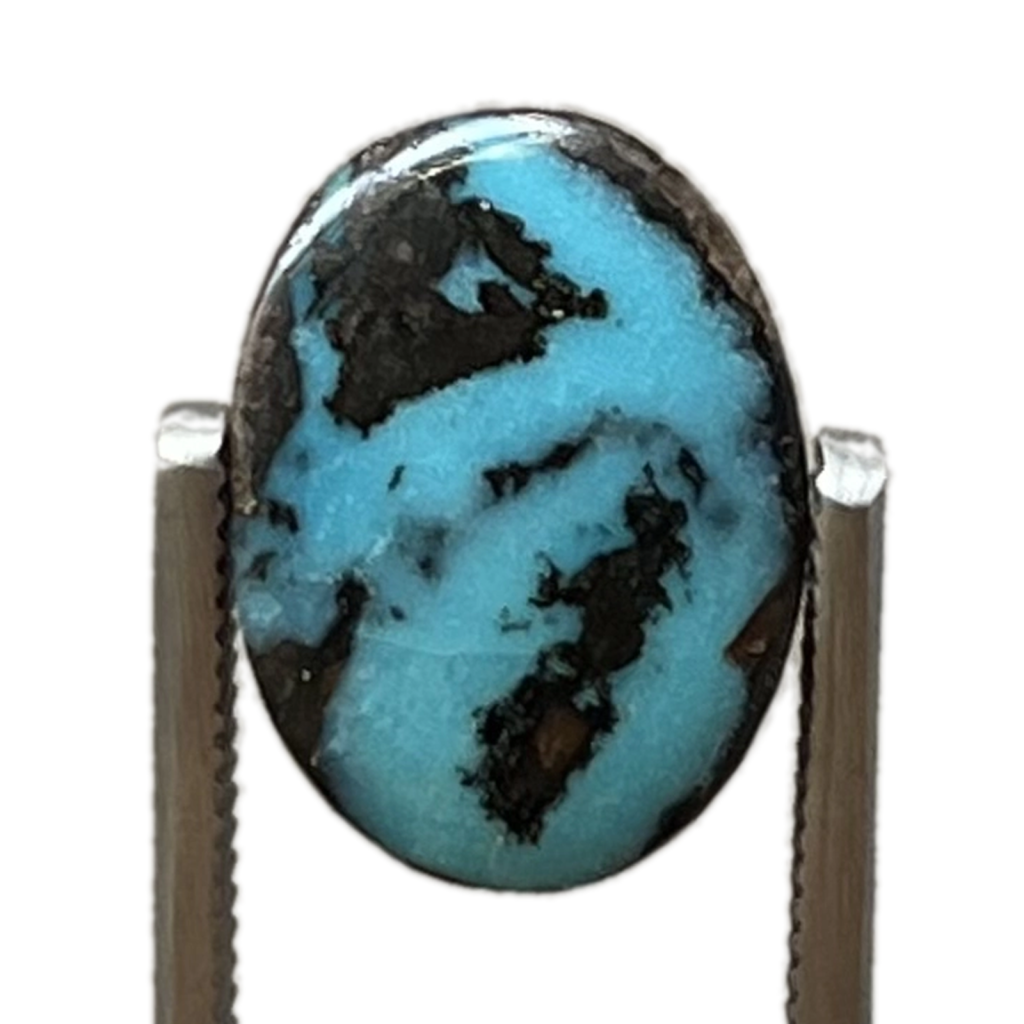
Start with the space available in the design. Record the maximum length and width, the depth the setting can accommodate, the intended orientation and the amount of edge that may be covered by a bezel or prongs. If the piece is a ring, discuss exposure and protection with the maker. For a pendant or brooch, consider how the stone’s direction will relate to the line of the piece and how it will sit against the body or garment.
These are not finishing details. They determine which stones are plausible candidates. A photograph can communicate shape and character, but the recorded millimetres—not the apparent size on a screen—should guide the first design decision.
2. Compare geometry, not just carat weight
Two cabochons with similar weight can create different design problems. Compare length, width and thickness together, then consider how the dome changes the visual height and the setting’s construction.
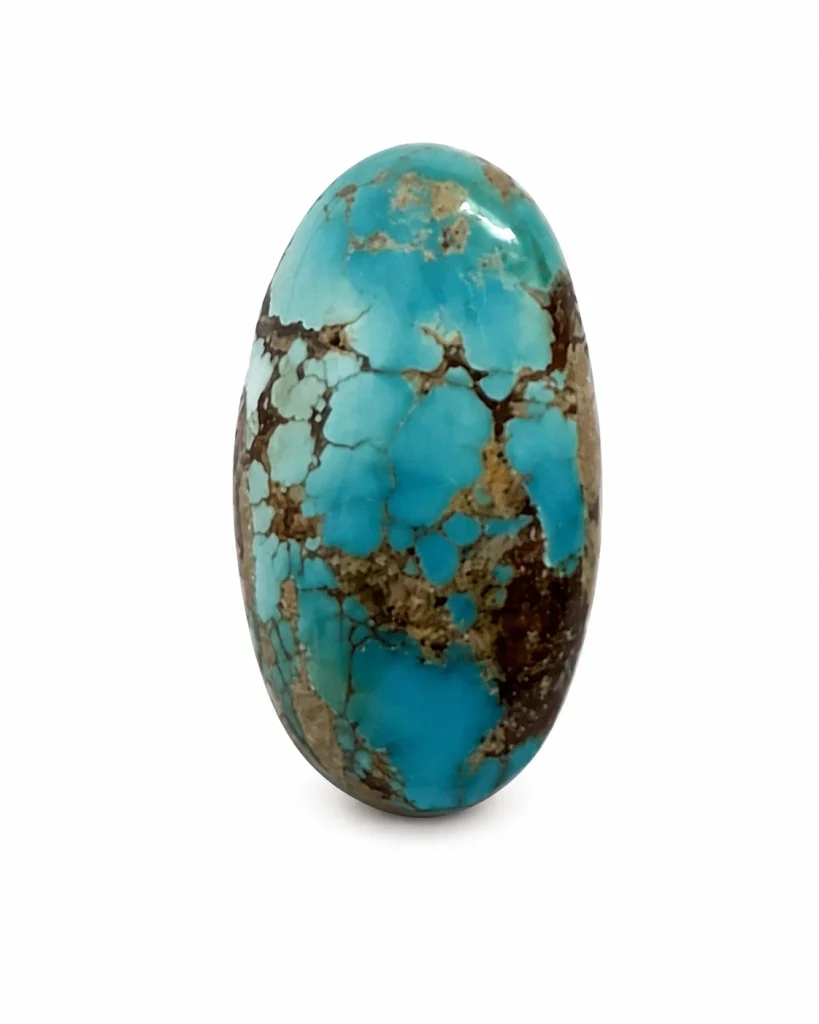
An elongated outline can support a vertical pendant or a narrow design axis; a broader oval may create a more centred focal point. Neither shape is inherently better. The right choice is the one that fits the design’s proportions and the physical setting.
3. Treat matrix as visual structure, not a grade
Matrix can behave like a fine line, a network, a patchwork or a larger field of host rock. Instead of asking whether a pattern is “better,” ask what role it should play: quiet texture, contrast, directional movement or the central visual event. Check the front, profile and reverse views together. The pattern’s distribution and the outline of the actual stone matter more than a label alone.
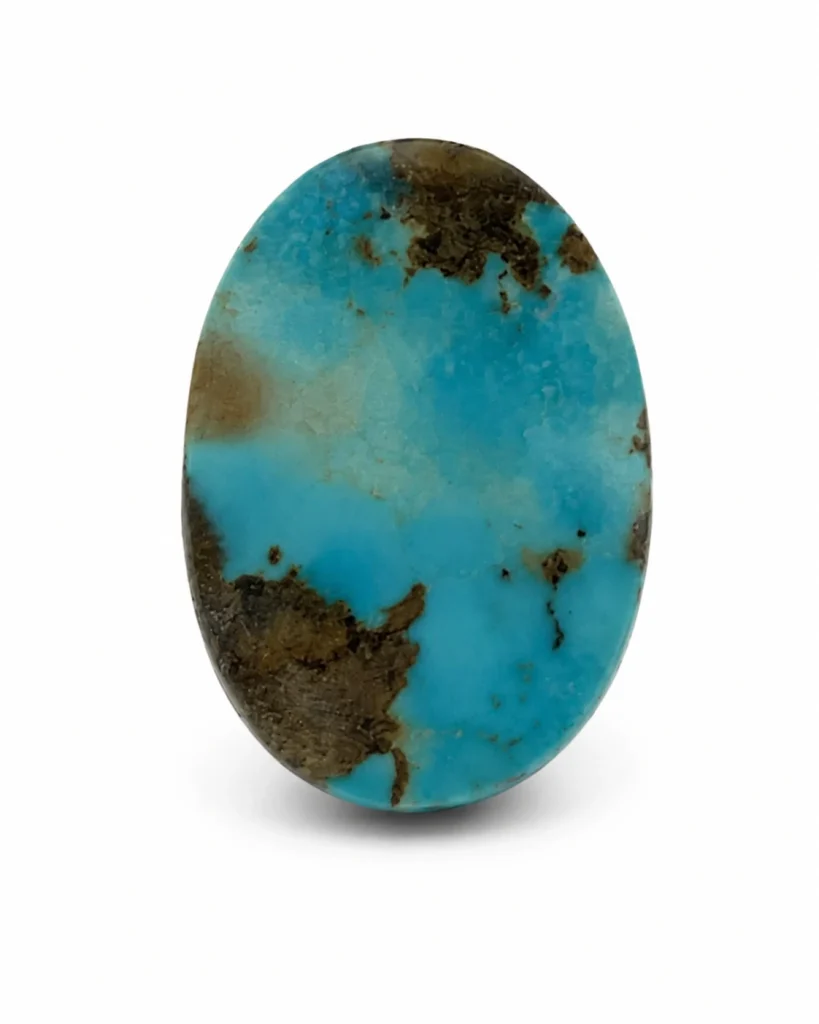
Matrix names describe visible character; they do not independently establish quality, geographic origin or treatment status. Read the seller’s disclosures separately, and request independent gemological testing when the transaction requires it. A brand’s internal stone record and an independent laboratory report are different forms of documentation.
4. Turn the brief into a repeatable record
For each candidate, save the Stone ID, dimensions, weight, shape, profile, colour description, matrix description, treatment disclosure, image set and current availability. Add one sentence explaining why it fits the design. This gives the designer, buyer and maker a shared reference and reduces the risk of discussing different stones under the same general description.
- Fixed: the maximum footprint, depth limit and functional requirements.
- Preferred: colour direction, matrix density and overall visual character.
- Flexible: the exact outline or pattern, if the design can accommodate alternatives.
Keep price and availability tied to the live product record, since one-of-one inventory can change. Do not treat a saved screenshot or an old sourcing sheet as proof that a stone is still available.
5. A practical next step
Choose two or three candidates and compare them against the same brief. Use NEYFI’s current collection to open individual stone records, and read the broader cabochon buying guide before finalising a shortlist. If the piece is commissioned, confirm the physical stone and planned seat with the jeweller before fabrication.
The goal is not to find a universally “best” turquoise. It is to identify the one stone whose geometry, character and documented facts serve the object you intend to make.
From the field notes
See the stones behind the material.
A field note is the beginning. Compare individual Neyshabur stones with their own documentary images, Stone IDs and EUR availability.