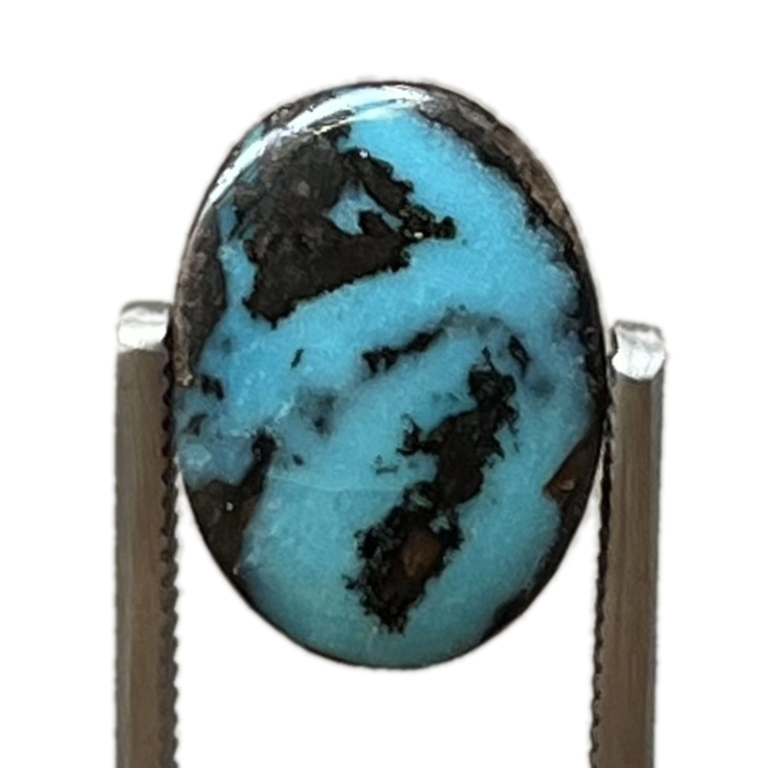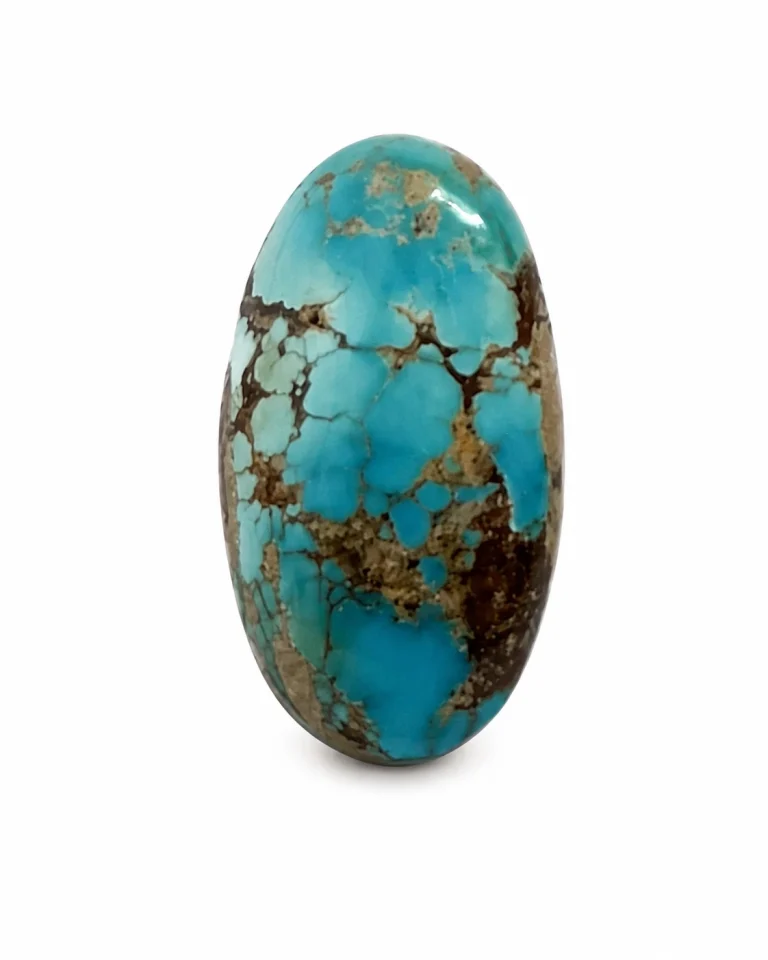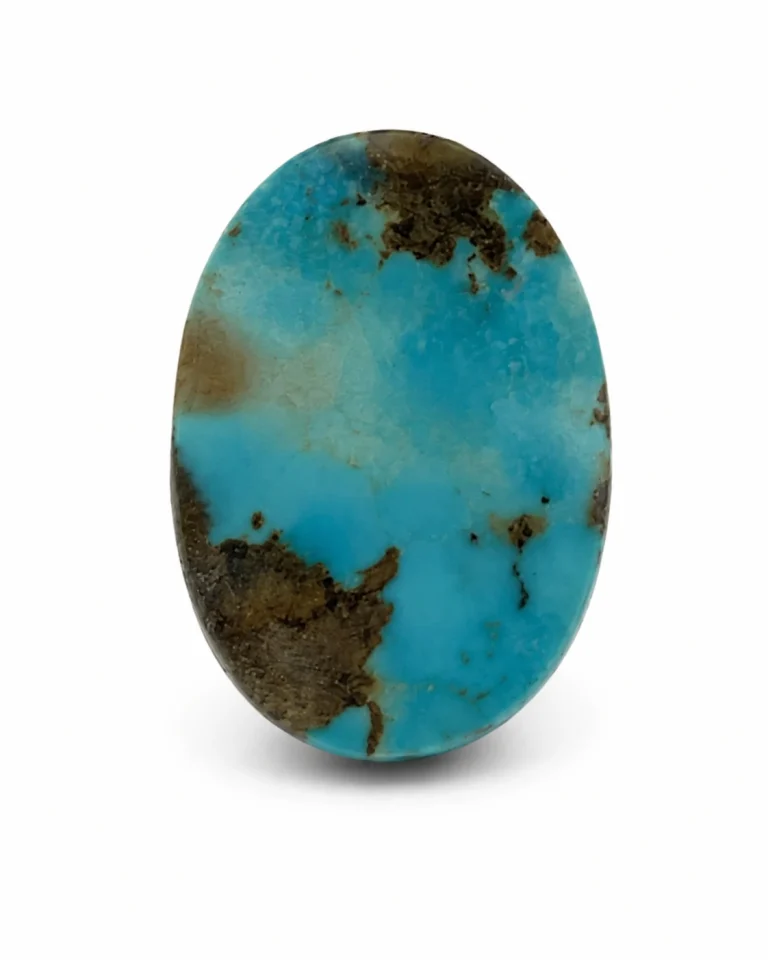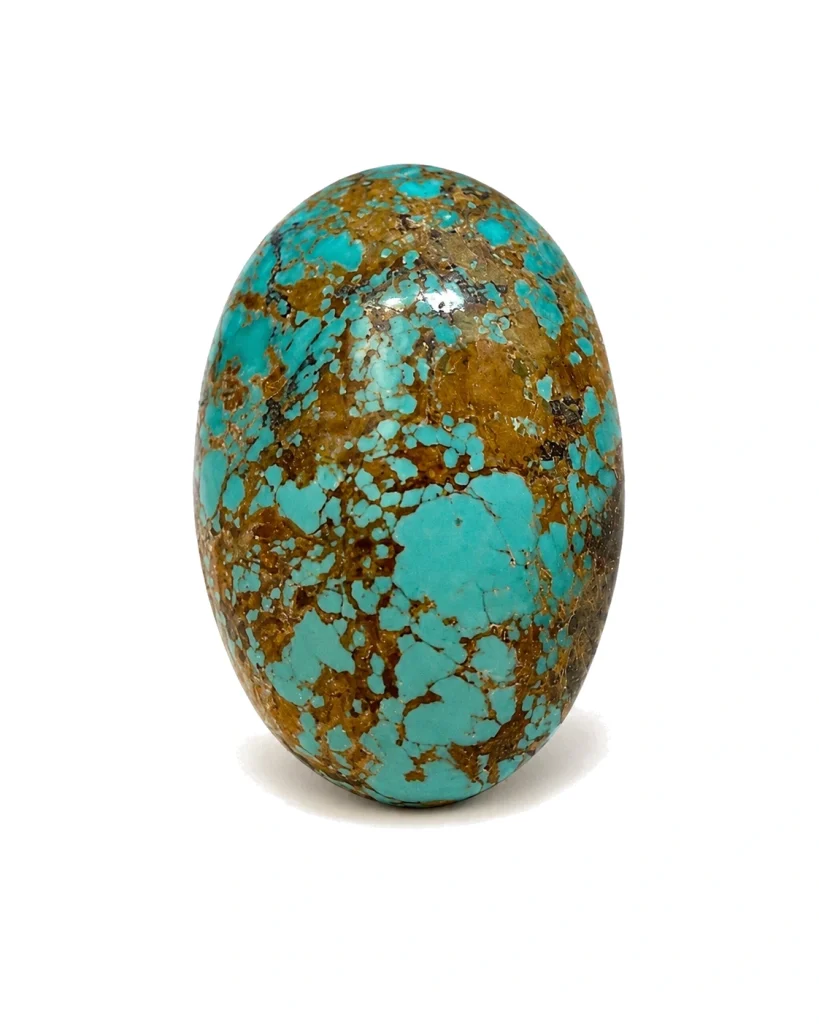
Choosing turquoise for a jewellery project begins before a setting is drawn. The stone’s footprint, thickness, dome, visual direction and matrix all affect what a maker can design around it. A useful sourcing brief therefore starts with documented measurements and images, then moves into setting questions.
1. Start with the setting’s real footprint
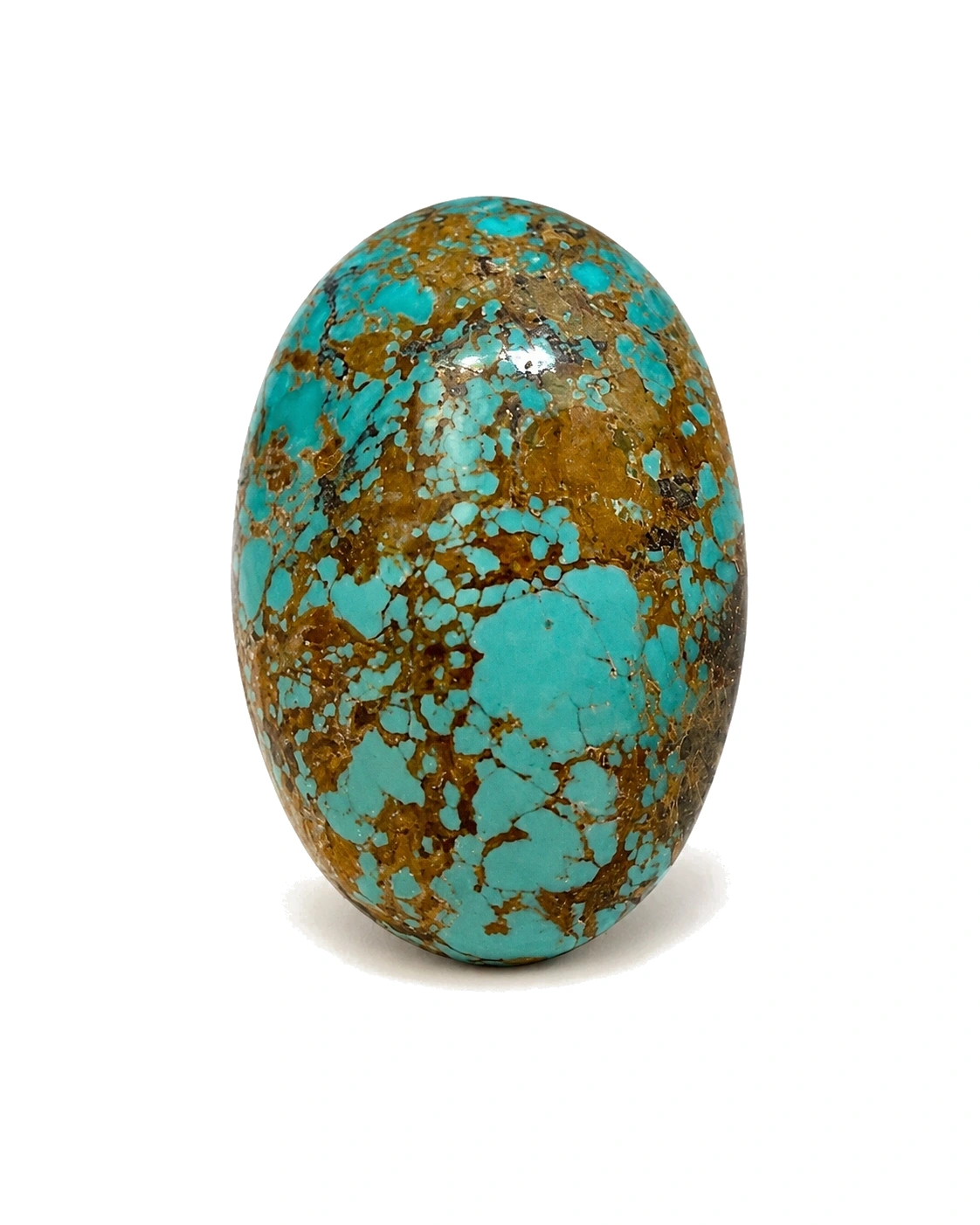
Ask for the stone’s length, width and thickness before choosing a bezel, prongs or a gallery. A difference of a few millimetres can change the balance of a ring, pendant or brooch. The public product page should be the source for the current dimensions; do not estimate scale from a screen image.
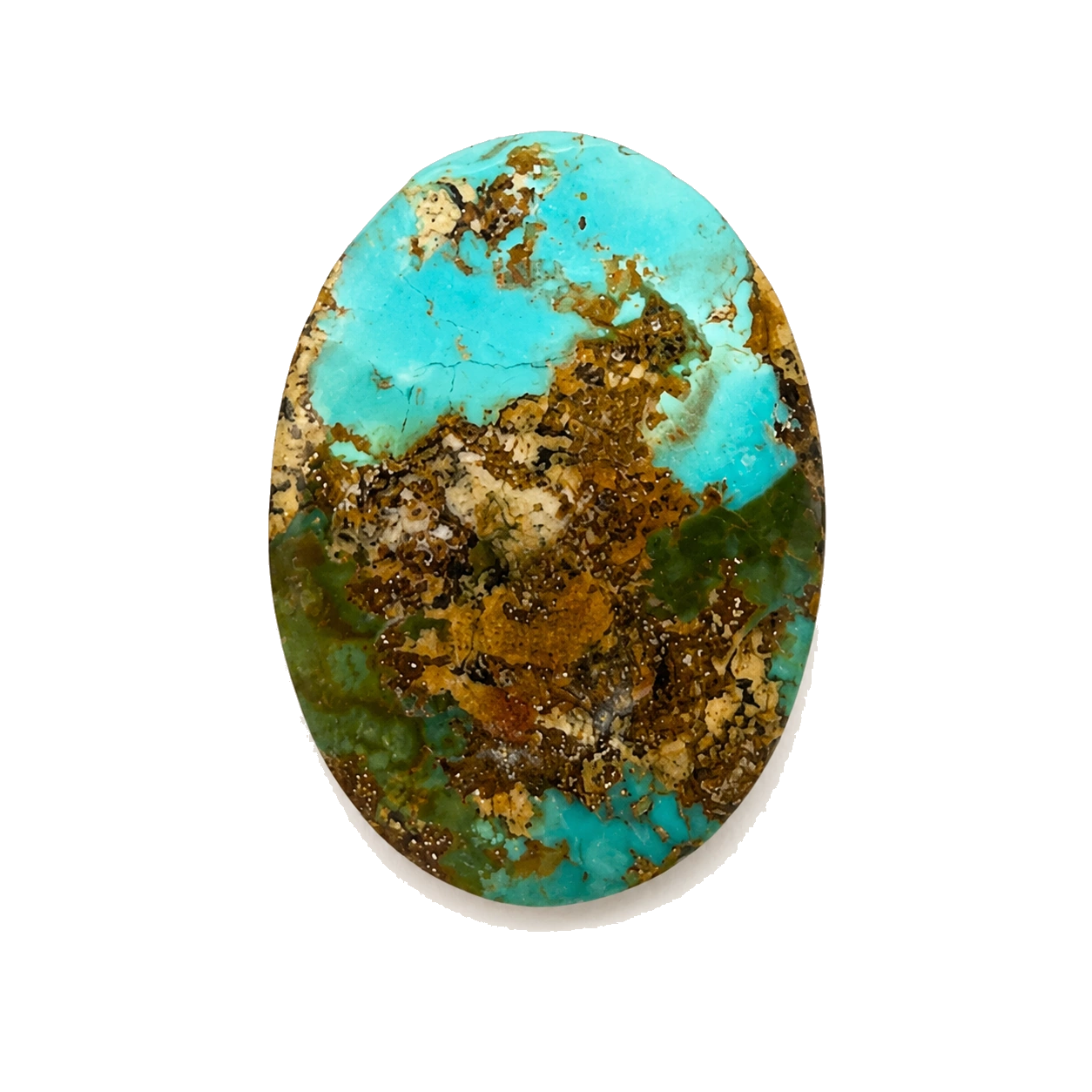
For example, NEYFI 1011 is recorded at 40 × 25 × 15 mm, while NEYFI 1014 is recorded at 29 × 21 × 5 mm. They are both oval cabochons, but their thickness and presence call for different setting conversations.
2. Decide how much of the stone should remain visible
A bezel can frame the complete outline and protect the edge, while an open setting can reveal more of the face and allow the matrix to lead the composition. The right decision depends on the stone’s edge, surface, thickness and the intended wear—not on a generic grade label.
Before fabrication, ask:
- Which part of the face is the visual centre?
- Should the matrix remain fully visible, or should the metal create a quieter border?
- Does the profile require a deeper seat or a raised gallery?
- Will the final design hold the stone securely without putting pressure on fragile edges?
3. Match shape and direction to the object
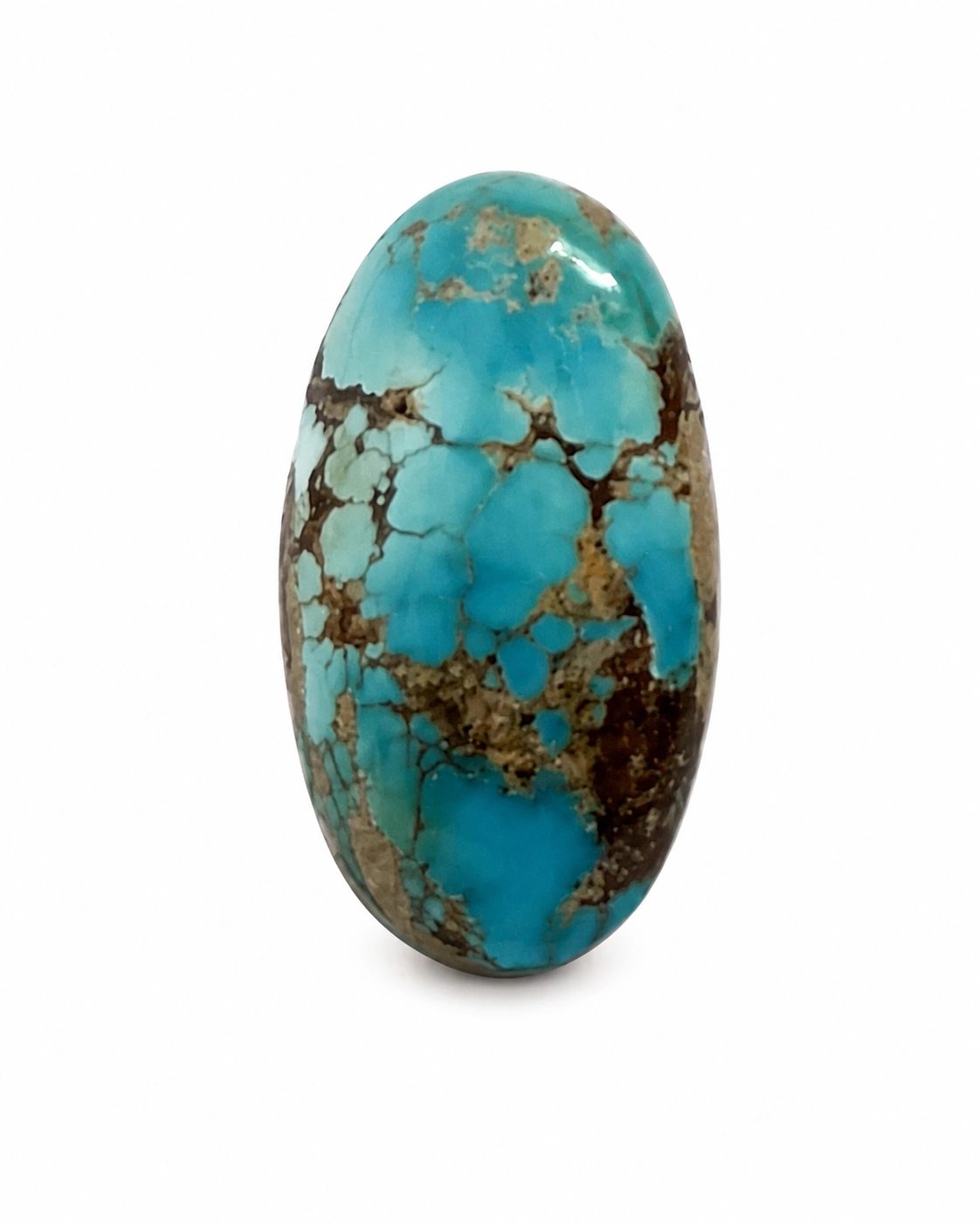
Shape influences how the eye travels through a piece. An elongated oval can create a vertical line in a pendant or a longer proportion in a ring, while a compact oval may suit a centred composition. NEYFI 1024 is recorded as an elongated oval measuring 22 × 11 × 8 mm, which makes its proportions a useful starting point for a narrow setting brief.
4. Treat colour and matrix as design information
Turquoise is not a uniform material field. The documented face may include a blue, blue-green or green direction alongside matrix, host-rock or other recorded visual structures. A jewellery brief should describe what the record shows and what the design needs, rather than relying on labels such as “best blue” or “cleanest.”
Useful brief language is specific: “an elongated oval with a visible matrix field,” “a low profile for a shallow setting,” or “a high dome that should remain the focal volume.” This gives the maker a design constraint without changing the stone’s identity.
5. Build the brief around the individual Stone Record
Every one-of-one NEYFI stone should be considered through its individual public record, documentary images, dimensions, treatment disclosure and current availability. The Record is a documentary identity for the stone; it is not presented as an independent laboratory report.
If you are sourcing for a collection, studio or gallery, begin with the NEYFI Collections, shortlist stones whose recorded dimensions fit the project, and then send a Professional Sourcing brief with the intended object, target dimensions, setting method and destination.
Questions to send with a jewellery sourcing request
- What object is being made: ring, pendant, brooch, earrings or another form?
- What maximum length, width and thickness can the setting accept?
- Should the matrix or host-rock character remain a visible part of the composition?
- What edge protection and setting method is planned?
- Which destination and timeline should the sourcing review consider?
A well-defined brief makes comparison calmer and more accurate. It also protects the stone from being reduced to a colour label when its dimensions, profile and recorded matrix are the details that matter to the finished piece.
Next step: Browse documented NEYFI Stones or request a professional sourcing review.
From the field notes
See the stones behind the material.
A field note is the beginning. Compare individual Neyshabur stones with their own documentary images, Stone IDs and EUR availability.