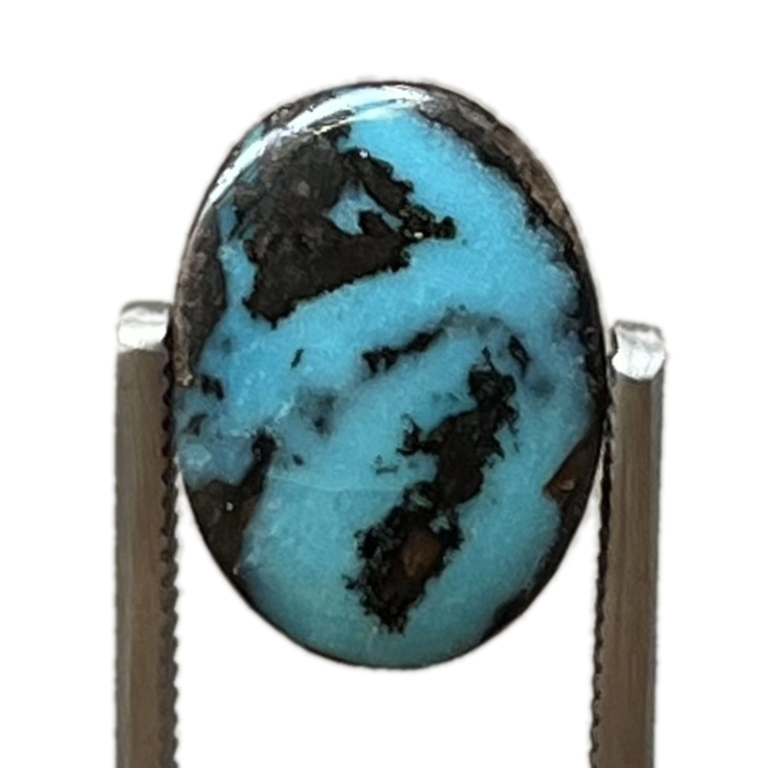
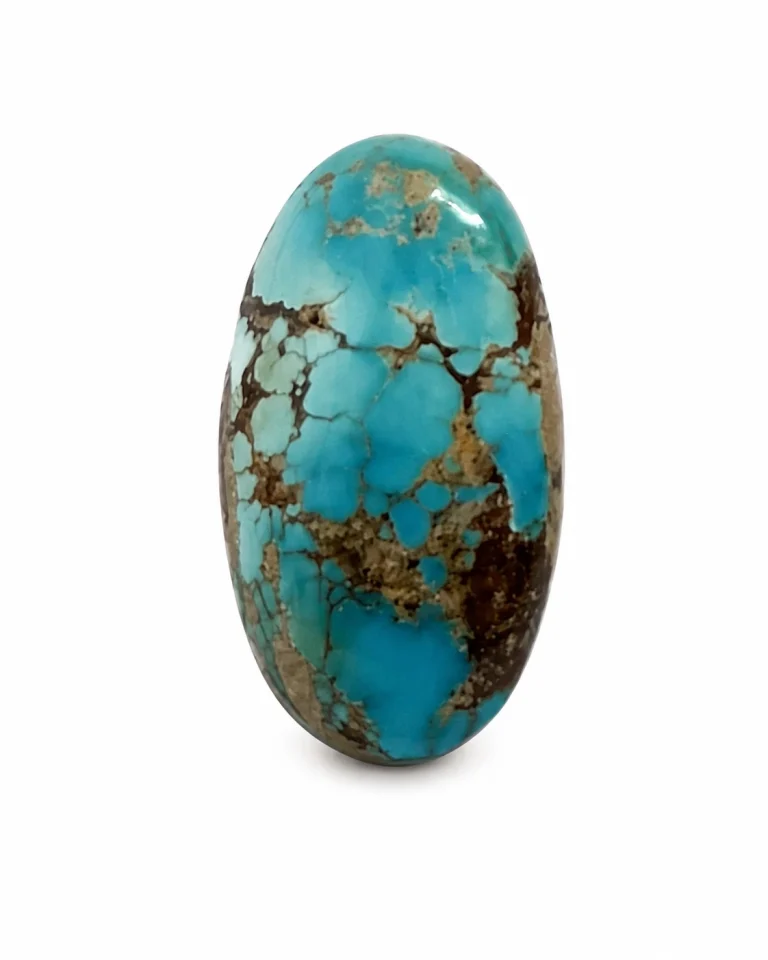
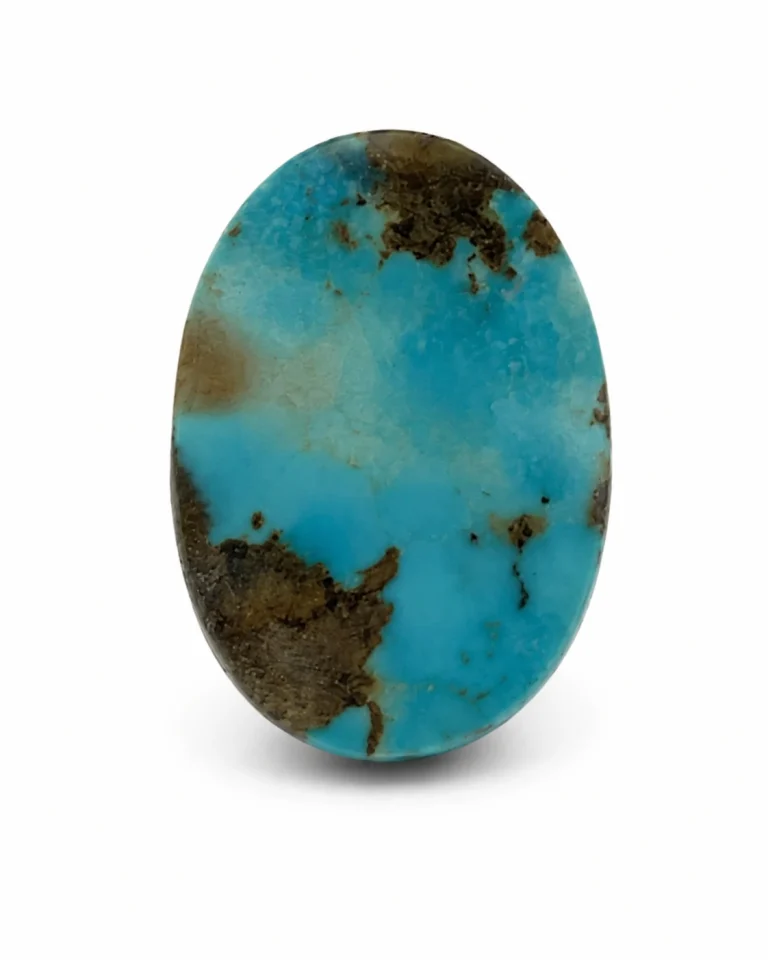
The phrase “find me a turquoise” is too broad for a serious jewellery project. A professional sourcing brief turns an aesthetic intention into a set of useful constraints: the form, approximate dimensions, colour direction, matrix character, project context and destination. It helps a curator compare real stones without flattening their individuality.
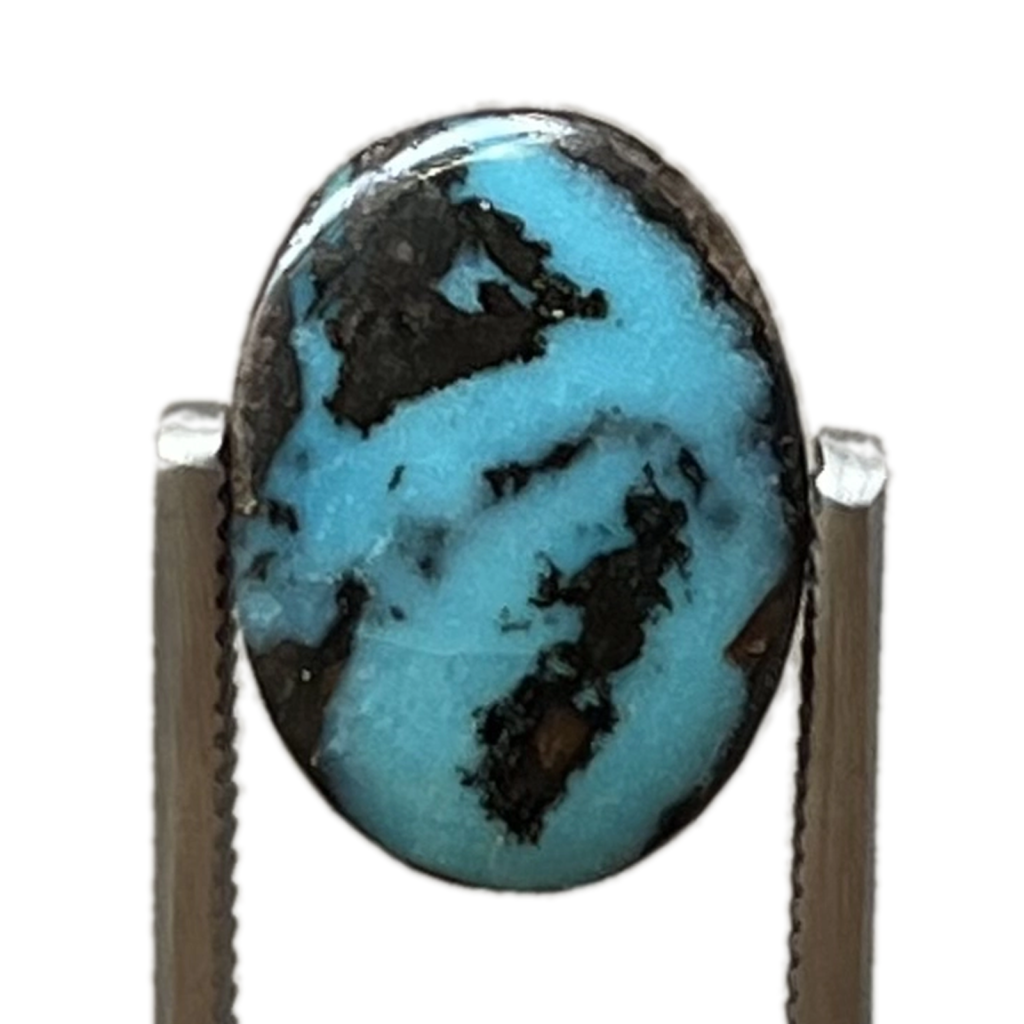
Why a brief is better than a colour word
Blue, green, clean, matrixed and Persian can mean different things to different people. A useful brief describes what the stone needs to do in the finished object. Is it for a ring, pendant, brooch, pair, series or collector display? Does the setting need a low profile? Should the matrix be quiet, mapped, cellular or visibly connected to host rock? These questions create a direction while leaving room for the character of an individual stone.
For the wider vocabulary, read Neyshabur Turquoise for Jewellery Designers and Turquoise Cabochon Buying Guide: Shape, Dome, Matrix and Scale.
1. Name the project and the setting constraints
Start with the object, not the stone. State the type of jewellery, the setting method if known, the available opening and whether the piece is one-off or part of a repeatable series. A one-of-one stone can be the starting point of a design, but the setting still needs a realistic length, width and thickness range.
- Project: ring, pendant, brooch, earrings, cuff or display.
- Setting space: minimum and maximum length, width and depth.
- Quantity: one focal stone, a pair, or a small group with related direction.
- Timeline: when the stone needs to be selected for the project.
If the dimensions are not fixed yet, say so. “Approximately 18–24 mm long, with flexibility on width” is more useful than an unexplained request for a medium stone.
2. Specify shape and direction
Shape is part of the design language. An oval can be calm and adaptable; an elongated oval introduces a clear axis; a broad oval can create a larger field; a high dome brings more vertical presence. Use reference products to show the direction you mean, while remembering that the reference is not a promise of an identical stone.
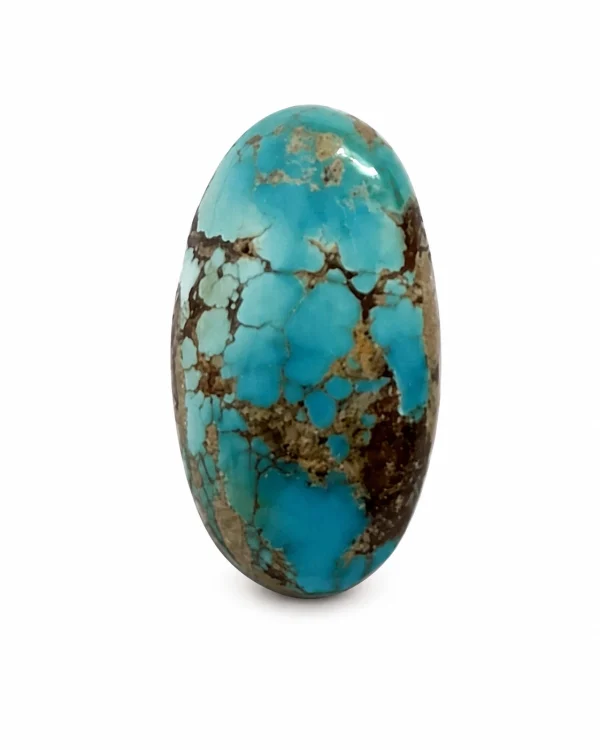
NEYFI 1024 is recorded at 22 × 11 × 8 mm. NEYFI 1030 is recorded at 20 × 14 × 5 mm. Both are natural, untreated Neyshabur turquoise records, but their proportions would create different conversations with a setting.
3. Describe the colour direction without erasing variation
Instead of asking for “the bluest stone,” describe the direction and the tolerance. You might request bright turquoise blue with a dark contrasting pattern, a more even blue field, or a blue-green direction with visible geological variation. If exact colour matching matters, include the lighting context and explain what can move.
Colour on a screen is not a measurement. The final decision should refer to current documentary images and the written product record. Ask for clarification when the difference between blue, blue-cyan and blue-green changes the design outcome.
4. Treat matrix as a visual requirement
Matrix can be quiet or dominant, linear or mosaic, cellular or brecciated, brown, cream, grey or mixed. A sourcing brief should explain the desired visual behaviour: subtle movement across the face, a strong map-like network, host-rock contrast, or a relatively calm field with only small inclusions.
NEYFI 1014 is recorded with a dense cream, ochre and brown mosaic matrix and green mineral zones. NEYFI 1011 is a much larger high-dome stone recorded with turquoise in host-rock and cellular/brecciated character. They are useful as vocabulary references, not as interchangeable units.
For a more detailed visual glossary, read Turquoise Matrix Patterns Explained. The brief should still leave the individual stone free to speak through its own record.
5. Set the scale and profile range
Give a range for length, width, thickness and, when relevant, approximate carat weight. Profile is especially important for a bezel or a shallow setting. A low dome may be appropriate where the setting needs a closer surface; a high dome may be central to the intended silhouette. These are project decisions, not universal quality rankings.
- Length and width: what must fit, and what can flex?
- Thickness: what clearance does the setting allow?
- Weight: is the stone meant to be light enough for wear or intentionally substantial?
- Profile: low, medium or high direction, with tolerance stated.
6. Ask for documented comparisons
When reviewing a shortlist, compare each stone through the same lens: product URL or Stone ID, front/reverse/profile imagery, measurements, weight, origin statement, treatment statement, current EUR price and availability. A shortlist is more useful when every option has the same documentary baseline.
The NEYFI record is documentary identity for the individual stone; it is not an independent gemological laboratory report. Keep that distinction clear in a client presentation and in your own procurement notes.
A copy-ready sourcing brief
- Project and setting: [ring / pendant / brooch / other]
- Quantity: [one / pair / small group]
- Size range: [length × width × maximum thickness]
- Shape: [oval / elongated oval / other]
- Profile: [low / medium / high, with tolerance]
- Colour direction: [describe the field and acceptable variation]
- Matrix character: [quiet / mosaic / cellular / brecciated / host-rock contrast]
- Origin and treatment requirements: [what must be documented]
- Destination and timing: [country or region and decision date]
- Reference stones or images: [URLs or Stone IDs]
Use Professional Sourcing when the brief is specific
When the brief is ready, use Professional Sourcing and include the project constraints in the message. The current catalogue is the starting point; a focused brief makes it possible to review documented stones against an actual use case. If you are still exploring, begin with المجموعات and note which forms, profiles and matrix directions hold your attention. For gallery-level selection planning, read How Galleries Can Build a One-of-One Turquoise Selection.
The best sourcing conversation ends with a clear comparison and an informed choice. It does not promise that every brief has an exact match, and it does not change the documentary identity of a stone to make it fit.
If your sourcing brief is moving toward fabrication, continue with Turquoise for Jewellery Designers: Shape, Scale, and Setting Questions to Ask for the setting questions that follow dimensions and matrix.
From the field notes
See the stones behind the material.
A field note is the beginning. Compare individual Neyshabur stones with their own documentary images, Stone IDs and EUR availability.