Buying a one-of-one turquoise cabochon is easier when the object has a clear record. A stone record does not replace your judgement or an independent laboratory report. It gives you a disciplined way to compare the individual stone shown on the product page with the work you want it to do.
What a stone record is for
A useful record connects one physical object to a stable identity. At minimum, you should be able to find a Stone ID or SKU, the product title, documentary images, measurements, weight, origin statement, treatment statement, current price and availability. These details make it possible to ask about the same stone before purchase rather than discussing a generic category of turquoise.
On NEYFI, the product page is the commercial surface for the individual stone. The record supports that page with observable and declared information. A NEYFI record is documentary identity; it is not an independent gemological laboratory report. When a laboratory report exists, it should be identified separately and not implied by the presence of a product record.
1. Start with identity: are you looking at one stone?
First, confirm that the title, URL, Stone ID or SKU and images refer to the same physical object. One-of-one inventory should not use a general stock photograph to represent a different unit. A clear record lets you move from an article, collection card or sourcing conversation to one exact product page.
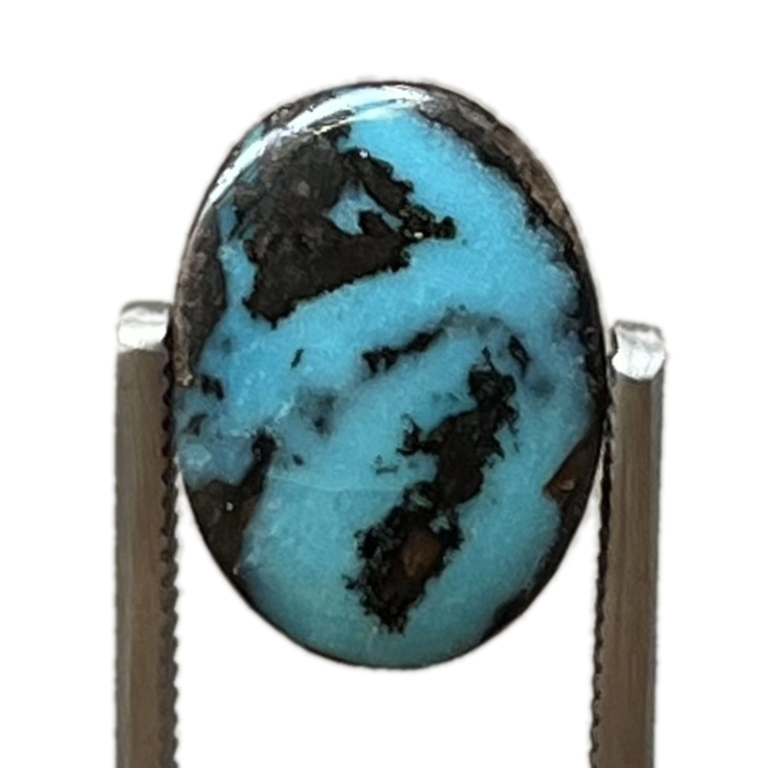
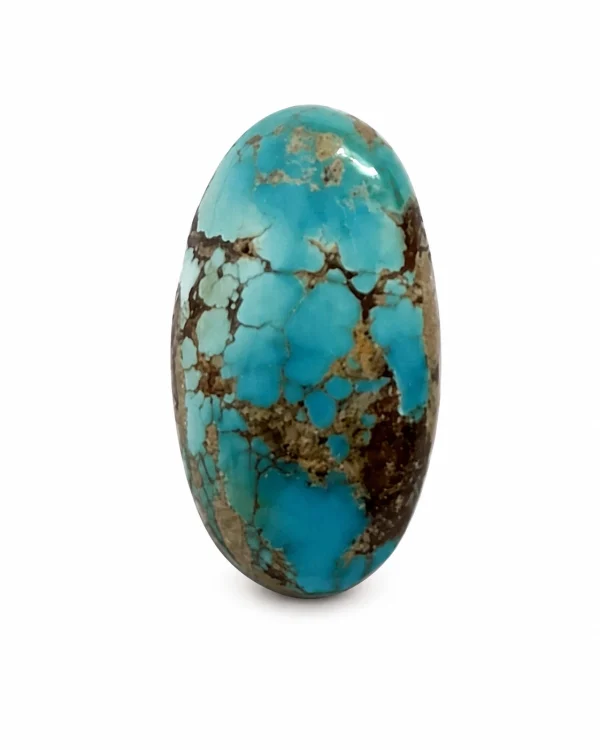
- NEYFI 1030 is one recorded natural, untreated Neyshabur turquoise oval cabochon.
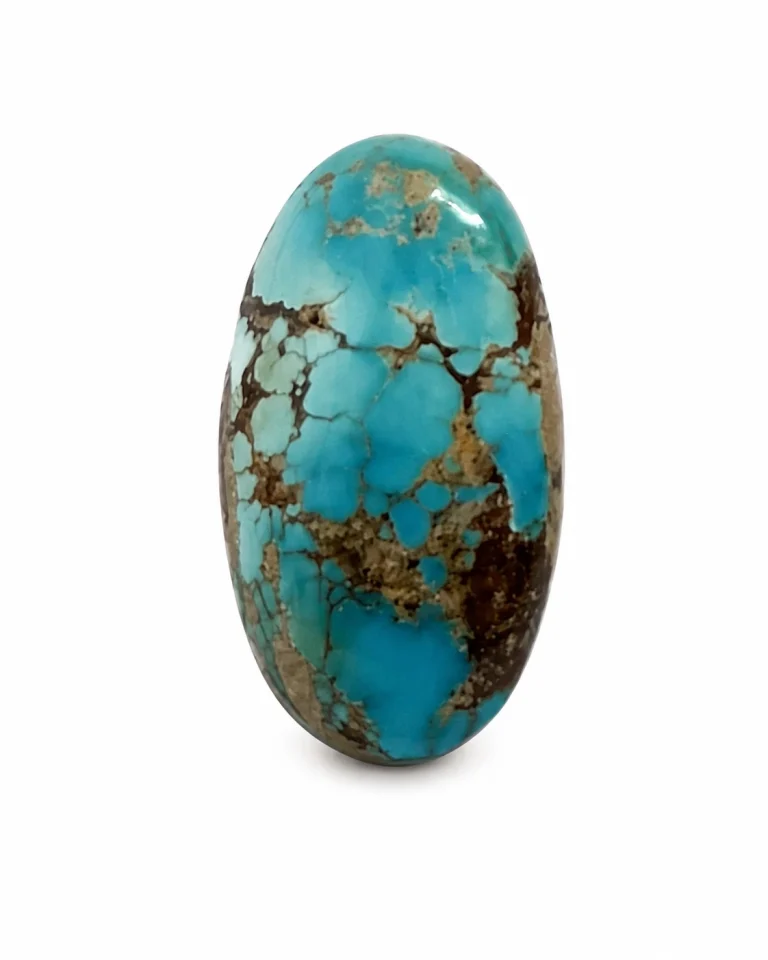
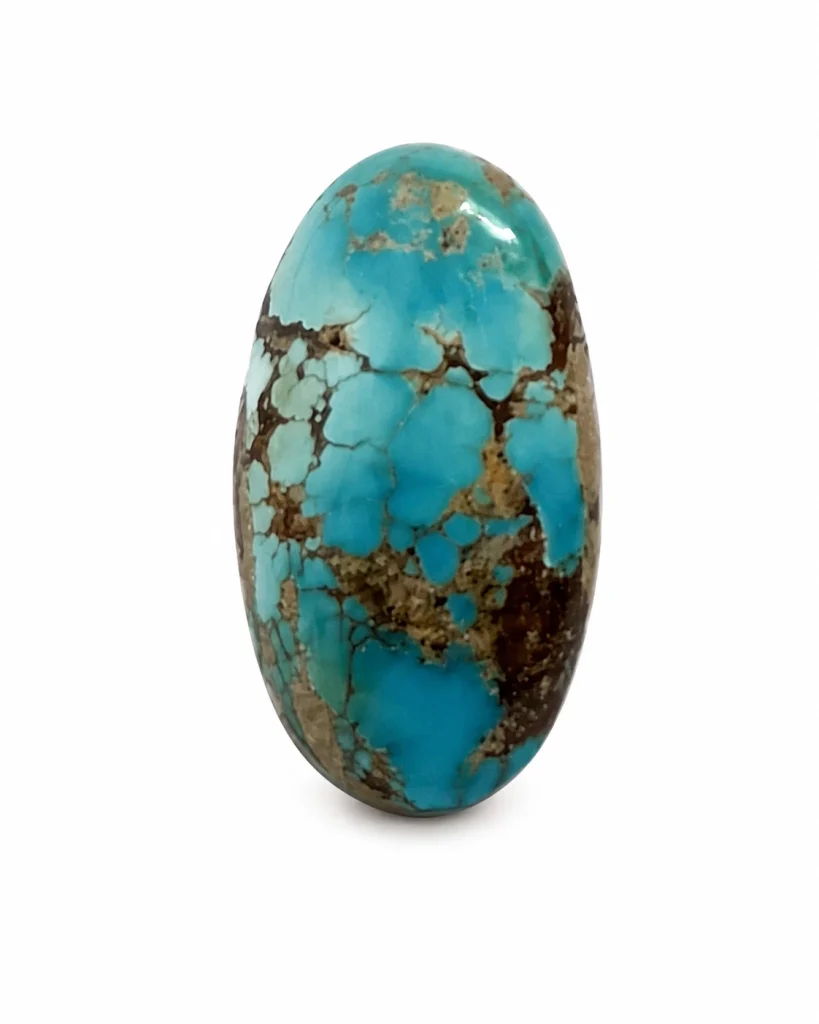
- NEYFI 1024 is a different recorded elongated oval with its own dimensions, profile and matrix character.
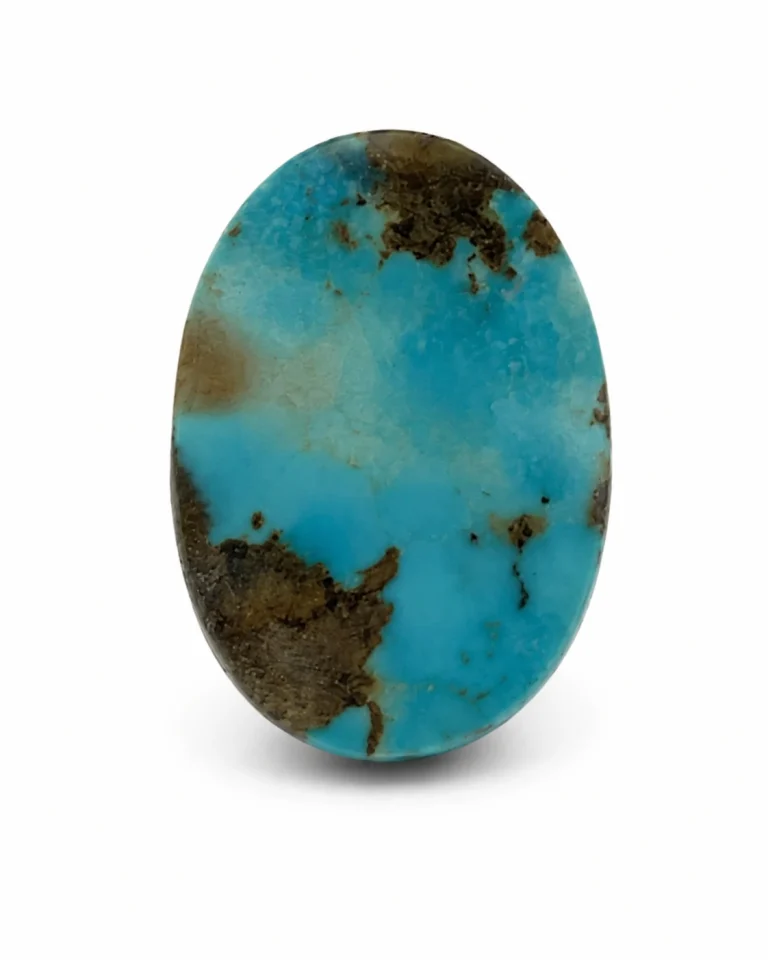
- NEYFI 1014 is another individual stone and should be judged from its own record, not from the appearance of 1024 or 1030.
2. Read the image set, not only the hero image
The front view is the natural place to begin, but it is not the whole stone. Look for reverse and profile views where available. The reverse can show how the material continues beyond the face; the profile helps you understand thickness, dome and possible setting constraints. Compare the pattern across the views rather than treating a single crop as the complete identity of the stone.
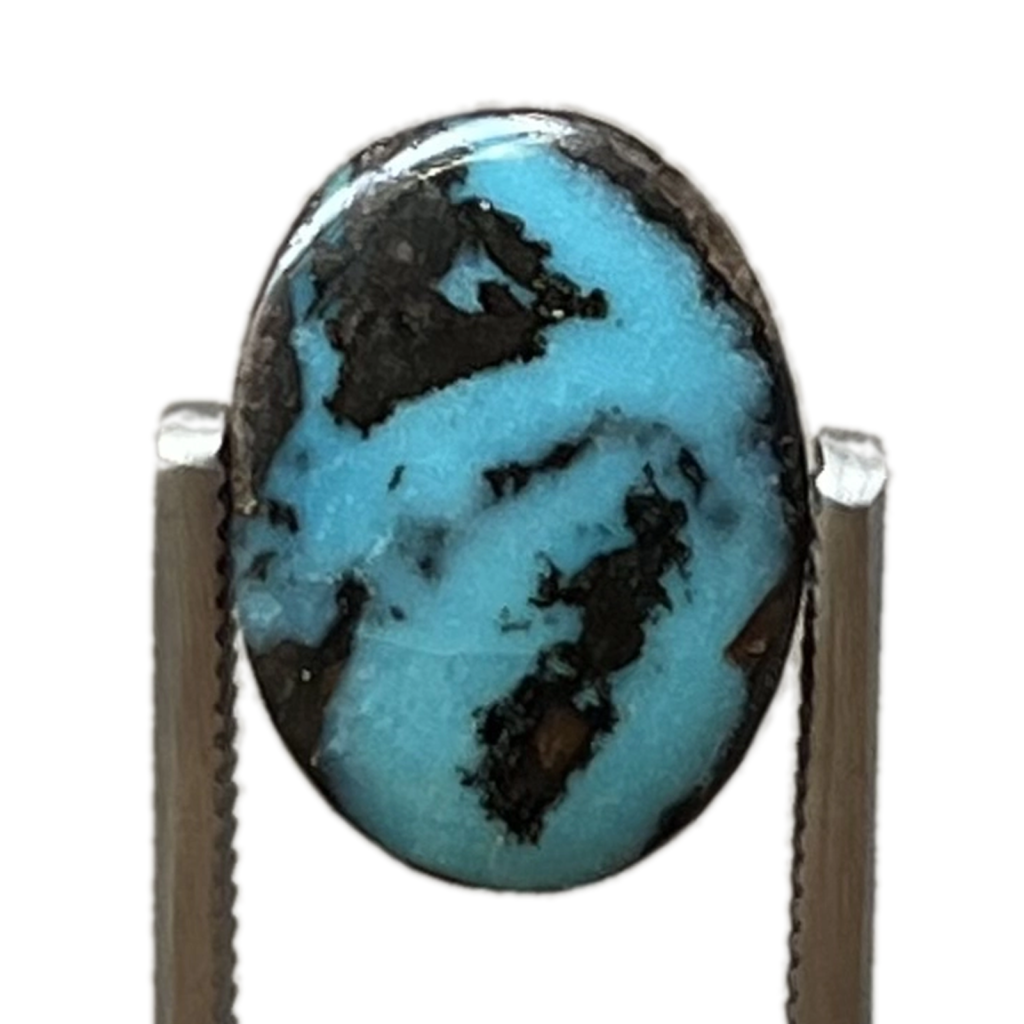
Images are evidence of the pictured specimen, but photography can change how colour and contrast feel on a screen. Use the written measurements and record as a second checkpoint, and request clarification when a detail matters to a setting or purchase decision.
3. Check measurements and weight against the project
Compare length, width and thickness before comparing adjectives. NEYFI 1024 is recorded at 22 × 11 × 8 mm and 14.5 ct. NEYFI 1030 is recorded at 20 × 14 × 5 mm and 14 ct. The numbers describe different proportions even though both are turquoise cabochons.
For scale contrast, NEYFI 1008 is recorded at 16 × 9 × 5 mm and 6.65 ct, while NEYFI 1011 is recorded at 40 × 25 × 15 mm and 87.20 ct. A design brief should say which dimensions are fixed, which can move and how much visual presence the stone needs.
4. Read origin and treatment statements precisely
Origin and treatment are not decorative words. They are part of the buying context and should be stated at the level the seller can support. The current NEYFI records above are presented as natural, untreated Neyshabur turquoise. Read the exact statement on the current product page, and ask if your decision depends on a treatment distinction or a more specific provenance claim.
A careful record also leaves room for uncertainty. It should not turn a visual impression into a laboratory conclusion, and it should not promise a provenance detail that has not been documented.
5. Check price, stock and the one-of-one context
Before you compare price, confirm that you are comparing stones with comparable scale, form, matrix character, condition and documentation. A price is attached to a particular object and its commercial context; it is not a universal price for every turquoise cabochon with the same colour word. Read How Turquoise Price Is Determined for the wider framework.
Also check availability at the moment of decision. One-of-one stock can change, and an enquiry should identify the exact product URL or Stone ID so the conversation does not drift to a different stone.
Questions worth asking before purchase
- Which Stone ID or SKU identifies the pictured stone?
- Are the front, reverse and profile images of that same specimen?
- What are the measured length, width, thickness and carat weight?
- What origin and treatment statements are documented?
- Is the current EUR price and one-of-one availability still valid?
- If the stone is for a project, can the setting constraints be reviewed before choosing?
When to use professional sourcing
If you know the setting, size range, colour direction or matrix character you need but do not want to search the catalogue alone, send a focused brief through Professional Sourcing. Include the intended use, approximate dimensions, preferred shape, matrix direction and destination. The goal is not to force a match; it is to narrow the available documented stones around a real requirement.
For the deeper reasoning behind individual records, read One-of-One Gemstones: Why Individual Stone Records Matter. A good record makes the next question sharper, the comparison fairer and the final choice more deliberate.
When you are ready to compare current documented stones, open Collections.
From the field notes
See the stones behind the material.
A field note is the beginning. Compare individual Neyshabur stones with their own documentary images, Stone IDs and EUR availability.