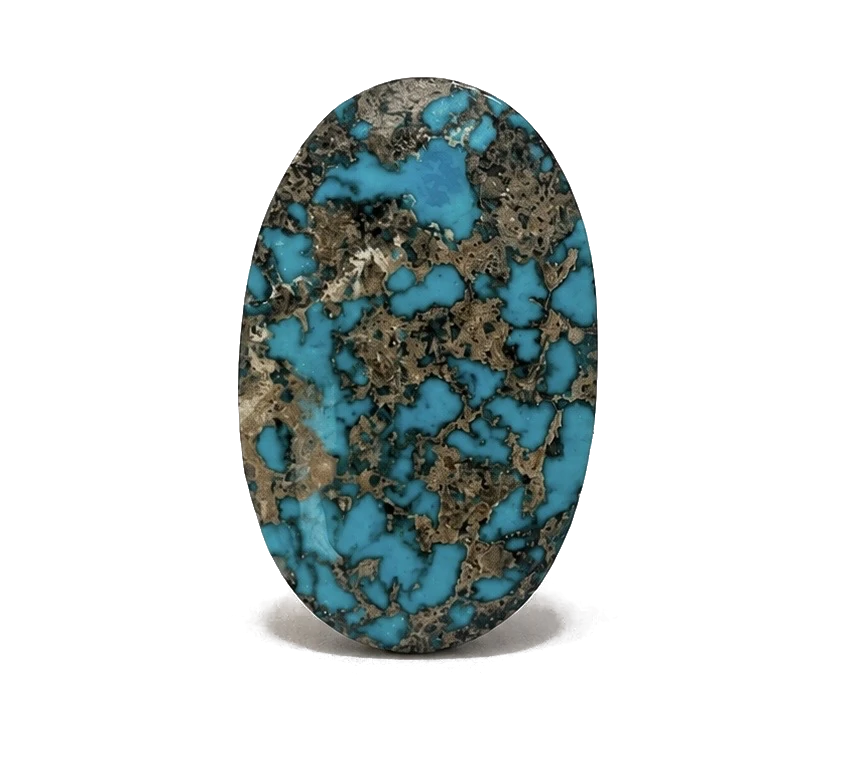
The Science Behind One of Earth’s Most Fascinating Gemstones
Introduction
A turquoise gemstone may appear simple at first glance.
A beautiful blue stone.
A natural piece of jewelry.
A collector’s treasure.
But beneath its surface lies a remarkable scientific story.
Turquoise is the result of a rare geological process that takes place over millions of years.
Its color, structure, and identity are created by a unique combination of minerals, water, and geological conditions.
Understanding what turquoise is made of allows us to appreciate why this gemstone has fascinated humanity for thousands of years.
What Is Turquoise?
Turquoise is a natural mineral and gemstone belonging to the phosphate mineral family.
Its scientific name is:
Hydrated Copper Aluminum Phosphate
The chemical formula of turquoise is:
CuAl₆(PO₄)₄(OH)₈·4H₂O
This complex mineral structure is responsible for many of turquoise’s unique characteristics.
The presence of copper creates the famous blue and green colors associated with this gemstone.
The Main Elements Inside Turquoise
Turquoise is created from several important elements.
Copper
Copper is one of the most important elements in turquoise.
It contributes to:
- blue coloration
- turquoise shades
- gemstone identity
Higher copper influence often creates stronger blue tones.
Aluminum
Aluminum contributes to the mineral structure and stability of turquoise.
It helps form the crystal framework that gives turquoise its physical characteristics.
Phosphorus
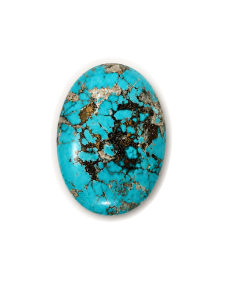
Phosphate minerals are essential for turquoise formation.
The interaction between phosphate and other elements creates the gemstone structure.
Water
The presence of water molecules within the mineral structure is another defining characteristic of turquoise.
This is why turquoise is classified as a hydrated mineral.
How Is Turquoise Formed?
Turquoise formation requires a very specific natural environment.
The process usually begins when mineral-rich water moves through rocks containing copper and aluminum.
Over long periods of geological time:
- Water interacts with minerals.
- Chemical reactions occur.
- New mineral structures develop.
- Turquoise slowly forms within fractures and cavities of rocks.
This process cannot be rushed.
Nature requires millions of years to create what humans recognize as a gemstone.
Why Is Turquoise Usually Blue?
The famous blue color of turquoise is mainly influenced by copper.
Copper absorbs certain wavelengths of light, creating the blue appearance that makes turquoise unique.
Different mineral conditions can create variations such as:
- sky blue
- robin egg blue
- Persian blue
- blue-green tones
This natural variation is one reason collectors appreciate turquoise.
What Creates Different Turquoise Colors?
Although copper creates the classic blue color, other minerals influence appearance.
More Copper
Usually associated with stronger blue tones.
Iron Influence
May contribute to greener shades.
Geological Environment
The location and conditions where turquoise forms affect:
- color
- matrix
- texture
- quality
Every turquoise deposit develops its own personality.
The Role of Matrix in Turquoise
During formation, turquoise often develops together with surrounding rock.
These natural traces are called:
Matrix may appear as:
- lines
- veins
- patterns
- web-like formations
For collectors, matrix can add character and individuality.
It tells the story of how the gemstone was created.
Why Neyshapur Turquoise Is Scientifically Unique
Neyshapur Turquoise from Iran has been recognized for centuries because of its distinctive characteristics.
Its geological environment has created gemstones known for:
- beautiful blue tones
- historical importance
- natural individuality
The combination of geology and history makes Neyshapur Turquoise one of the world’s most respected turquoise varieties.
Nature Creates What Technology Cannot Copy
Modern technology can create materials that imitate the appearance of turquoise.
However, imitation cannot reproduce:
- millions of years of geological formation
- natural mineral variation
- unique matrix patterns
- geological origin
A natural gemstone carries information from the Earth itself.
The Connection Between Science and Beauty
The beauty of turquoise is not separate from its science.
Its color comes from chemistry.
Its patterns come from geology.
Its rarity comes from natural conditions.
Its meaning comes from human history.
This connection between science and emotion is what makes gemstones extraordinary.
NEYFI: Sharing the Science and Heritage of Neyshapur Turquoise
The name NEYFI comes from:
NEY → Neyshapur
FI → Firooze (Turquoise)
NEYFI means:
Neyshapur Firooze
Our mission is to introduce authentic Neyshapur Turquoise through:
- education
- transparency
- careful selection
- respect for natural beauty
We believe understanding a gemstone makes the experience of owning it more meaningful.
Why Gemstone Knowledge Matters
An educated collector does not only see color.
They understand:
- origin
- formation
- rarity
- history
Knowledge transforms a beautiful object into a meaningful treasure.
Frequently Asked Questions
What mineral is turquoise made of?
Turquoise is a hydrated copper aluminum phosphate mineral.
Why is turquoise blue?
The blue color of turquoise is mainly created by copper within its mineral structure.
How long does it take for turquoise to form?
Natural turquoise forms through geological processes that can take millions of years.
Is natural turquoise rare?
High-quality natural turquoise is limited because its formation requires specific geological conditions.