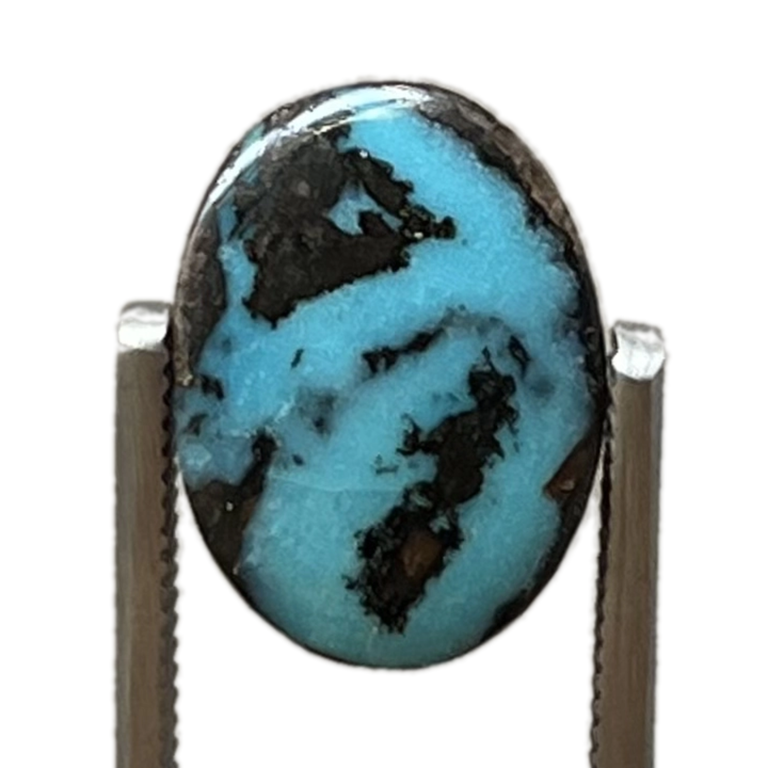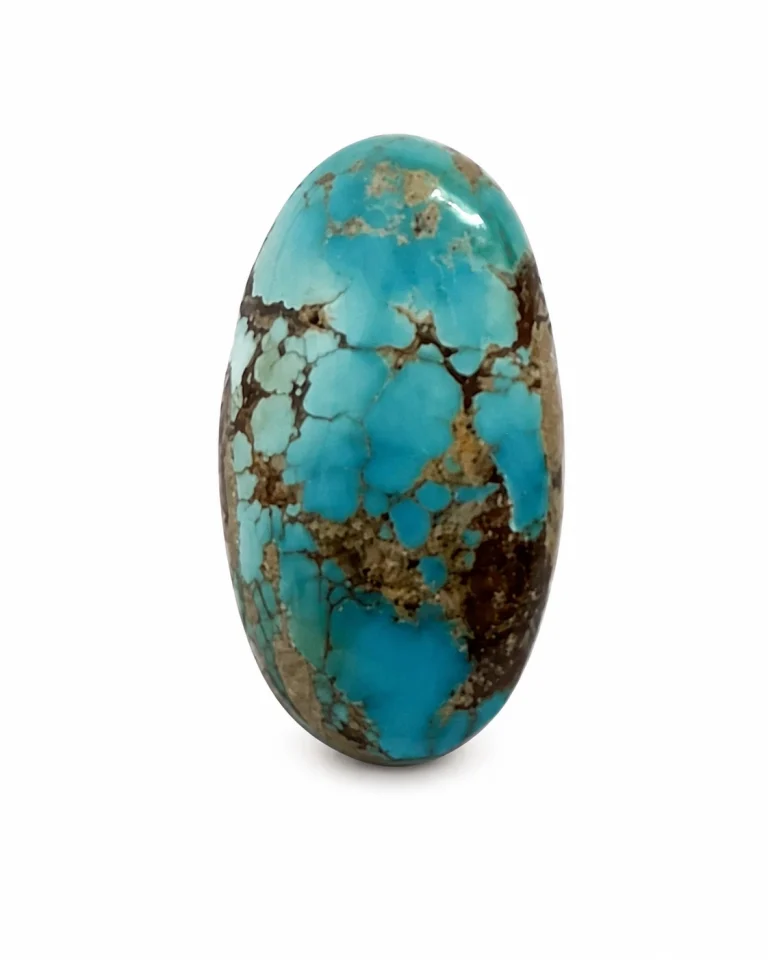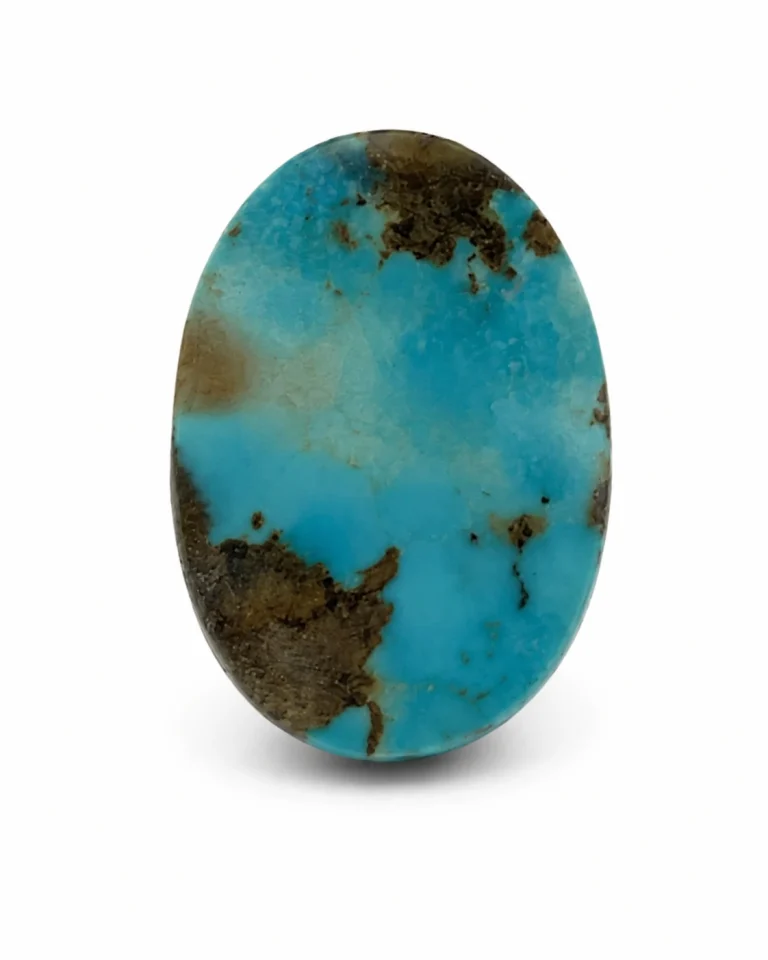
To tell if turquoise is real, separate three questions: is the material turquoise, has it been treated or reconstructed, and is the stated geographic origin supported by evidence? Color and matrix can help you examine a stone, but they cannot prove origin or treatment on their own.
This guide explains what photographs, seller records and gemological testing can—and cannot—establish, using Neyshabur turquoise as the provenance context.
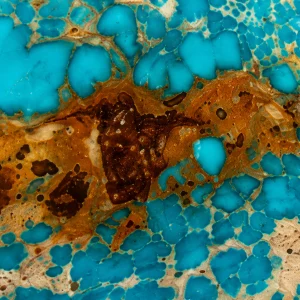
Use the same evidence-first standard for any turquoise origin claim.
What Is Authentic Neyshapur Turquoise?
Authentic Neyshapur Turquoise is a natural gemstone originating from the historic Neyshapur region of Iran.
Known globally as Persian Turquoise, it has been valued for centuries because of its:
- distinctive blue colors
- natural formation
- geological rarity
- cultural heritage
- collector appeal
A genuine gemstone is not defined only by appearance.
Its origin, characteristics, and transparency all contribute to its value.
1. Examine the Color
Color is one of the first characteristics people notice in turquoise.
Authentic Neyshapur Turquoise can display a range of natural blue tones, including:
- robin egg blue
- Persian blue
- sky blue
- deep turquoise shades
However, natural gemstones rarely look perfectly identical.
Small variations are expected and often demonstrate authenticity.
A stone that appears unnaturally uniform, extremely bright, or artificially enhanced may require further examination.
Natural beauty often includes subtle differences.
2. Understand Natural Matrix Patterns
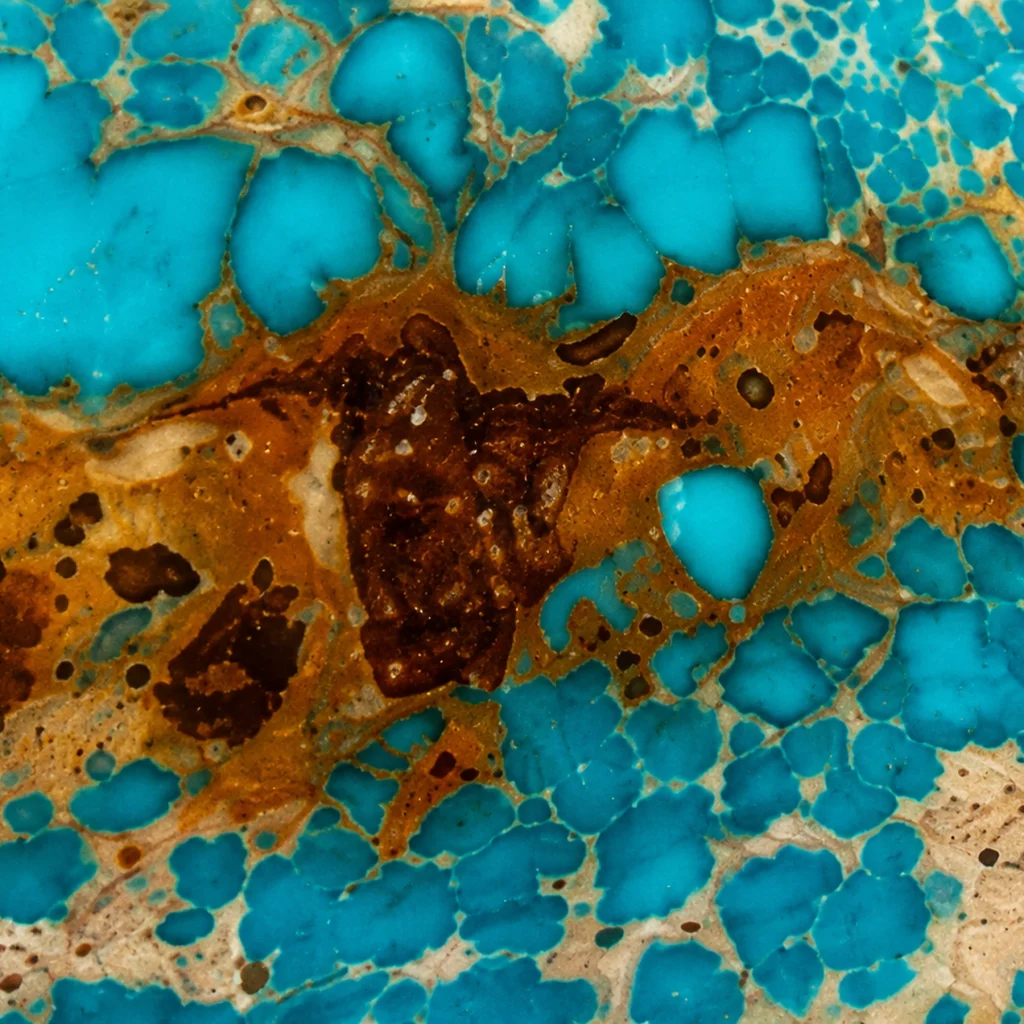
Matrix refers to the natural patterns or traces of the surrounding rock that can appear within turquoise.
These patterns are created during the geological formation process.
Some collectors prefer clean, pure blue stones.
Others appreciate matrix because it gives the gemstone a unique identity.
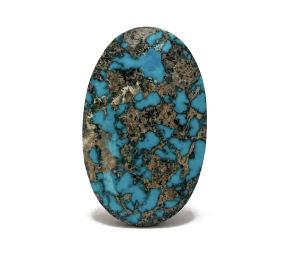
Matrix is part of the stone’s visible material character, not automatically a defect or a quality grade. Its appearance can be documented and compared, but matrix alone does not prove authenticity, treatment status or geographic origin.
3. Consider the Origin and Provenance
The origin of a gemstone is an important part of its identity.
Neyshapur Turquoise has a history connected to one of the oldest turquoise traditions in the world.
When evaluating a valuable gemstone, ask:
- Where was it mined?
- Is its origin documented?
- Is information about the stone transparent?
- Is the seller able to provide reliable details?
Clear provenance information makes a stone easier to evaluate and preserve as a documented object, but an origin claim should remain distinct from independent laboratory determination.
4. Look for Natural Characteristics
Natural turquoise has its own personality.
Visual features worth documenting include:
- colour variation
- matrix and pattern distribution
- surface character
- individual landmarks across front, reverse and profile views
These observations can help distinguish one physical stone from another, but they do not by themselves prove that a stone is natural, untreated or from Neyshabur. Imitation and treated materials can reproduce convincing visual features, so higher-confidence identification may require gemological testing.
5. Understand Treatments and Enhancements
Some turquoise gemstones may receive treatments to improve durability or appearance.
Common treatments may include:
- stabilization
- dyeing
- reconstruction
- artificial enhancement
These treatments are important information for buyers because they influence value and collecting decisions.
A trustworthy seller should clearly communicate:
- whether the stone is natural
- whether any treatment has been applied
- what characteristics define the gemstone
Transparency protects both the collector and the gemstone’s reputation.
6. Avoid Common Signs of Fake Turquoise
Imitations may be created using materials such as:
- dyed stones
- synthetic materials
- plastic composites
- reconstructed turquoise
Warning signs can include:
- extremely low prices
- identical appearance across many stones
- unnatural colors
- lack of origin information
- no documentation
A valuable gemstone should always come with knowledge and confidence.
7. Why Documentation Matters
For online evaluation, documentation reduces ambiguity around the exact stone being offered.
A useful individual record may include:
- a stable Stone ID
- weight and dimensions
- photographs of the exact stone
- observable material characteristics
- an explicit origin statement
- a clear treatment disclosure
The NEYFI Record is a documentary identity record for an individual stone. It is not an independent gemological laboratory report and should not be presented as one. If an independent laboratory report exists for a particular stone, it should be identified separately and specifically.
The NEYFI Approach to Authenticity
The name NEYFI represents:
NEY → Neyshapur FI → Firooze (Turquoise)
NEYFI means:
Neyshapur Firooze
Our aim is to present documented Neyshabur turquoise through a precise, transparent and object-centred system.
We focus on:
- careful selection
- accurate information
- detailed photography
- transparent presentation
- collector-focused service
Our goal is not simply to sell gemstones.
Our goal is to help people understand and appreciate them.
A Collector’s Checklist Before Buying Neyshapur Turquoise
Before purchasing, consider:
✓ Is the gemstone origin clearly explained?
✓ Are accurate photographs available?
✓ Are weight and dimensions provided?
✓ Is the stone natural or treated?
✓ Does the seller provide transparency?
✓ Does the gemstone have a unique identity?
✓ Can you trust the source?
A knowledgeable collector makes better decisions.
Why Clear Identity Matters Over Time
For a one-of-one natural stone, a stable identity remains useful after the moment of purchase. Photographs, measurements, treatment disclosure, origin context and a persistent Stone ID help future owners distinguish the object from similar material and retain its documentary history.
This does not guarantee future financial value. Its practical value is clearer: the stone can continue to be understood as the same documented physical object as it moves through ownership, design use or collection.
Final Thoughts
Identifying turquoise responsibly is not only about screening for imitation. It is about separating what can be observed from what requires documentation or independent testing.
For a one-of-one stone, the strongest buying context combines the exact photographs, measured dimensions, treatment disclosure, provenance information and a stable Stone ID. No single visual clue should be treated as proof of authenticity, treatment status or mine origin.
What to Check Before You Buy
- Confirm that the photographs show the exact stone being offered.
- Read the treatment disclosure rather than assuming “natural-looking” means untreated.
- Compare weight, dimensions and profile, not only the face view.
- Use origin and Stone ID documentation as supporting context, not as a substitute for independent laboratory testing when that level of verification is required.
Frequently Asked Questions
Can you tell if turquoise is real from a photo alone?
No. Photographs can reveal color, matrix, surface character and obvious inconsistencies, but they cannot prove treatment status or composition by themselves. Use photographs together with seller disclosure, dimensions, provenance and documentation.
Does matrix prove turquoise is natural?
No. Natural turquoise can contain matrix, but imitation and dyed materials can also reproduce matrix-like patterns. Matrix is a visual characteristic, not proof of authenticity.
Are home scratch, heat or solvent tests reliable?
Destructive home tests can damage a stone and still produce ambiguous results. For valuable material, careful documentation and professional gemological testing are safer than destructive experiments.
Does Natural / Untreated mean laboratory certified?
Not necessarily. A seller’s treatment disclosure and an independent laboratory report are different forms of documentation. NEYFI identifies its own product records clearly and does not present them as independent laboratory reports.
Explore NEYFI
Visit NEYFI to compare currently available one-of-one Neyshabur turquoise stones and their individual records.
Related NEYFI research: natural versus imitation turquoise, buying turquoise online safely, and individual stone records.
Browse all available one-of-one Neyshabur turquoise stones
Continue reading
- Natural Turquoise vs Fake Turquoise: How to Identify Real Turquoise
- How to Buy Turquoise Online Safely
- Turquoise Grading Guide: How Experts Evaluate Quality
- View NEYFI 1001 — Natural Persian Turquoise Teardrop Cabochon, 28.45 ct
- View NEYFI 1004 — Natural Persian Turquoise Elongated Oval Cabochon, 60.00 ct
- Natural Turquoise vs Fake Turquoise
- Why Individual Stone Records Matter
- Explore NEYFI Collections
From the field notes
See the stones behind the material.
A field note is the beginning. Compare individual Neyshabur stones with their own documentary images, Stone IDs and EUR availability.