هذا هو النص الإنجليزي الأصلي؛ لا تتوفر حاليًا ترجمة عربية مُراجَعة لهذا الإصدار.
Neyshabur turquoise is sought after for its distinctive blue-to-green colour, geological history and expressive matrix patterns. But the value of an individual turquoise cabochon cannot be reduced to colour, carat weight or a famous place name. A considered evaluation brings together the stone’s visible character, dimensions, intended use, treatment and provenance documentation, photography, availability and the buyer’s requirements.
This guide explains how to assess Neyshabur turquoise value when choosing a single stone, commissioning jewellery or sourcing multiple cabochons for a studio or retail collection. NEYFI presents individual stones with stone-specific records so buyers can evaluate the actual piece rather than rely only on a general description.
What determines the value of Neyshabur turquoise?
1. Colour: tone, saturation and consistency
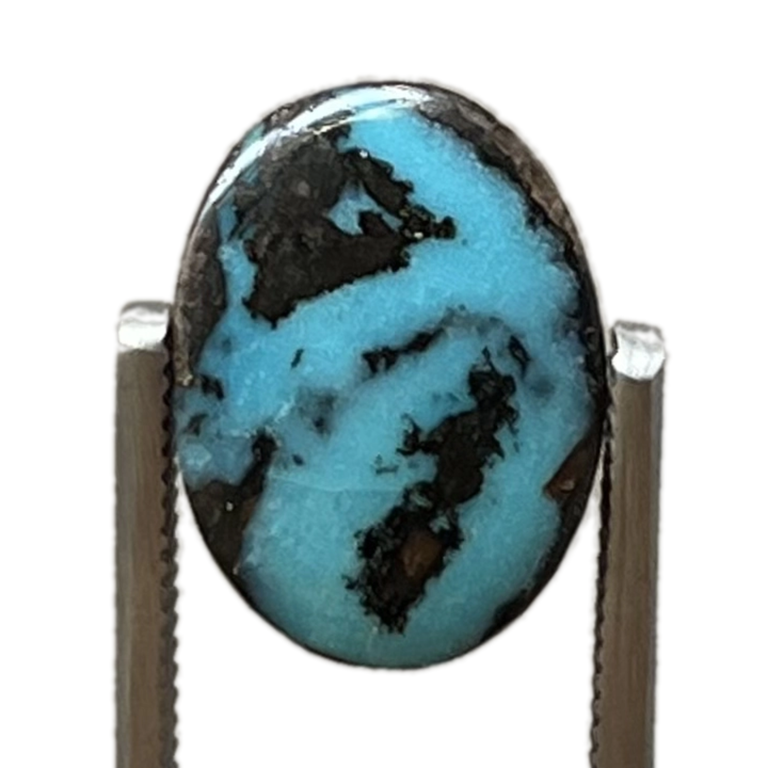
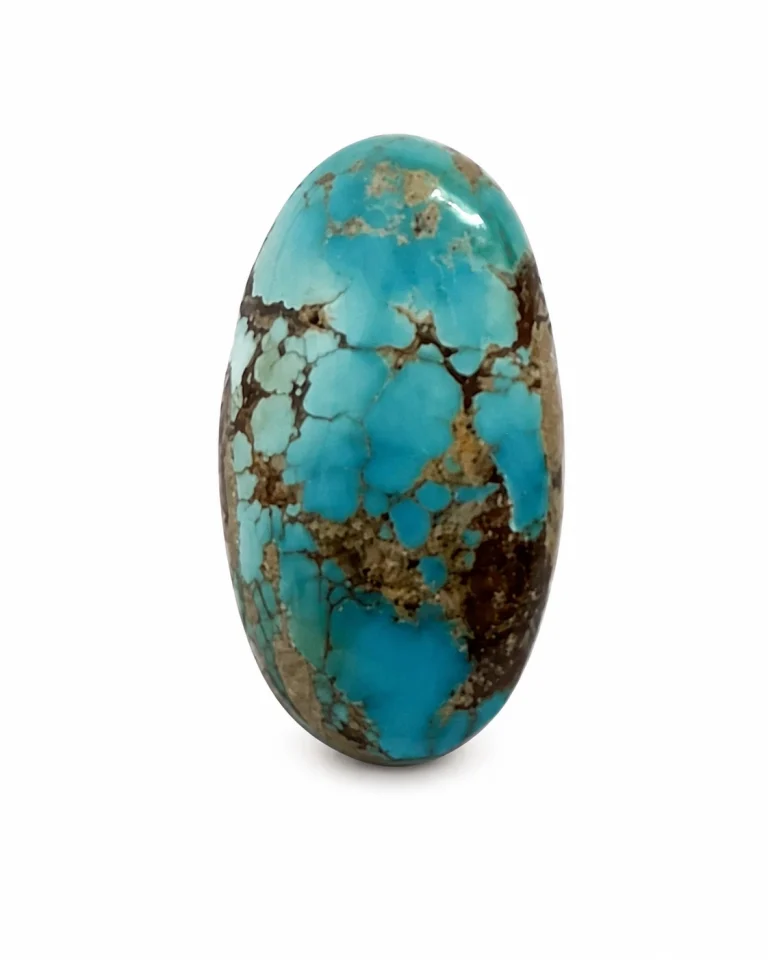
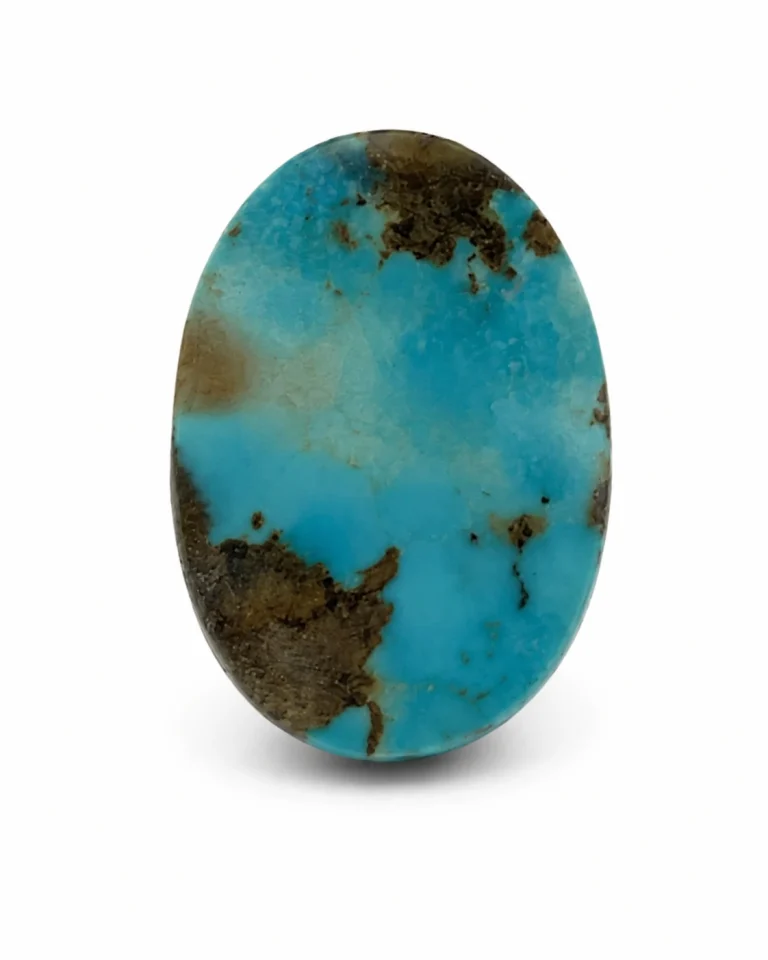
Turquoise can appear blue, blue-green or green, with variation in tone and saturation. Colour preference is partly personal and partly dependent on the design: a jeweller may need a particular hue to work with metal, other gemstones or a collection palette. Colour should be assessed from well-lit photographs that represent the actual stone; screens and lighting can change its appearance. Avoid treating a single colour label as a complete quality grade.
For a broader overview, read the guide to turquoise colours and the documentary guide to turquoise colour.
2. Matrix: a pattern, not a certificate
Matrix is the contrasting host-rock material or pattern visible in a turquoise stone. It may be fine, scattered, web-like or concentrated in larger areas. Some buyers prefer relatively clear colour; others look for matrix-rich stones with a strong graphic character. Matrix affects the visual identity and suitability of a stone, but no matrix pattern by itself proves authenticity, geographic origin, treatment status, rarity or monetary value.
Compare turquoise matrix patterns with matrix-rich and cleaner turquoise. If you are selecting a statement stone, this guide to matrix-rich turquoise jewellery can help connect pattern preference to design intent.
3. Shape, dimensions and cabochon profile
Carat weight is only one measurement. Length, width, thickness, outline and dome height affect how a cabochon sits in a bezel, ring, pendant, brooch or pair of earrings. A stone can be visually appealing yet unsuitable for a setting if its proportions do not match the design. Before purchasing, compare the recorded measurements with the setting dimensions and the jeweller’s tolerances.
Use the turquoise cabochon buying guide, cabochon dimensions guide and setting brief for jewellery designers when assessing fit. For specific formats, see matching cabochons for earrings and choosing a cabochon for a brooch.
4. Treatment disclosure and provenance
Natural appearance, treatment status and geographic origin are separate questions. Colour and matrix are not enough to establish whether a stone has been treated or to prove its precise source. A responsible listing should clearly state what is documented, distinguish observation from verified fact, and avoid claims that exceed the available evidence. For higher-value purchases or commercial requirements, request suitable documentation or qualified gemmological assessment where appropriate.
Learn the distinctions in the guide to turquoise treatment and gem-lab assessment, the guide to assessing authentic Neyshabur turquoise and the natural-versus-imitation turquoise guide. The explanation of what turquoise is made of provides additional material context.
5. Documentation, photography and confidence
For a one-of-one gemstone, the record and photographs should identify the same physical stone. Check the Stone ID, measurements, weight, stated treatment and origin information, current availability and price. Useful photographs show the real surface, outline, matrix and finish without digitally reconstructing the stone or concealing relevant features. Documentation does not automatically guarantee quality, but it helps buyers understand what is—and is not—being represented.
Before placing an order, use the stone-record reading guide, the explanation of one-of-one stone records and the guide to reading turquoise photographs online. For the online buying process, also see how to buy turquoise online safely and the natural turquoise purchase checklist.
How to buy one Neyshabur turquoise stone
Single-stone buying is appropriate when a design depends on a specific outline, colour relationship or matrix pattern. Start with the intended setting and decide which features are essential. Then compare the actual stone’s dimensions, profile, visual character, documentation and price. Do not use a general category image as a substitute for the photographs of the individual piece.
- Choose the intended use: ring, pendant, brooch, earrings, collection or display.
- Confirm the Stone ID and that every photograph belongs to that record.
- Compare weight and all recorded dimensions with the setting or design brief.
- Review treatment and origin statements; ask for clarification if the evidence is incomplete.
- Check availability, total price, delivery terms and possible import charges before ordering.
Browse the NEYFI collection of individual Neyshabur turquoise cabochons. For designers beginning with a brief, read how to source Neyshabur turquoise for a jewellery design and the Neyshabur turquoise guide for jewellery designers.
How to source turquoise wholesale for jewellery and retail
Wholesale and multi-stone sourcing involve a different decision process from choosing one cabochon. Before requesting an offer, define quantity, target dimensions, colour range, acceptable matrix variation, shape, intended application, budget range, delivery destination and timing. Be explicit about whether you need visually matched stones, a coordinated but varied selection, or a mixed lot for different designs.
Ask for a clearly identified inventory list and clarify whether each stone has an individual record. Confirm how substitutions are handled, whether quoted prices apply per stone or to the full lot, what documentation is available, how availability is reserved and which shipping or import costs may apply. Do not assume that volume guarantees uniformity, a discount or a particular treatment or origin status; request the terms for the specific selection.
For a professional enquiry, prepare a concise sourcing brief containing your intended use, quantity, size range, preferred colour and matrix character, acceptable variation, target budget and delivery country. The article how to write a professional turquoise sourcing brief explains what to include. Buyers interested in curated one-of-one selections can also read how galleries build a one-of-one turquoise selection.
Contact NEYFI with specific Stone IDs or a sourcing brief to discuss the available selection. Wholesale availability, minimum quantities, discounts and commercial terms should be confirmed individually; they should not be assumed from the presence of a public collection.
Why Neyshabur turquoise has cultural and collecting significance
Neyshabur—also commonly rendered as Neyshabur or Nishapur in English transliteration—is historically associated with Persian turquoise. The place name contributes cultural and geological context, but a specific stone’s provenance still needs to be represented carefully. Buyers should distinguish the wider history of turquoise mining and trade from evidence that establishes the source of an individual piece.
For historical context, read the history of Persian turquoise and the overview of Neyshabur turquoise mining and collecting. For comparisons with other material, see Neyshabur turquoise compared with other turquoise. These pages provide context; they should not be treated as substitutes for stone-specific documentation.
Care and practical ownership considerations
Turquoise requires thoughtful handling, particularly when set in jewellery and exposed to heat, chemicals or repair processes. Discuss care and setting methods with a qualified jeweller who understands the material. Before buying for frequent wear, consider the design, setting protection and intended use rather than assuming every cabochon is equally suited to every piece of jewellery.
Read how to care for Neyshabur turquoise, whether turquoise is durable enough for a ring and how heat can affect turquoise during jewellery repair. For an introduction to collecting, see how to start a turquoise collection and why collectors value rare natural gemstones.
Frequently asked questions
What makes Neyshabur turquoise valuable?
Value depends on the individual stone and its intended use, including colour, matrix, dimensions, finish, documentation, availability and buyer preferences. No single visible feature determines value on its own.
Does matrix prove that turquoise is from Neyshabur?
No. Matrix is a visual feature, not proof of geographic origin, authenticity or treatment status. Provenance claims require appropriate supporting evidence.
Is a heavier turquoise cabochon always worth more?
No. Weight should be considered alongside dimensions, shape, visual character, condition, documentation and suitability for the intended setting. Price comparisons should be made between stones with relevant comparable characteristics.
What should jewellery designers provide when sourcing several stones?
Provide the quantity, intended use, dimensions, shape, colour preferences, acceptable matrix variation, budget range and delivery destination. State whether you need matched stones or a varied selection, and ask how each piece will be identified and documented.
Can I buy one stone or enquire about multiple stones from NEYFI?
Use the NEYFI collection to review individual stones. For a multi-stone or trade requirement, contact NEYFI with relevant Stone IDs and a sourcing brief so availability and terms can be discussed.
Explore the NEYFI collection
Compare the available Neyshabur turquoise cabochons, use the linked guides to refine your selection, and review each stone’s own record before deciding. For a design or trade enquiry, share the Stone IDs and specifications relevant to your project.
Editorial note: This guide provides general purchasing and design information. Visual appearance alone cannot establish authenticity, treatment status or precise geological origin. Seek appropriate documentation or qualified assessment where a claim materially affects the purchase.
From the field notes
See the stones behind the material.
A field note is the beginning. Compare individual Neyshabur stones with their own documentary images, Stone IDs and EUR availability.