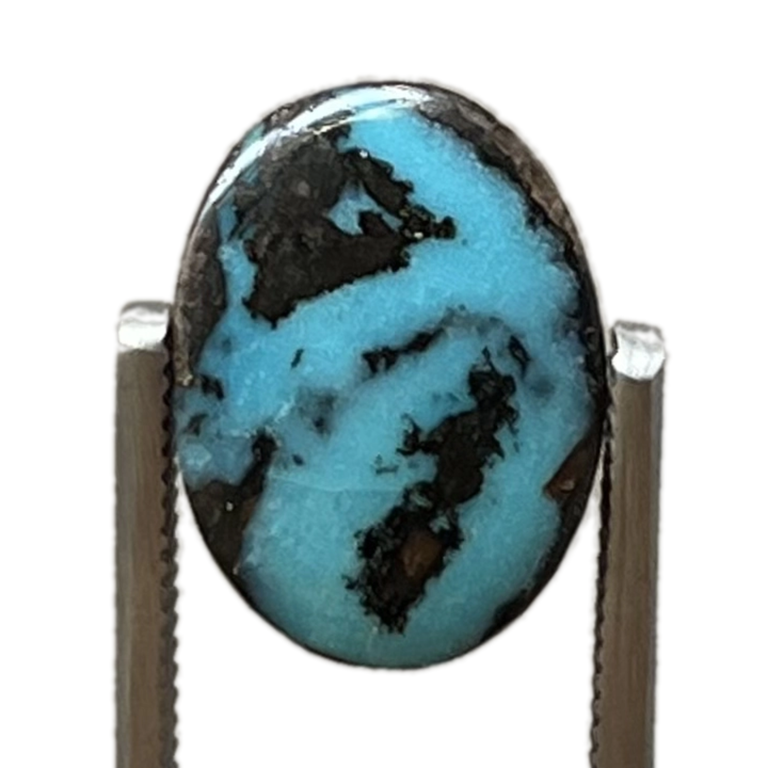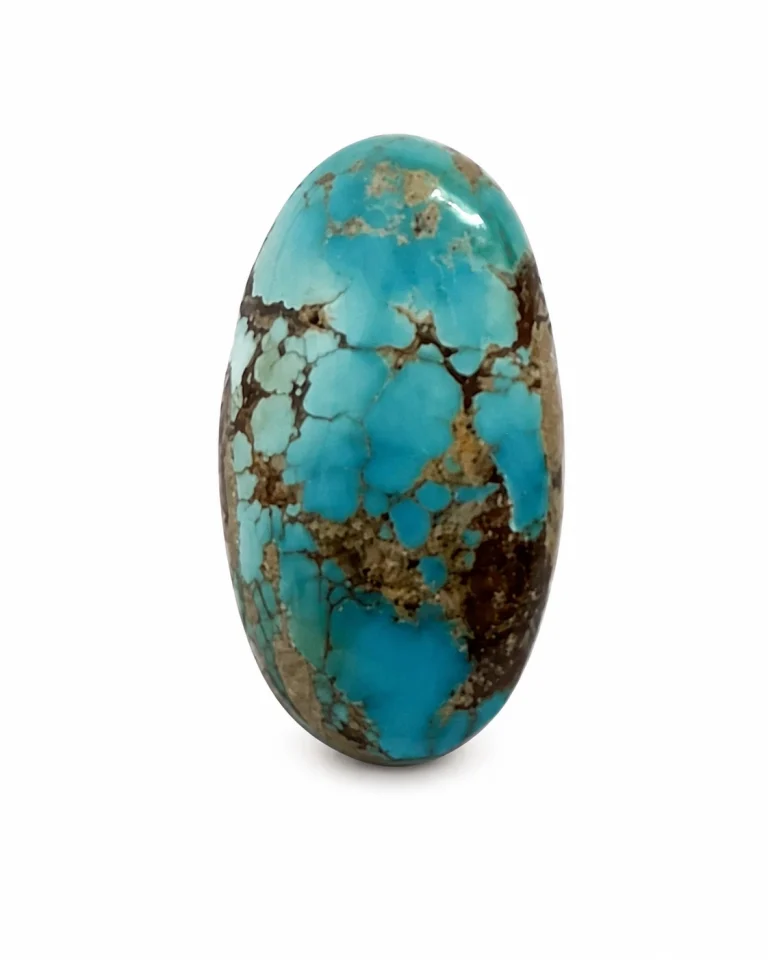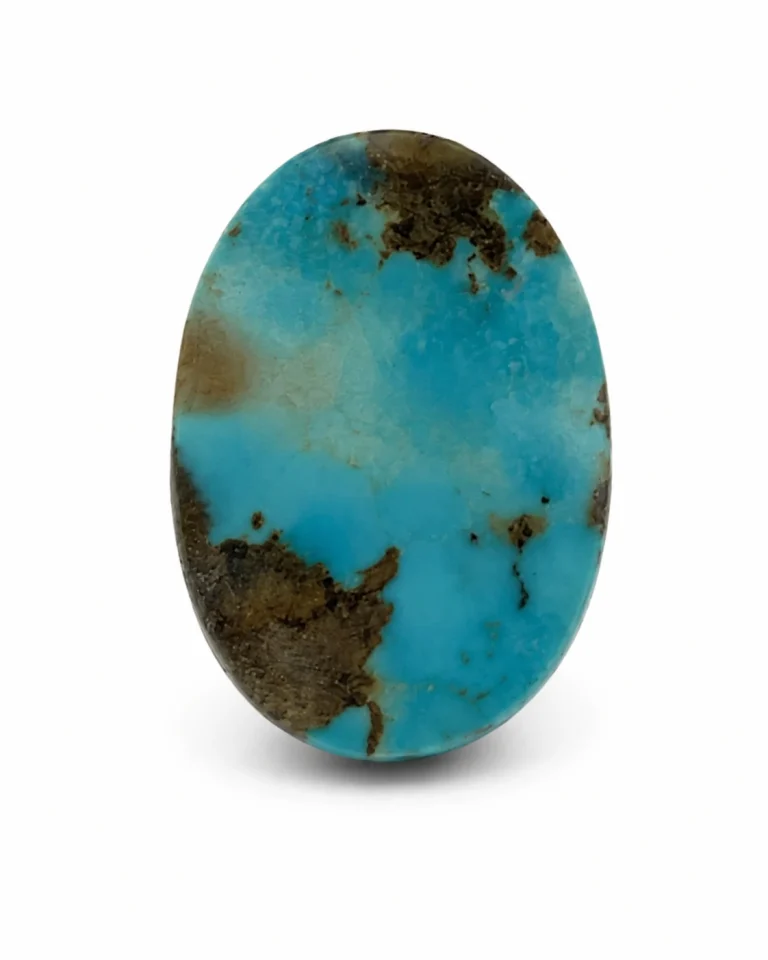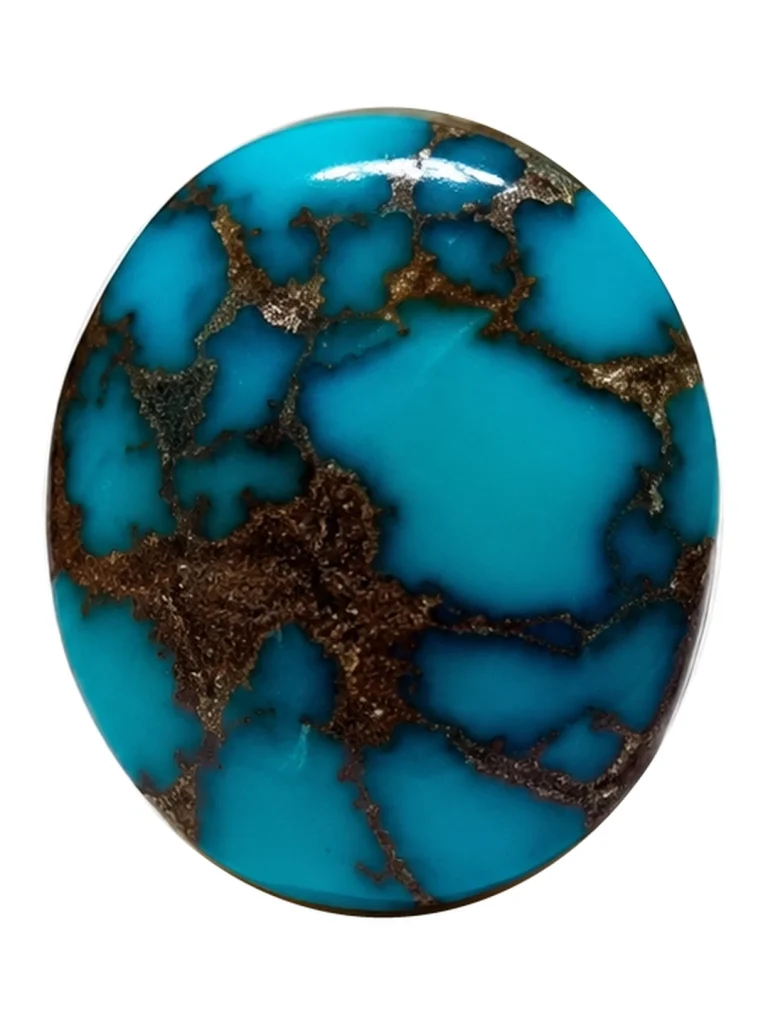
A turquoise collection becomes meaningful when each stone has a reason to be there. Colour may draw you in, but a thoughtful collection develops through comparison: different blues and greens, matrix patterns, shapes, sizes, origins, and documented histories. The goal is not simply to accumulate stones. It is to build a group you can understand, explain, and continue learning from.
If you are learning how to start a turquoise collection, begin with a clear collecting question rather than a price target. This guide explains how to choose a focus, assess individual stones, document provenance and treatment, compare value, and buy with a process that can stand up to scrutiny.
1. Choose a collecting principle before you buy
A useful collection has a point of view. You do not need to decide on a lifelong theme, but a first principle helps you make deliberate choices instead of buying whichever stone looks most vivid in a photograph.
- By place: focus on documented material associated with a particular mining region, such as Neyshabur in Iran.
- By visual character: compare clean colour fields, contrasting matrix, spiderweb-like patterns, or unusual colour transitions.
- By form: collect cabochons with different outlines, domes, proportions, and dimensions.
- By use: study stones suitable for rings, pendants, brooches, or display, while considering setting constraints.
- By documentation: prioritise stones with clear photographs, treatment disclosure, measurements, and a traceable record.
These approaches can overlap. A small collection of documented Neyshabur turquoise, for example, could explore how matrix and shape change the character of stones from the same broad region.
2. Learn to separate beauty, quality, rarity, and price
These ideas are related, but they are not interchangeable. A stone may be visually compelling without being rare; another may be unusual but less suitable for a particular piece of jewellery. Price is an asking value in a specific market, not a complete description of quality.
When comparing two stones, assess each dimension separately:
- Colour: note hue, saturation, tone, and how evenly the colour appears across the stone. Describe what you can see rather than relying only on words such as vivid or premium.
- Matrix and pattern: record the colour, density, distribution, and visual contrast of the host-rock pattern. Matrix is a matter of preference as well as appearance; it is not automatically a defect or a sign of superior quality.
- Surface and structure: inspect visible pits, cracks, chips, polish, and any areas that may affect durability or setting.
- Cut and proportions: compare length, width, depth, dome, outline, symmetry, and the amount of material available for a setting.
- Treatment: establish what is disclosed about stabilisation, dye, impregnation, or other enhancement. Natural origin and treatment status are separate questions.
- Documentation: check whether the seller supplies consistent measurements, photographs, a stone identifier, and a clear statement of what is known and unknown.
For a practical visual exercise, compare the stones in this guide to matrix-rich and cleaner turquoise. Then read how turquoise colour reads in real photographs before deciding that one image represents the exact colour you will see in person.
3. Treat origin, authenticity, and treatment as three different questions
Collectors often use the word natural as if it answers everything. It does not. A careful record distinguishes at least three questions:
- What is the material? Is the object turquoise, and is there evidence to support that identification?
- What has been done to it? Has it been stabilised, dyed, impregnated, assembled, or otherwise treated? Ask for explicit disclosure rather than inferring treatment from appearance alone.
- Where does it come from? What evidence supports the stated geographic origin? Colour or matrix pattern by itself should not be treated as conclusive proof of a mine or region.
A seller description is useful information, but it is not automatically independent verification. For higher-value purchases, ask what supports the claim and whether a qualified gemmological laboratory report is available or appropriate. A report may address identification and treatment; geographic-origin conclusions depend on the laboratory, the material, and the available evidence, and may not always be possible.
NEYFI explains its approach to Neyshabur turquoise origin and provenance and keeps a stone-by-stone record through The Record. Read those details carefully and distinguish documented facts from interpretation or seller attribution. For independent background on turquoise quality and buying considerations, consult the Gemological Institute of America turquoise buying guide.
4. Build a record for every stone
A collection becomes more useful when you can revisit a purchase months or years later and still understand exactly what you bought. Create a simple record as soon as each stone enters the collection.
| Record field | What to capture |
|---|---|
| Identifier | A unique code that appears in your files and, where practical, on the storage label. |
| Measurements | Length, width, depth, weight if available, outline, and dome profile. |
| Visual description | Colour, matrix pattern, surface features, polish, and distinctive marks. |
| Material and treatment | The exact wording supplied by the seller, plus any report or supporting documentation. |
| Origin claim | The stated region, who made the claim, and what evidence supports it. |
| Purchase record | Date, seller, price, invoice, return terms, and correspondence about the stone. |
| Images | Front, back, side profile, scale reference, and a consistent neutral-light photograph. |
| Open questions | Anything still uncertain, such as treatment, origin, repairs, or suitability for setting. |
Do not turn uncertainty into certainty simply to complete a field. Write “not disclosed” or “not independently verified” when that is the accurate status. A record is valuable because it preserves the difference between what is known, what is claimed, and what remains unresolved.
For an example of close visual documentation, see the NEYFI 1007 stone record. Use it as a model for observing one individual stone rather than assuming that a single example represents every stone from a region.
5. Compare stones under consistent conditions
Photographs are essential, but they are not neutral windows. Light source, white balance, exposure, reflections, background, and screen settings can change how turquoise appears. A highly saturated photograph is not enough to establish the colour of a stone.
- Compare photographs made against a neutral background and look for front, back, and side views.
- Check whether the stone fills a useful portion of the frame without losing its outline or scale.
- Use measurements alongside photographs; a close crop can make a small cabochon look much larger.
- Look for consistent colour across multiple views, while allowing for genuine changes caused by angle and light.
- Ask for an additional view if a critical feature is hidden by glare, shadow, or framing.
Use this visual checklist for reading turquoise photos online before making a remote purchase. If you are photographing your own collection, the guide to photographing turquoise with a phone can help you build a more consistent archive.
6. Set a buying rule and a budget
A collecting rule protects you from impulse purchases. Before buying, write down why the stone belongs in your collection and what evidence you need before you are comfortable proceeding.
- Set a total budget and a maximum price for a single stone.
- Keep some budget available for a genuinely different specimen instead of filling every gap immediately.
- Compare stones of similar size, quality, treatment status, and documentation rather than comparing prices by colour alone.
- Read return, shipping, insurance, and customs terms before payment, especially for international purchases.
- Do not pay a premium for an origin or rarity claim unless the evidence and the stone itself justify that premium to you.
One practical method is to maintain a comparison sheet with three columns: what attracts you to the stone, what is documented, and what remains uncertain. This keeps aesthetic response in the process without allowing it to replace due diligence.
7. Store and handle turquoise thoughtfully
Turquoise is not a gemstone to treat carelessly. Hardness, porosity, treatment, fractures, and setting all affect how an individual stone should be handled. Keep stones separated to avoid scratches and knocks, and avoid sudden temperature changes, harsh chemicals, ultrasonic cleaners, and steam cleaning unless a qualified professional has confirmed that a specific stone can tolerate the method.
For a piece intended for jewellery, discuss the stone and its treatment history with the setter before work begins. Heat and some workshop chemicals can damage turquoise or affect its appearance. Read the guide to heat risks during jewellery repair before approving a repair or setting.
8. Develop the collection through comparison, not accumulation
After the first three to five stones, pause and review the group. What differences can you now see? Which features did you initially overlook? Have your criteria changed after comparing real examples? The next purchase should answer a question or add a meaningful contrast, not simply increase the count.
A strong collection can contain a modest number of carefully documented stones. Its value as a learning project comes from the relationships among them: similarities, exceptions, visual character, evidence, and the questions that remain open.
If you want to explore documented individual stones, start with the NEYFI turquoise collection and read the available stone records before comparing options. Review the stated details for each stone individually; do not assume that one description or treatment statement applies to the entire collection.
Frequently asked questions
What is the best turquoise for a beginner to collect?
There is no single best stone for every beginner. Choose a stone that fits your interest and budget, has clear photographs and measurements, and comes with explicit treatment disclosure and a transparent explanation of any origin claim.
Is blue turquoise always more valuable than green turquoise?
No universal rule makes colour alone decisive. Value can also depend on appearance, pattern, condition, size, treatment, provenance, demand, and the preferences of a particular buyer or market.
Does spiderweb matrix prove that turquoise is from Neyshabur?
No. A visual pattern alone should not be treated as conclusive proof of geographic origin. Ask what documentation supports the stated origin and whether independent testing is available.
Is natural turquoise the same as untreated turquoise?
Not necessarily. “Natural” can refer to the material or its origin in a seller description, while treatment status is a separate matter. Ask whether the stone has been stabilised, dyed, impregnated, or otherwise enhanced, and seek clear written disclosure.
Do I need a laboratory report for every stone?
Not always. The appropriate level of documentation depends on price, intended use, risk, and the strength of the seller evidence. For a costly or consequential purchase, consider independent professional assessment and understand exactly what the report does and does not establish.
How many stones should a first collection contain?
Start with a manageable group, perhaps three to five stones chosen to make comparison possible. The number matters less than whether each stone adds something you can describe, document, and learn from.
A final principle
Collect with curiosity, but keep your evidence separate from your enthusiasm. A beautiful stone deserves close attention; a serious collection also needs clear records, honest uncertainty, careful comparison, and buying decisions you can explain later.
From the field notes
See the stones behind the material.
A field note is the beginning. Compare individual Neyshabur stones with their own documentary images, Stone IDs and EUR availability.